



|
|
|
|
 |
 |
|
|
Editorial overview Programme
and cons empowerment “BISP
is the most transparent programme” How
the experts view it…
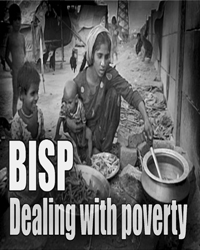
Editorial It’s easy for armchair intellectuals, economists and critics of all orders to dismiss this one, like all else. Direct cash transfers breed lethargy, they say. For political governments, the considerations are a little different. While they must plan long-term, they do need short-term solutions for the poorest of the poor. For those who eek out a living from below the poverty line, about 40 per cent of the total population, any sort of help is welcome. For those five million families with a monthly earning of less than Rs6000, one thousand rupees extra per month is like windfall. But there’s a lot more to the Benazir Income Support Programme than just these plain statements. There are mixed views on the scheme. There are some who think this is too little for too few, breeds dependency and has problems of corruption, over-centralization, leakage and patronage. Others think that, in the absence of any other social security net, this is a crucial life line for those living below the poverty line, that it is a good way of empowering women and that where so much money is being wasted at least this is providing some relief to those in need. Both views are not entirely correct. The BISP has the potential of being a good programme if it is re-structured, learning from examples of poverty alleviation programmes of other countries. The present managers may think it is a great model in itself and can be sold to the rest of the world. But in the absence of an impact assessment done in the last three years or more, certain changes would make it more viable and long term. To begin with, it would make sense to make this a conditional financial support as suggested by the donors, economists and all right thinking people. Getting children enrolled in school or getting them vaccinated, or for women to learn certain skills in order to be eligible to receive the money are good starting points. This plus an emphasis on micro-credit is where real empowerment lies. It should also be de-centralized with more attention to rural-urban needs. Considering the state of the economy, it should be combined with measures to save money from other wasteful expenditures in the government. Judging from the statements of those managing the programme, it seems that some of these changes are being incorporated in the programme. This, we suggest, should be quicker than our expectations. And will serve the political government well.
overview Three and
a half years down the road, the BISP looks By Farah Zia In order to operate in a political system and that too from a position of power is not easy. Political parties do have some compulsions. They must appear to be doing something because in politics these days being a doer is preferred to being a non-doer. If the party in question has overstressed its commitment to the poor people it is supposed to be leading, it must do something for them once in power. And as early as the word go. This is exactly the case
with the Pakistan People’s Party’s poverty alleviation programme that we
know as Benazir Income Support Programme (BISP). The programme, named after
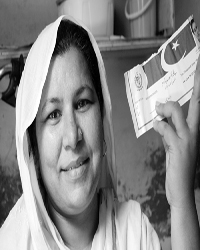
its slain leader, was supposed to give cash The programme thus aimed to cover almost a quarter of the population and increase the income of the family earning less than Rs 6,000 by 20 percent. It aimed to cover all four provinces including FATA, FANA, ICT and AJK. Three years later, the BISP looks different from where it began. It has expanded and diversified. Gradually, it seems to be accommodating many criticisms levelled against it. But one is not sure if the government which is touting the programme as its biggest success is convinced that cash transfers of this kind are only a short-term solution and not the best one at that. Yes, it has ventured into micro-credit and vocational training and health insurance but it hasn’t yet given up on the direct income transfers which remain unconditional so far. Of course, there were many positive indicators. Here was a programme that was designed, at least theoretically, to be as transparent as possible: the data was computerised; the aid was being directly received by the beneficiaries with no intermediaries except the poor postmen; it was across the board; at the time of delivery, the beneficiary woman had to establish her identity and show her CNIC which also meant that a huge majority of women in this country had to seek their CNICs by default; the payment details and status of delivery was displayed at the BIPS website. At the time when it was started, there was no data available for the identification of the underprivileged in the country. The task of identification was thus entrusted to the parliamentarians, eligibility criteria were devised and forms were distributed among parliamentarians (8,000 to each member of the National Assembly and Senate and 1,000 to each member of the provincial assemblies) without any party considerations. The stage was thus set for the launch of the BISP with an initial allocation of Rs 34 billion for the year 2008-2009. In a country that had just seen a free election after a lapse of nine years, the fact that somebody was doing something for the poorest of the poor was seen as a positive development; particularly, because the high growth years (a characteristic of all previous military periods) of Musharraf were just as indifferent to distribution. For all its poverty-related rhetoric, the BISP had its share of critics, too, and from the word go. This money was too little to alleviate poverty and too short-term. Providing Rs 1,000 a month to a poor family from the federal level might turn out to be a ‘bureaucratic nightmare’. Besides, being federally implemented, it went against the principle of provincial autonomy and devolution. The greatest criticism — the BISP offers cash without any conditions, “unlike successful income transfer programmes in Latin America, such as Brazil’s Bolsa Familia”. Linking it with children’s immunisation and sending children to schools might have made it into a more meaningful exercise. Critics would rather have micro-credit schemes on the pattern of the Grameen Bank in Bangladesh to eliminate poverty from the lowest or no income groups. Apart from the general allegations of corruption, there was no transparency regarding the data of the eligible people (a concern which should now be considered addressed with the near completion of the poverty survey done all across the country). There is a hint of truth in their statements that, in the last three and a half years, there has been no impact assessment or feedback about the programme. According to the managers’ own accounts, there has not been a hundred percent disbursement of the allocated amount. On the micro-level, the postman has been charging Rs 100-200 from each beneficiary. More recently, the resignation of Governor State Bank of Pakistan Shahid Kardar has been partly linked with the BISP. The governor is said to have opposed doling out billions of rupees under the programme. Moreover, the World Bank is said to have lowered its rating for the BISP due to “an overly cumbersome procurement process that causes too many delays”. The BISP management blames the bank itself for the delays because in addition to the $60 million in technical assistance, Pakistan has also reportedly obtained a $200 million loan from the World Bank for the actual cash disbursements. In the overall size of the economy, Rs 50bn may not seem like a huge amount but considering the state of the economy and the huge borrowing the government has to do, the concerns of the former State Bank governor make sense. On its part, the political government must bear the economic cost in order to reap some political benefit. Only if it could do that wisely; only if it could cut costs elsewhere to allow BISP to run as it wants; only if it could make the cash transfers conditional; only if it could make micro-credit into a larger and more meaningful part of the programme; and only if it could add value to its vocational training programme. Eligibility/Ineligibility criteria The families are eligible for the fund in case… - the female applicant/recipient possesses her CNIC - the monthly family income is less than Rs.6,000/- - the women is widowed/divorced, without adult male members in the family - there is physically or mentally retarded person(s) in the family - a family member is suffering from a chronic disease The families are ineligible if… - any member of the family is in the employment of government/semi- government/authority/department or armed forces of Pakistan - any member of the family is drawing pension from government/semi-government/authority/ department or armed forces of Pakistan - any member of the family is receiving any post-retirement benefits from any government department/agency - any member of the family owns an agriculture land more than three acres or residential house/plot of more than 80sq yards (3 marlas) - any member of the family is receiving income support from any other source like Punjab Food Support Scheme etc - any member of the family possesses a Machine Readable Passport - any member of the family possesses a National Identity Card for Overseas Pakistanis (NICOP) - any member of the family has a Bank Account (except in NBP, HBL, UBL, MCB, ABL, BOP, Bolan Bank, Khyber Bank, First Women Bank, ZTBL, Khushhali Bank, and all microfinance banks) The BISP has come under fire for not delivering on its stated promise, for nepotism, lack of transparency and more By Aoun Sahi The family of Hurmat Bibi, 45, resident of Ghulam Nabi Shah union council in Umerkot district in Sindh province, is among the poorest in the village. Her husband who used to be a Hari with a local landlord a couple of years ago was sacked from the job and has been out of work since. They live in a small, two-room mud house with five children and do physical labour to feed their children. “We cannot find work for
more than 2-3 days a week, which means our earnings aren’t enough for us
to make a The announcement of Benazir Income Support Programme (BISP) in 2008 brought some hope to the family, with its Rs 1,000 a month. “We are among the most deserving people to get this [money] under the BISP in my village,” she says. “We barely earn Rs 4,000 a month and an extra thousand bucks would mean a lot.” Incidentally, so far, she hasn’t received a single penny despite applying twice to the local BISP office. “The people there even took away my identity card (No. 4410529291244). “Those [in the village] who are better off have been getting the fund money while the poor are being denied this,” she says. Ghulam Akbar Mallah, a social worker based in Umerkot, says the fund distribution under the BISP was suspended in the said district from August 2010 to June 2011 in the wake of the growing number of complaints of political favouritism and diversion of funds to the rehabilitation of flood-hit areas. It was resumed after the government carried out a poverty scorecard survey in the district. “Sadly, the survey carries false information since a lot of needy and poor families are not able to avail it whereas many rich people who earn up to Rs 60,000, or government employees whose salary is Rs 30,000, are enlisted as eligible,” he tells TNS, adding that those poor families who have been receiving the fund money were forced to pay a certain amount to post office officials as a bribe. Sources in the Ministry of Postal Services say it is faced with myriad problems in the disbursement of funds. “Bureaucratic problems, the time factor in transmission of money orders and delivery at the doorstep are some of the major challenges.” It is said the service charges per money order under the BISP are Rs 5 only, compared to small cards in mobile banking that charge Rs 100-150 per transaction on delivery to customers. Security is another issue. “Several post office officials have been attacked in Sindh and other parts of country in recent times, while distributing money orders [of the BISP]. On April 27, a postman was killed by dacoits as he was distributing the money orders in New Karachi.” A report compiled by the Auditor-General of Pakistan (AGP) says the Pakistan Post Office (PPO) is yet to return Rs 778 million — originally meant for the needy under the Benazir Income Support Programme (BISP) and Zakat and Ushr committees — to the national exchequer. The report also reveals that the officials of 11 post office hubs embezzled or misappropriated money, instead of paying to the original beneficiaries. People in Umerkot are not the only ones raising their voice against the issue of transparency in the BISP; in fact, a few weeks ago, all major political parties in the Azad Kashmir elections blame the PPP for using the programme to get political benefits. The PPP leadership, on the other hand, terms the BISP as completely apolitical and nondiscriminatory. “[This] is evident from the fact that Rs 47bn have been disbursed among the beneficiary families recommended by the representatives of different political parties, in the first phase itself,” claims Farzana Raja, chairperson of BISP, talking to TNS. Giving further details, she says Rs 25bn have been distributed on the recommendations of the PPP parliamentarians, Rs 14.87bn on PML-N’s recommendations, Rs 15.5bn on PML-Q’s, Rs 4.5bn on MQM’s, Rs 3.6bn on ANP’s and Rs 134m on PML-F’s. “The amount is being distributed to families that earn less than Rs 6,000 a month,” she adds. “We have conducted a poverty survey to further improve on the programme. Donor agencies including the World Bank and the US government have appreciated BISP on a number of occasions. The programme is acknowledged the world over because of its transparent nature and quality of service, and it is the duty of the Pakistan Post to ensure delivery of aid installments without any delay and embezzlement to those entitled.” Raja reveals that around 1.2 million families in Punjab, 1.48m in Sindh, 820,000 in Khyber-Pakhtunkhwa, 350,000 in Balochistan, 70,000 in Azad Jammu Kashmir and 40,000 families in Gilgit-Baltistan are being facilitated by the BISP. However, it seems even coalition partners of the PPP are not satisfied with the programme. ANP’s central information secretary Senator Zahid Khan alleged in the Upper House last month that the much-touted BISP was the hub of corruption and had no role in combating the alarming rise in poverty across Pakistan. “I distributed 800 BISP forms among the people of my constituency but they haven’t received a penny even after a lapse of two years,” he told the Senate. “The BISP is for PPP’s workers only!” Talking to TNS, Senator Khan says he would like to know what the BISP has achieved in the last three years with regard to fighting poverty. “Looting and plundering of the tax-payers’ money has been going on with impunity at all levels and the only beneficiaries happen to be the PPP activists and workers,” he says, adding that those serving on deputation in the BISP with PPP background are drawing Rs 0.4m to Rs 0.6m salary per month whereas the poor, who desperately need financial help, are getting nothing under the programme. “Poverty is on the rise in the country, despite this programme, which means there are problems in it,” he insists. “In each and every district, the BISP offices are being managed by PPP activists who have got latest model cars out of the programme.” Khan says Rs 70bn earmarked under the BISP for the year 2011-12 must be utilised for developmental projects and schemes to generate jobs. Public representatives from small provinces accuse the BISP officials of their geographic bias in the disbursement of programme funds. Senator Humayun Khan Mandokhel from Balochistan says that over 900,000 people were beneficiaries of the programme in Punjab but only 19,843 were able to receive any funds from the BISP in Balochistan till June this year. “In Balochistan, the poverty survey has been done only in the stronghold areas of PPP,” he says.
empowerment Giving cash is a viable mechanism for the relief of the poor, but empowerment is a process that goes beyond deprivation that women experience By Alefia T Hussain The PPP government is
pursuing an ambitious plan, Benazir Income Support Programme (BISP), which
aims to Contrarily, the supporters of the BISP argue that a Rs 1,000 handout to a poor or very poor woman every month would do no harm. It would, they claim, supplement Rs 5,000 monthly family income by 20 percent. Very true. In Lane No 3 of Husnainabad in Lahore’s Cantonment area, women welcome the sum. “The postman comes every two to three months and gives me the handout of Rs 2,000 or 3,000. But his visits are very irregular,” says Ija Bibi, an elderly widow who has been abandoned by her four daughters. “My daughters don’t want me. I’m at the mercy of my neighbours, for food and a place to live,” she adds. With no house, no job and no monthly income as such, the occasional BISP cash comes as a blessing to her. “I mostly spend the money on myself — on food, clothing, oil and powder — or sometimes give it to the family I live with.” Others in the basti are as supportive of the programme. “The money comes in handy in meeting the cost of running the house. At times, ration, aata, daal, chawal, needs to be replenished; at other times the children’s school fees must be paid,” says Rebecca, middle-aged, and mother of five children. “But the money doesn’t come on regular basis. So I can’t plan how to spend it best,” she says, lamentingly. Accepted that giving cash is a viable mechanism for the relief of the poor, but isn’t empowerment a process that goes beyond deprivation that women experience? Isn’t it about deciding how to spend the money, too? Also about a regular, perhaps monthly, flow of the cash; so it can be spent prudently and with planning. More importantly and, as women’s rights activist Anis Haroon points out, “It must be seen whether the amount of Rs 1,000 is beating inflation?” Thirty five years old Mrs Noor Muhammad from Peshawar is a mother of six. She says the Rs 1,000 support has hardly made any difference in her status at home. “I get the cash every month but before I know, it’s all spent on getting some edibles for my children.” Cash transfer schemes like the BISP is not peculiar to Pakistan. They are gaining popularity all over the world. Probably the biggest and the best known is the Bolsa Familia in Brazil. Since 2003, 12 million families have received small amounts of money ($12 a month). Remarkably, inequality has been cut by 17 percent and the poverty rate has fallen from 42 percent to 28.8 percent. But unlike BISP, Bolsa Familia comes with certain conditions. The payment is contingent upon a family’s children remaining in school until 17, and attendance must be at least 85 percent up to age 14, and 75 percent for the rest of the years. Alongside, the family must ensure the children get full set of vaccinations in their first five years and that the mother receives pre- and post-natal care. “The quarterly support of Rs 3,000 is significant. It does strengthen the woman’s status in the family,” says Anis Haroon, adding “But just giving money will not empower women. The money must come attached with vocational training as a condition.” There is a provision for vocational training in the BISP as well under the Waseela-e-Rozgar scheme which provides technical and vocational training to a family member nominated by the woman herself. Waseela-e-Haq and Waseela-e-Sehat are other initiatives of the programme. But reports on the reach and effectiveness of such initiatives are vague so far. Nonetheless, the demand for such initiatives is high. Eighteen years old Khalida of Mattay, Ashaab Baba area in Peshawar, is a mother of one child. She has been a beneficiary of the BISP for over a year now. Although the Rs 1,000 she gets per month has improved her status at home as she has an additional amount to spend on care of her baby, she believes that vocational training would have been far better than the cash support. She says the cash support is of minimal importance yet better than having no support at all. “I live in a joint family system with my husband’s four brothers and their families. Though the cash I receive has decreased my dependency on my husband, it has hardly increased my influence in the family. I would prefer to get some training, take short courses or set up my own business.” Women’s rights activist Najma Sadeque is extremely critical of the BISP. “Is this one of those amateurish ideas of token help that creates no lasting beneficial change whatsoever?” she asks. If the government was serious about alleviating poverty or empowering women it would have reinstituted the ration system a long time ago and provide food stamps, she says.
“BISP is the most transparent programme” — Farzana Raja, MNA (PPP) and Chairperson, Benazir Income Support Programme By Mehtab Haider The News on Sunday: What has been the impact of the BISP on people living below the poverty line? Are you satisfied with the results of the programme so far? Farzana Raja: The BISP
gives a cash grant of Rs 1,000 a month to the beneficiary families whose
monthly income is Rs. 5,000 or below — as an immediate relief. Having said
that, the BISP has also envisaged long-term policies Under Waseela-e-Haq, the BISP ballots to select 1,000 persons out of 4 million families to provide interest-free loans of Rs 300,000 each which the beneficiaries would have to return in a period of 15 years. The beneficiaries of the scheme get assistance from the Pakistan Poverty Alleviation Fund (PPAF) and its subsidiary organisations for establishing businesses with the help of this interest-free loan of 0.3 million. Waseela-e-Sehat is going to be launched as a pilot project in four districts that include Faisalabad, Badin, Nowshera and Quetta, with a limit of Rs 25,000. The survey called Poverty Scorecard has been conducted in 96 percent area of the country, barring FATA and a few districts of Balochistan, so the beneficiaries are also shifted on the basis of the survey results. Before the floods, the BISP identified 5 million families on the basis of the Poverty Scorecard Survey by giving scores of 16.17, though no one has an idea how much marks were fixed for a specific answer of a given question. With the same level of cutoff at 16.17 the number of people identified by the BISP as chronically poor pushed up to 7 million after last year’s flash floods. In order for it to cater for the needs of the 7 million families the BISP requires an amount to the tune of Rs 100-116bn. The government has granted us the permission to seek assistance from the corporate sector of the international world under its Article 6. The BISP has so far disbursed Rs 88 billion among poor families — right from its inception in 2008 — against the total available resources of Rs 93 billion from the government’s budgetary resources and international donors. TNS: Many economists advocate conditional cash transfers to the deserving people, linking it with immunisation or children’s schooling. Comment. FR: Well, the conditional cash grants have shown a remarkable success in many countries. In fact, even the ongoing Cash Transfer Programme of the BISP has two conditions: a)the cash grant can only be received by a woman and b)the receiver woman must have a CNIC to be eligible for payments. These two conditions ensure women’s social and economic empowerment also. The BISP is developing another Conditional Cash Transfer (CCT) programme in collaboration with the World Bank, which is linked to the children’s education. The programme is already in the pipeline and efforts are being made to finalise it. With the help of this scheme, the BISP plans to cater for one million children who are currently out of school. TNS: There are allegations of corruption and lack of transparency, as far as the BISP is concerned. How will you respond? FR: The BISP is the most transparent and effective programme in the social sector of Pakistan. It’s not just our claim but the prestigious international organisations including the UN and the World Bank have also placed their complete trust in the transparent mechanism adopted by the BISP at every level. However, in case there are any specific incidents of corruption, the BISP will take immediate necessary action. Till date, 83 postmen have been dismissed on complaints of corruption. It has also been decided that in case of any complaint against postmen, his immediate boss will be suspended. TNS: How has the programme empowered the women in particular? FR: The BISP has made a huge contribution to the cause of women empowerment as the cash grants as well as other facilities including life insurance, vocational training and interest-free loans are provided through the women of the beneficiary families. Further, over the last 3 years, more than 10 million women have obtained their CNICs which has not only made them eligible to register with the BISP as beneficiaries but also given them their identity. The number of women in FATA who have obtained CNICs is presently more than 200,000. The rationale behind transferring the cash directly to women relies on two basic assumptions: a)as in other countries, giving cash directly to women not only increases the total household income, but also increases women’s bargaining power as the cash transfers are perceived to be women’s additional income; and b)women’s decision-making power is associated with higher human development investment within households. A study quoting the Pakistan Social and Living Standards Measurement Survey (PSLM) 2005-06 analyses the impact of women’s decision-making power on household expenditures, the composition of caloric availability and child education. The regression analysis confirms that when women’s decision-making power increases, the share of the budget spent on footwear, clothing and education increases and decision-making power affects caloric allocation: when women have a greater bargaining power, households tend to consume more calories from non-grains. TNS: Is the government considering increasing BISP’s budgetary allocation? Do you plan to expand the programme in terms of the number of recipients? FR: The government has allocated Rs 65bn to the BISP for the financial year 2011-12. In the budget announcement, the allocation for the BISP was Rs 50bn which has now been enhanced to Rs 65bn with consent from the Ministry of Finance. Further, the president and the prime minister of the country have given their kind reassurance that the financial needs of the BISP will be duly catered for and that an additional budget will be provided as per requirements. Presently, more than 4 million families are registered with the BISP as beneficiaries. We expect this number to rise up to 7 million as a result of the ongoing, nationwide, door-to-door survey which is almost complete. The data entry process will be completed soon. TNS: There are allegations that the BISP funds have been used to win elections in AJK and, earlier, in Gilgit-Baltistan. FR: These are all baseless. The BISP released its funds to AJK side by side with the whole country in March this year when the election data had not even been announced. In the first phase of the programme in AJK, Rs 930m have been disbursed on the recommendations made by the Muslim Conference and allied parties while only Rs 465m have been distributed among the poor families identified by the MNAs of the PPP. The figures are self-explanatory. Besides, having a technology-based system in place eliminates any chances of corruption. TNS: Social security programmes have been successfully implemented in many Latin American countries; does the BISP share any thing in common with them? FR: Well, firstly, such programmes are operating in more than 40 countries of the world. Based on direct cash grants, they are considered to be very effective in providing relief to the poor and the downtrodden. However, the BISP is not limited to cash grants; it is also emerging as a comprehensive social safety net by virtue of its innovative schemes that aim to eliminate poverty systematically. In its approach, the programme is based on the idea of targeting the poor households. Secondly, it accords primacy to women as programme beneficiaries, as in other successful cash-transfer models of the world. Another distinctive feature of the BISP is that it delivers cash grants at the doorsteps of the beneficiary families, whereas in other countries, the beneficiaries have to collect the grant from any given place or centre. The BISP has done this in order to protect the self-esteem of the poor segments of the society. TNS: Are you prepared to have the performance of the BISP evaluated from independent auditors? FR: The BISP is an exceptionally transparent programme. It is already undergoing regular audits by the Auditor General of Pakistan which also recently carried out a Special Audit. None of these audits have identified any major shortcoming. In addition, the BISP is subject to third-party validations by external consultants. A contract for process evaluation will be signed within this week. With the help of the World Bank, the BISP has planned to allow system analysis, spot checks and impact of initiative taken under our programme that would be completed by end of this year. The BISP developed world class data with GPS maps and this data information is confidential but we are sharing it with our development partners and other stakeholders on specific bases to enrich interventions and to bring about desired improvements such as the initiatives related to disabled persons or children’s education. Economists agree that the idea behind Benazir Income Support Programme (BISP) is good, in principle, as it is designed to provide the much-needed financial support to people living below the poverty line. But, that is not the whole picture. The difference of opinion is in the detail. While some of them are not ready to accept it in its present form, others believe it is a workable option that only requires a few modifications here and there By Ather Naqvi S. AKBAR ZAIDI, senior
economist, believes the programme cannot achieve its objective unless it is
restructured. Zaidi suggests that other countries in the region or elsewhere can serve as good examples of conditional financial support, “There are four best forms of poverty-reduction programmes being implemented. These are in countries namely Brazil, Mexico, Chile, and India. In India, for instance, the programme called The Mahatama Gandhi National Rural Employment Guarantee Act (MGNREGA) is a good example of how it should work at the grassroots level.” He agrees that “Rs 70bn set aside for the programme is not a very big amount but the money should be put to some good use,” he says, adding, “The only positive aspect of the exercise is women empowerment, meaning that only women can apply for financial support, but then it should be conditional on the women to acquire certain skills, such as training as Lady Health Workers (LHWs), etc. DR AKMAL HUSSAIN, distinguished Professor of Economics at Beaconhouse National University, seconds Zaidi when he says that the BISP is not providing sustainable means of livelihood to the people. “It is like giving first aid relief. It is not a poverty reduction programme aimed at providing employment opportunities or imparting skills,” he says. Hussain pinpoints another
drawback, “It covers a very small portion of the poor population. Forty
million people
Hussain suggests a solution: “To be able to run the programme successfully and get the required money for it, the government must drastically cut its unproductive expenditure, such as getting rid of some ministries, cutting down on expenditure on foreign visits, etc. In this way, the government can save up to Rs 95bn a year and set an example.” ASAD SAYEED, a senior
economist, does not go along with Hussain. “This programme is a positive
move which is Sayeed does not agree with the view that the programme is a burden on the economy in any way, “What is having a bad effect on our economy? It is the subsidies that we give on so many things, such as to Wapda and PIA, and wasting it on schemes such as sasti roti, etc.” While agreeing that there is room for refining the programme, Sayeed believes it will take some time to correct the plan’s minor flaws, “Of course, there is a room for improvement here. We know that the system should be transparent and verifiable. And that it should reach out to more people. Also, it should be a conditional transfer of funds as it happens in other countries. For example, mothers are asked to ensure immunisation of their children or send them to school to be able to qualify. But I would still want to expand it further for the good of the poor people,” he says, adding, “It is up to the government to decide at what stage it wants to expand it further and cover more or less people with the amount of money it has.” DR SALMAN SHAH, former finance minister, agrees with Sayeed when he says that the programme should continue. “The BISP is good if it reaches out to the people who actually need the money, though we have objections to the title,” he says. “It is not a new concept as we saw a similar programme in our tenure under a different name. It should prove itself to be a social security net which it theoretically is.”
|
|


 credits to families living below the poverty line irrespective of party
affiliations. In a country where, according to the most recent Economic
Survey, even the proportion of people living below the poverty line is as
high as 43 per cent, there were happy takers for the programme when it
started in 2008.
credits to families living below the poverty line irrespective of party
affiliations. In a country where, according to the most recent Economic
Survey, even the proportion of people living below the poverty line is as
high as 43 per cent, there were happy takers for the programme when it
started in 2008.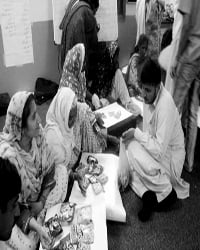 decent living,” Hurmat Bibi tells TNS.
 eradicate chronic poverty and empower women. But now, just about three years
into the programme, doubts are emerging over whether the BISP will actually
empower them and promote gender equality in the society. They pinpoint no
conditionality, irregularity in disbursement of cash, rate of inflation as
lacunas in the programme. Also, they fear this may breed a culture of
dependency among women. For, having a policy plan is one thing, we know,
getting it implemented and seeing the satisfactory results another.
eradicate chronic poverty and empower women. But now, just about three years
into the programme, doubts are emerging over whether the BISP will actually
empower them and promote gender equality in the society. They pinpoint no
conditionality, irregularity in disbursement of cash, rate of inflation as
lacunas in the programme. Also, they fear this may breed a culture of
dependency among women. For, having a policy plan is one thing, we know,
getting it implemented and seeing the satisfactory results another.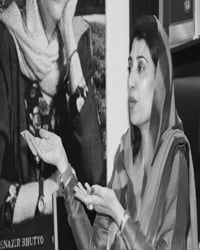 aiming to break the vicious circle of poverty. They include micro-financing
through Waseela-e-Haq, vocational training through Waseela-e-Rozgar and Life
and Health insurance through Waseela-e-Sehat. They will definitely help
improve the living standards of families belonging to the downtrodden
segments of society.
aiming to break the vicious circle of poverty. They include micro-financing
through Waseela-e-Haq, vocational training through Waseela-e-Rozgar and Life
and Health insurance through Waseela-e-Sehat. They will definitely help
improve the living standards of families belonging to the downtrodden
segments of society.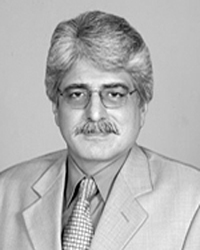 “The plan seems to have been hastily prepared and implemented so it has
enough room for refinement. To begin with, it should have been what we call
conditional financial support; that is, requiring certain conditions to be
fulfilled by the recipient to be eligible for the money, such as getting
their children vaccinated or enrolled in school, etc. Secondly, there are
reports of leakages in the entire exercise of distribution of money which
have to be plugged.”
“The plan seems to have been hastily prepared and implemented so it has
enough room for refinement. To begin with, it should have been what we call
conditional financial support; that is, requiring certain conditions to be
fulfilled by the recipient to be eligible for the money, such as getting
their children vaccinated or enrolled in school, etc. Secondly, there are
reports of leakages in the entire exercise of distribution of money which
have to be plugged.”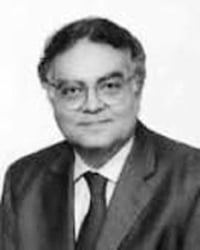 form a small part of the targeted population. So, what happens when you
expand the programme? You need more money and for that you will have to
borrow from the State Bank of Pakistan (SBP). With limited foreign aid for
the BISP, borrowing from the SBP is not an option either as the bank is
already printing Rs 3bn everyday. So, it is a question of programme’s
financial sustainability also,” he says, adding, “If you go ahead with
the programme, you are adding to inflation. And, it is like giving with the
one hand and taking away from the other.”
form a small part of the targeted population. So, what happens when you
expand the programme? You need more money and for that you will have to
borrow from the State Bank of Pakistan (SBP). With limited foreign aid for
the BISP, borrowing from the SBP is not an option either as the bank is
already printing Rs 3bn everyday. So, it is a question of programme’s
financial sustainability also,” he says, adding, “If you go ahead with
the programme, you are adding to inflation. And, it is like giving with the
one hand and taking away from the other.”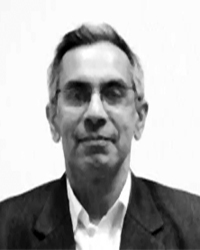 He
puts stress on transparency of the whole exercise, “The World Bank has
conducted a survey on poor households in Pakistan. That survey should be
used and cross-checked by a commission consisting of notables of the area or
a region. The Federal Bureau of Statistics (FBS) should also be of help but
in the form of an independent body.”
He
puts stress on transparency of the whole exercise, “The World Bank has
conducted a survey on poor households in Pakistan. That survey should be
used and cross-checked by a commission consisting of notables of the area or
a region. The Federal Bureau of Statistics (FBS) should also be of help but
in the form of an independent body.” constitutionally mandated and has a targeted audience,” he opines.