


|
|
|
|
 |
 |


|
A
crisis of PCB’s own making The
highs and lows of Pakistan’s series win
Phil
Mickelson: aUS Open away from all-time greatness
Blind date
for the cricket board
Pakistan’s
last-chance saloon
Kathmandu disaster
A crisis of PCB’s own making If the Board really wants to put its house in order then it will have to start from the grassroots as sweeping measures are needed to fix things at district and regional levels By Khalid Hussain To say that
Pakistan cricket is in a neck-deep crisis would be an understatement.
And to add that like many times in the past it is a crisis of Pakistan
cricket officialdom’s own making wouldn’t be off the mark. Pakistan cricket has
almost always been in some sort of crisis as periods when everything
went smoothly have been few and far between. But things were never as
bad as they have been for the last few years. In recent years,
international teams have stopped coming to Pakistan especially after a
tragic attack on Sri Lankan cricketers in Lahore that has made the
country a no-go zone for foreign players. Some of our cricketers have
been involved in what are counted among the sport’s biggest scandals
ranging from match-fixing and spot-fixing to doping and even forfeiting
of a Test match. Today, Pakistan
Cricket Board (PCB) is effectively headless while there is no chief
selector to appoint the various national teams for international
assignments. And the story goes on. But there seems to be
a silver lining. Following a detailed
judgement of the Islamabad High Court (IHC), it has become apparent that
PCB chiefs have no other option but to put their house in order. The
court order has struck the right chord as it demands much-needed
structural changes in the PCB set-up besides highlighting the various
issues confronting Pakistan cricket. However, the problem
is that the courts can only pass judgements. Their execution depends
largely on the people in power. Unfortunately, over the years people in
the corridors of power haven’t given Pakistan cricket the respect it
deserves. The PCB which was once
a trend-setting cricket board has been turned into an incompetent
organisation that seems incapable of protecting and safeguarding the
interests of Pakistan cricket both at home and abroad. The Board has, to
a great extent, become a one-man show as the chairman has been given too
many powers. And to make matters worse, all PCB chairmen starting from
Gen Tauqir Zia, who was appointed back in 1999 after the Musharraf coup,
have been political appointees. All of this can
change. What last week’s IHC judgement gives us is the opportunity to
fix a script that has gone horribly wrong. It’s not that the
IHC judgement tells us everything that is needed to done to save
Pakistan cricket. It does give guidelines on how to elect the right man
for the key post of PCB chairman. It also talks about how a selection
committee should look like. But this wouldn’t be enough if a through
surgery has to be done to root out the various maladies afflicting
Pakistan cricket. The spade work will
have to start from the very foundation of Pakistan cricket. The IHC
judgement calls for an ex-cricketer with the right credentials to take
charge of PCB as its chairman. That’s a good call. But unless the
various districts and regions all over the country are also headed by
ex-cricketers, having a chairman with the right sort of cricketing
background wouldn’t produce desired results. The only way we can
really move forward is when all stake-holders of Pakistan cricket, from
the newly-elected PCB chairman to office-bearers of the various
districts and regions, are on the same page. At the moment,
Pakistan’s domestic structure is in a shambles. Take for example the
case of Lahore region. It is the heart of Pakistan cricket. Lahore
region has three zones — East, West and North. These zones do not even
have any offices. To think that they will have proper office-bearers
with the right kind of credentials would be like living in a fool’s
paradise. If Lahore’s regional
cricket is in such a poor state then you can well imagine what things
would be like in the newly-formed regions like Larkana and and Dera
Murad Jamali. If the Board really
wants to put its house in order then it will have to start from the
grassroots as sweeping measures are needed to fix things at district and
regional levels. Just like the Board
needs qualified professionals with ample cricketing knowledge and
experience at its helm, the various regions also require chief
executives, who can run their affairs in the best possible manner. We
will have to make sure that every region gets a chief-executive with at
least first-class experience. That’s not all.
Concrete measures will have to be taken to make sure that the regions
are on the right track. Fresh elections need to be carried out in a fair
and transparent manner. In the past, there have been too many
malpractices which have produced disastrous results. The Board will have
to ensure that the regions perform their roles according to the
constitution. It is important that these steps are taken because the
districts and regions need to be in good shape because they have to
perform vital roles that include the task of reviving club cricket all
over the country. I must say that the
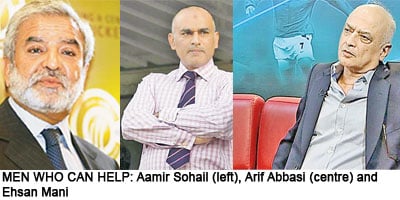
relevant authorities should garner the support of people like Arif
Abbasi, Ehsan Mani and Aamir Sohail. A former Pakistan captain, Aamir
once worked overtime to prepare a plan which if implemented has the
potential to bring revolutionary change in the state of Pakistan
cricket. Maybe its time that Sohail’s plan, which was once shelved by
former PCB chairman Ijaz Butt, sees the light of day. Khalid Hussain is
Editor Sports of The News, Karachi Khalid.hussain@thenews.com.pk
The
highs and lows of Pakistan’s series win Skipper
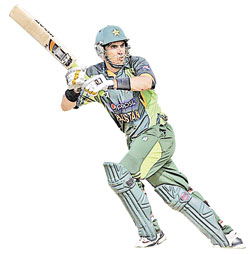
Misbah-ul-Haq’s yet another half-century in the fifth One-day
International (ODI) against West Indies guided Pakistan to a 3-1 series
triumph — their third successive away ODI series win. Undoubtedly, it was
Misbah, who anchored the innings throughout and without such solid
performance it would be difficult for Pakistan to clinch the series. Despite their win,
Pakistan’s batting once again faltered and highlighted the need of a
batting coach for future assignments. Shahid Afridi, who was
included in the squad after missing the Champions Trophy, marked his
comeback with a match-winning all-round performance in the first ODI,
smashing 76 off 55 balls and later taking seven wickets for just 12
runs. But in the remaining four matches he failed to repeat this
performance and could only manage 26 runs. Although Afridi’s
commitment is never in question, critics believe he does not play up to
his potential and inconsistency was the main reason behind Afridi’s
omission from the squad, especially for last month’s ICC Champions
Trophy. Opener Ahmed
Shehzad’s disappointing run with the bat continued in the series apart
from the final game in St Lucia. The selectors gave him a chance but he
once again failed to impress and apart from an inning of 64 runs in the
last ODI, managed only 55 runs in his first four outings. Umar Akmal, who was
brought back with an added responsibility to keep the wickets, justified
his selection and finished as the second highest run-getter for
Pakistan, scoring 175 runs with an average of 58.33. His performance behind
the stumps was also quite satisfactory — except for the crucial run
out he missed in the third ODI which allowed West Indies to tie the
match from a seemingly losing position. The management can afford the
luxury of playing an additional batsman or bowler if Umar Akmal can take
the role of a wicket-keeper batsman. Pakistan’s T20
captain Mohammad Hafeez, failed both with the bat and ball in the series
and scored only 105 runs at an average of just 21 with one fifty and
despite being economical with the ball he could not take a single
wicket. Asad Shafiq, the
youngster who many believe is the future of Pakistan cricket, failed to
live up to his potential and against an average bowling attack, scored
only 10 runs. However, the one fact that seems to be have contributed
towards Shafiq’s failure is the team management’s decision to axe
the batsman from the playing eleven every now and then. In the bowlers’
section, Shahid Afridi remained the highest wicket-taker for Pakistan
with 10 wickets at an average of just 13.50 followed by Mohammad Irfan
(9), Saeed Ajmal (8) and Junaid Khan (7) wickets. Fast bowlers Wahab
Riaz and Asad Ali were unimpressive and claimed only two wickets for 150
runs and one wicket for 93 runs respectively. khurrams87@yahoo.com Highest run-getters
for Pakistan in ODIs since Jan 2011 Batsman
Innings
Runs Average
Strike rate 100s/ 50s Misbah-ul-Haq
62 2265
50.33 69.13
0/ 20 Mohammad Hafeez
68 2051
32.04 75.21
5/ 10 Umar Akmal
43 1392
39.77 87.32
0/ 11 Younis Khan
42 1101
28.97 76.19
0/ 9 Nasir Jamshed
24 906
39.39 73.12
3/ 4 Shahid Afridi
44 872
21.26 125.64
0/ 5 Asad Shafiq
32 847
29.20 69.94
0/ 7 Imran Farhat
21 605
30.25 67.37
0/ 6 Kamran Akmal
27 591
22.73 76.95
0/ 3
Phil
Mickelson: aUS Open away from all-time greatness Despite being
43 years young, Phil Mickelson is in the form of his life without a
shadow of a doubt. His astounding comeback at Muirfield — quite
possibly the greatest achievement of his golfing career — meant that
he has done what he was never expected to do: master links golf. The
British Open triumph meant that Mickelson has now won three of the four
golfing majors, with only the US-Open remaining for the American to
become only the sixth golfer in the history of the sport to win a career
Grand Slam (winning each of the four majors at least once in their
career). And the intriguing twist in the tale is that, at the only major
he is yet to win, Mickelson has had a record six runners-up finishes. Five weeks ago,
Mickelson went into the final round of the US Open at Merion with a
one-shot lead and then went on to shoot a lacklustre 74, which meant
that he ended two shots behind Justin Rose. He was visibly distraught
after that but has come back resoundingly in a golfing realm that was
for long his Achilles’ heel. Back to back triumphs in the Scottish
Open and the British Open have rubber stamped the fact that as things
stand Mickelson is as fit as he’s ever been, as hungry as he’s ever
been and without a doubt as good a golfer as he has ever been. Mickelson has now won
five majors, has nine European Tour triumphs, and 42 PGA Tour victories
— ninth on the all-time list. He is currently a part of 15 golfers in
the history who have won three of the four golf majors. He is also third
in all-time runners up finishes at majors with eight — only Arnold
Palmer (10) and Jack Nicklaus (19) have more. Mickelson’s win on
Sunday solidifies his case of being one of the top 10 golfers of all
time if you consider the overall majors and PGA tour wins. However, if
he were to vanquish a US-Open title, not only would he penetrate the
list of top 10 golfers of all time he’d be pretty high up that list as
well as one of only six players to have won a career Grand Slam, (at
least) six majors and over 40 PGA tour wins. He’s already well
within the mix for all-time greatness, and he’s far from being done
yet. He might be in his 40s, but the way Mickelson’s mind functions,
he would consider himself as a veritable challenger for the major
trophies well in his 60s as well. Following his triumph
in the British Open Mickelson while discussing the potential career
Grand Slam said, “I’m a leg away. And it’s been a tough leg for
me! Those five players are the greats of the game. You look at them in a
different light. If I were able to ever win a US Open, and I’m very
hopeful that I will...” Mickelson never
completed that sentence. But maybe at Pinehurst — where he got his
first runners up spot at the US Open — his golf will complete the
aforementioned sentence. khulduneshahid@gmail.com
Blind date
for the cricket board How many of
you know the significance of this date in Pakistan’s cricket history?
Well, today — July 28 — is a day that is no less significant to
Pakistan cricket than our Independence Day is to Pakistan as a whole or
the day this country became a full member of the United Nations. Like many landmark
events that we don’t celebrate anymore or even write about, I suppose
this is one of the most important that we ignore when it comes to our
cricket history. Sad that even Pakistan Cricket Board (PCB) ignores it.
I don’t remember it ever being celebrated or even recognised. Reason being that
without reading this today they probably wouldn’t be aware of it.
There could have been a morning rush by them to make something out of
the day after reading this to show they were fully aware, but being a
Sunday today, they won’t know anything about it till next week when
clippings of all articles reach them for filing. It is said that a
society is known by the manner in which they bury their dead. I believe
that when it comes to Pakistan cricket we should be known by how we
remember the past. It will show what importance PCB, and for that matter
all cricket associations affiliated with it, gives to our history. Even a small town in
America has parades for significant days of their town’s history.
Perhaps when the focus is on materialistic things and power grab and how
to get famous in 90 days who cares? You see, on 28th July
all cricket lovers should rejoice on the 60th anniversary of Pakistan
being granted full membership of the ICC then called Imperial Cricket
Council. This was in the year 1953. Interestingly, exactly on this date
a year earlier Pakistan had been granted Test status by the ICC. But as Martin Luther
King Jr said “I have a dream”, and I’m sure that any passionate
lover of Pakistan cricket like myself would have definitely come up with
wonderfully exciting ways to celebrate this. I had thought of
writing to the PCB but knowing the commitment and the mood, it would
have been useless. A country in which our leaders give a token
consideration to our Independence Day, some standing like zombies waving
small flags with the children, it would have actually belittled the
occasion. I remember when the
late Gul Hameed Bhatti Sb, (former Group Sports Editor of The News) and
Abid Ali Kazi had written much in advance to the Pakistan Cricket Board
(then called BCCP) that the 1000th Test was to be played on Pakistani
soil. In a period where
matches could be shifted on a few days notice because there was no
satellite coverage that would have brought in logistical nightmares, the
BCCP simply scheduled it in the city of Hyderabad, though Gaddafi
Stadium would have been the right place. The match was between Pakistan
and New Zealand, who had played an earlier Test at Lahore Responding to the
information the BCCP and the local administration did put up a ceremony.
There were some wedding band in disheveled uniform with their trumpets
and oversize drums, and some cultural dances which was as much organized
and choreographed as your little girl’s birthday games in the drawing
room. At the time Pakistan
was among the top respected cricket-playing nations of the world, with
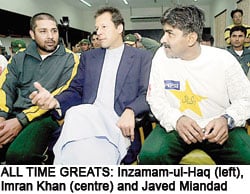
Imran Khan and Javed Miandad at their peak and administrators like Lt
Gen (Retd) Ghulam Safdar Butt who was the chairman of BCCP had a
profound voice in ICC. We really should
celebrate July 28 every year in a manner befitting the occasion. It
would be great if the PCB arranges a parade of sorts inviting all our
international cricketers to mark the occasion; maybe even play a game
between the Veterans and the current lot that are in Pakistan. Perhaps the actual
time of the announcement in 1953 can be located and we can sing a
cricket anthem put together for the occasion. Local cricketers can
gather on the main grounds of their respective cities; speeches made in
honour of those who represented their city or district or country,
cricket stories told by the former cricketers to the younger lot. There
can be a focus on how proud we should be of our cricket past. At a time when we are
ostracized from holding home matches, and are crying out for recognition
while messing up in ICC meetings, such patriotism in our cricket will
show the world that we are proud of our cricket. It will revive the
spirit among the younger Pakistanis. What about the budget,
the wily in PCB will ask. My answer? Reduce foreign travelling; fire the
courtesans, get people to come on their own cars, lower TA/DA to US$50
from the US$400-800 for top management and top management travels
economy. Oh and work with salary commensurate with the position rather
than the name tag. The vibes would travel
to the world. International teams would still not be allowed to tour the
country of course, but we could at least show the world we have a great
past and we are proud of it, whether you come to play here or not.
Sadly, we have painted
ourselves in a corner with our own brush. Lack of accountability allows
successive chairman with no credentials for the position, to rule at
their whim making a mockery of the rules of conduct. We have had as
chairman generals, Bureaucrats, doctors, ex-crickters, bankers and now a
journalist, anyone except a professionally trained manager with a
management background, proven experience and degree. Of course it is
also because no professional manager would accept the job ob the current
terms, where he can be chucked out by the stroke of a pen from the
President/PM. Also accepting a job description that primarily implies
that he should promptly follow the diktats of the bosses/outside
influencers and “tell the buggers you’re the boss”.
At least there were
some checks and balances up to the sixties and some method to the
madness until the end of the nineties. Since then it’s been nothing
short of King Kong thumping his chest on top of Empire State Building.
So we celebrate the
60th anniversary of our full membership to ICC today with no country
willing to come and play on our soil, without a chairman who by
operational definition effectively has CEO powers. If at all we have one
who has no idea how to interpret his role according to the PCB
constitution and has to be reined in from playing Acting Chairman and
reminded he is just the caretaker to mark the attendance and pay the
bills. We have no chief selector and as per rules cannot approve a
Pakistani team to tour Zimbabwe. If we don’t we run the risk of being
fined by ICC not to mention becoming the laughing stock of the cricket
world if it has not already pulled a stomach muscle from the
hilariousness of our situation over the last one year. And we have a team
where the batsmen play like they’re swatting flies or groping in the
dark and all in responsible position admit openly that we have no talent
left to pick from. Come to think of it,
PCB is celebrating its 60th anniversary of ICC membership the way it
deserves to, with its neck in the sand. Sohaib121&gmail.com
Pakistan’s
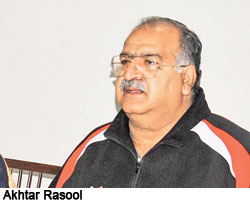
last-chance saloon Akhtar
Rasool’s decision to kick former captain Shakeel Abbasi out of the
Asia Cup training camp in Lahore last Wednesday shows the level of
desperation in the Pakistani dugout. But the four-time world champions,
who are in clear and present danger of missing out on a spot for World
Cup 2014, need much more than desperation to bring themselves to a
position from where they can take a realistic shot at winning the Asia
Cup to be held in Ipoh, Malaysia. As head coach of an
under-achieving Pakistani team, Akhtar Rasool should be well aware of
the fact that his charges lack the sort of consistency that is required
by a team to win even a relatively smaller, continental event like the
Asia Cup. The former Olympian together with fellow team officials that
include newly-appointed coach Tahir Zaman should be focusing on a
variety of things that include the team’s form and fitness as well as
the various game plans for the different matches of the Asia Cup. There is little doubt
that Asia Cup is an all-important assignment for Pakistan just like it
is for their old rivals India and Korea. The Asian trio is on the brink
of what would be an embarrassing ouster from the World Cup. All three
Asian giants failed to win World Cup berths after flopping in the two
semi-finals of Hockey World League, which served as a qualifying event
for World Cup 2014. Now only one of them can make the cut for next
year’s World Cup in Holland. There is even the
possibility of all three of them missing out on the quadrennial
spectacle because fast-improving teams like hosts Malaysia and Japan are
also fancying their chances of winning the Asia Cup which begins from
August 24. The Asia Cup champions would be the only team from the
continent at World Cup 2014. Meanwhile, Pakistan
haven’t helped their cause by stirring up the Shakeel Abbasi
controversy. The seasoned striker is one of the most accomplished
players in this current Pakistani line-up. Akhtar and Tahir need players
like Abbasi to help save Pakistan from the ignominy of missing the cut
for World Cup an event which they once dominated in the seventies and
also won in the eighties and nineties. If a player wants to
fast during a training camp then it is his individual decision. The team
management should respect it. In the meantime, it is also the players’
responsibility to be at their best in an important training exercise
like the ongoing preparatory camp for the Asia Cup. If the team
management’s claim that Abbasi was unable to give his hundred percent
in the training camp because he was fasting is right then the player is
at fault. In that case, he should have followed the example of his
teammates who have all agreed to fast once the Asia Cup is over. The Abbasi issue
should be resolved as soon as possible. Pakistan have more important
problems to tackle ahead of their forthcoming trip to Malaysia. It was on their last
tour to Malaysia that they flopped miserably in Hockey World League
semi-finals, finishing seventh in the eight-nation contest. It was quite
clear that Pakistan were lagging behind most of the other teams in
almost all areas of the game. Their defence conceded too many goals
while their attack failed to capitalise on many a scoring opportunities.
Pakistan have a big batch of team officials but they were unable to come
out with winning strategies during the event. When Pakistan returned
home, the axe fell on Hanif Khan but the rest of the team management
survived which was quite surprising. It wasn’t unexpected when Hanif
struck back at Pakistan Hockey Federation (PHF), stressing that he was
made a scapegoat following the debacle. With just a few weeks
to go before the Asia Cup, maybe it’s not the right time to discuss
whether misfiring officials like Akhtar Rasool deserve to remain a part
of the team management. But one must say that Asia Cup should be
Akhtar’s last chance to prove that his presence is beneficial for the
team. And that can only happen if Pakistan go on to win the Asia Cup.
Otherwise, Akhtar should be shown the door. Pakistan need
competent coaches and managers, who can put the team back on track.
Otherwise there is little hope for Pakistan hockey. bilalsports86@yahoo.com
Kathmandu disaster Looking to
defend its crown, Pakistan’s Under-16 football team flopped in the
second edition of the Under-16 SAFF Championship being held in Kathmandu,
failing to even reach the semi-finals of the event. Pakistan colts’
brief voyage ended on a disappointing note when they went 0-3 down
against hosts Nepal in their do-or-die Group A game on Wednesday.
Pakistan, who were held to a goalless draw by both Afghanistan and
minnows Bhutan in their initial two matches, ended third in the group
with just two points. The Green-shirts, who had lifted inaugural title
in 2011 also in Kathmandu, did not score even a single goal in the
entire event. They conceded three goals. Nepal qualified from
the pool for the semi-finals with seven points while Afghanistan did so
as group runners-up with five points. It was expected that Pakistan
would at least qualify for the last four but the way their voyage was
cut short raised many eyebrows. Their performance,
particularly against Bhutan, is unpardonable as the underdogs had been
thrashed by Nepal 7-0 in their opener. Some of the matches played in
rain and Nepal, who were used to play in the wet conditions, got full
benefit from it. Pakistan played their last game against Nepal under a
heavy downpour that might affected their performance. But it was the
responsibility of the management to prepare the lot for such conditions.
The below-par performance of the future stars exposed the policies of
the Pakistan Football Federation (PFF) to promote the game at the
grassroots level. In the Pakistani team
that failed to live up to the expectations in Nepal, as many as 11
players had already got international exposure at the Under-13 and
Under-14 level. After a research, I have concluded that the team was not
properly prepared. Being defending champions there was a need to prepare
a much better side but the authorities failed to work properly on the
lot that faced premature exit from the seven-nation event. Only a 17-day camp was
held in Lahore to train for the Kathmandu assignment. There should have
been at least a month-long training camp as it is not always easy to gel
the raw youngsters for any international assignment in such a short
time. Look at the non-serious attitude of the authorities that the
team’s assistant coach Hasan Baloch joined the squad only four or five
days before its departure for Kathmandu. Being secretary of the Sindh
Football Association (SFA) Hasan was busy with the Asian Football
Confederation’s (AFC) delegation which was in Karachi during those
days to inspect the venues which would be hosting the AFC Under-16
Championship Qualifiers in September. The PFF should have
made Hasan available for national duty instead of keeping him away from
the squad during the team’s testing training phase. Soon after announcing
probables for the camp after the National Under-16 Championship in
Abbottabad a former PFF official Col Mujahid told me that proper
selection for the Nepal’s assignment had not been made and the team
would not be able to perform. And his prediction was right on the money. Before going to Nepal,
head coach Sajjad Mehmood had said that the preparation was good and the
team would perform but his body language was not indicting any such
thing and from his tone it sounded that the team needed much better
preparation for the tough assignment. The PFF should learn
from a small country like Bhutan which is investing a lot on the
grassroots level and even they have hired a Japanese coach for the
purpose. Bhutan looked much better in Nepal and the way they held
Pakistan and offered resistance against Afghanistan was remarkable.
There is a lot of talent in Pakistan but there is a need of a positive
approach to groom and polish it. There is a need to rope in a foreign
coach, with solid credentials, for at least five years to work on the
colts. Home grown coaches would not be able to bring the sort of
improvement needed by Pakistani youngsters to excel internationally. Unfortunately, the PFF
also did not use Pakistan’s Serbian coach Zavisa Milosavljevic for
preparing the youth sides in spite of investing a lot on him during the
last couple of years. He has been hired for the senior team but during
his off-time his services could have been taken for the age-group
outfits. The PFF needs a
national academy in Lahore where top youngsters could be kept and given
training on permanent basis. The PFF should also
keep a vigilant eye on the selection process for the junior lots. The
AID-27 coaches usually ignore each other’s players for national duties
because of personal grudges which is a serious violation of the ethics
of selection. The same Under-16 team
would now appear in September’s AFC Under-16 Championship Qualifiers
Group E at the Peoples Stadium in Karachi. Iran, United Arab Emirates (UAE)
and Sri Lanka are the other teams in the group. And if the Green-shirts
were not properly prepared the result would be more agonising in their
own backyard. For preparing the
colts for this continental assignment, the PFF may also take the
services of the experienced Tariq Lutfi if he agrees to do so. Former
international striker Ali Nawaz Baloch could also be brought in as a
coaching consultant for the purpose. The question is whether the PFF
would be able to see its team in the 2022 World Cup which they have
already planned for? My straight reply is “not, maybe never”. The
PFF should do justice with its job and should adopt a professional
approach. 73.alam@gmail.com
|
|