


|
|
|
|
 |
 |


|
Could it be Pakistan’s turn? The purpose of warm-ups
The fiercest battle
Obituary
The POA-PSB tangle
The cricket saviours
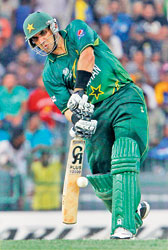
Could it be Pakistan’s turn? The team return to the country of their previous scandals, but things look rosier now as Pakistan aim to win the Champions Trophy for the first time By Saad Shafqat Cleansed of
corruption and with their image appreciably rehabilitated if not fully
restored, Pakistan once again find themselves key participants in an
English summer. Their last two visits to these parts, in 2006 and 2010,
were marred by damaging scandals that bookended an era so nightmarish
that Pakistan supporters would not wish it upon their opponents.
Thankfully the Oval forfeit is now distant history, and the spot-fixing
mess a receding blemish in the rear-view mirror. The last three
years in Pakistan cricket have witnessed none of the crippling
controversies from before that period, which has imparted an air of
relative stability and calm. Misbah-ul-Haq’s steadying influence as
captain and senior figure, which began in the immediate wake of the
spot-fixing crisis, has served as both balm and glue in this revival.
During this period Pakistan have compiled a string of creditable
performances, including a comprehensive series win over Sri Lanka,
semi-final finishes in the World Cup and the World Twenty20, an ODI
series victory in India, and — the biggest scalp — whitewashing
England in a Test rubber in the UAE. There has been no
international cricket in Pakistani stadiums since March 2009,
effectively rendering the team a bunch of nomads. Yet, if anything, this
continuing adversity has motivated and sustained the boys. With pots
boiling over elsewhere in the cricket world, the fate of other teams is
also playing its part in making Pakistan cricket appear healthier and
sturdier by comparison. For the first time in a long while, Pakistan
don’t look the most troubled cricketing nation around. Even the bigger
picture is beginning to look favourable. Islamabad has finally enjoyed a
peaceful civilian transition of elected governments — the first such
occasion in Pakistan’s chequered 65-year political history. An
energetic wave of optimism and hope is sweeping the country. Mian Nawaz
Sharif, the prime minister-elect, has promised economic revival, energy
reform, improved law and order, and peaceful regional relations,
including with the all-important neighbor, India. He has not yet turned
his attention to cricket, but Sharif is a well-known aficionado of the
game and it won’t be long before he does. Without him lifting a finger
in the PCB’s direction, his influence is already beginning to tell.
Last week the Islamabad High Court suspended Zaka Ashraf from
chairmanship of the PCB on grounds of a flawed ascension to the post.
This would have been unthinkable prior to Sharif’s election. All these factors have
whetted the appetite of Pakistani fans for the Champions Trophy. Of the
three global competitions in which all the frontline teams participate,
this is the only one that Pakistan have not won. Coming into this
tournament, Pakistan are ranked sixth in the ICC ODI rankings, which
feels about right, not just in terms of where Pakistan stand in
comparison with the other teams but also as a measure of their prospects
for the title. It does not help that Pakistan are sitting in the tougher
of the two groups, alongside India, South Africa and West Indies. Still,
the tournament is a short one and the format inherently unpredictable.
As with previous editions, this one too is really anybody’s trophy.
You only need four victories — two within the group, plus the
semi-final and final — to secure the top spot. Twice before, the
Champions Trophy has been claimed by outfits that started as dark horses
(New Zealand in 2000 and West Indies in 2004). English weather will be
an added complication, since a rained-out match will mean split points. Pakistan’s greatest
challenge will be for their batsmen to cope with the extravagant
sideways movement that is a staple of English conditions. In the absence
of Younis Khan (discarded for this trip because of dwindling ODI form),
the anchor’s role falls to Misbah by default. Asad Shafiq, the most
technically correct batsman in the side, who recently notched up a
highly competent century in Cape Town, will also be expected to step up.
Beyond these two, the batting resources appear threadbare, particularly
when compared to the riches that Pakistan’s group mates are blessed
with. Mohammad Hafeez, Nasir Jamshed, and Imran Farhat populate
Pakistan’s top order, but in stature and standing they are nowhere
near the likes of Virat Kohli, Hashim Amla or Chris Gayle. Inevitably the major
burden of expectations will be shouldered by the bowling attack. Junaid
Khan, Mohammad Irfan and Wahab Riaz are all capable of impressive pace,
lift and movement. They comprise a relentless left-arm battery that
could torment any side. They will be complemented — potentially to
devastating effect — by Saeed Ajmal and Hafeez, currently ranked the
second and fourth-best ODI bowlers in the world. Waiting in the margins
are the rookie seamers Asad Ali and Ehsan Adil, and the experienced
Abdur Rehman with his nettlesome left-arm orthodox. Pakistan’s
cricketers have arrived in the UK during what appears to be an
increasingly difficult time for British society. A gruesome murder by a
religious extremist on a busy London street in broad daylight has
ignited widespread shock and anger, some of which is inevitably
targeting the Pakistani immigrant community. Mosques have been
vandalised and newspapers are speaking of Britain bubbling with
anti-Muslim rage. As context, these developments are hard to avoid.
These thorny circumstances are bound to make Pakistan’s UK-based
supporters all the more desperate for success, sportsmanship, and clean
behaviour from the lads. It is impossible to say if the extra load will
enhance or compromise Pakistan’s chances, but there is no denying it
is yet another variable in the mix. The terminal status of
this year’s Champions Trophy adds to the ongoing debate about ODI
cricket as a viable format. Yet this game has a funny way of reminding
us of its uniquely mesmerising nature. With several teams more or less
evenly matched, it is virtually certain that we will witness a few
closely fought firecracker contests in the coming days. That could well
silence the detractors of the ODI format, at least for a good while. Who
knows, even the decision to discontinue the Champions Trophy may be
withdrawn, and the competition may well receive a new lease of life. —Cricinfo caption Misbah-ul-Haq
After watching
the warm-up matches of the ICC Champions Trophy, many cricket followers
have asked what exactly the “warm-up games” are. They have asked why
time, effort and money are spent on them instead of going straight into
the battles proper, which will be more competitive and as such thrilling
to watch. In order to attempt an
answer to this question a bit of superficial research was required and
the following may be of some assistance. An exhibition game is a
sporting event in which there is no competitive value of any significant
kind to any competitor (such as tournament or season rankings, or prize
money). The games can be held
between separate teams or between parts of the same team. A synonym is
preparation match. A related concept is a warm-up match, where teams who
will play in a tournament with one another first play in unrelated
matches in order to select players for the tournament and to familiarise
themselves with the playing fields. This definition,
though not all encompassing, gives us a fairly good idea that warm-up
matches are played prior to teams taking part in a tournament (they
would be useless anyway if played post tournament!) The purpose for this
exercise is quite clear. It is to select players who will participate in
the real tourney and to have an assessment of their forms and fitness,
to acclimatise and familiarise themselves with the conditions, and also
to gauge the strengths and weaknesses of the other participants. This
will ensure that the teams know each other better and also know the
conditions and peculiarities and behaviour of the pitches and grounds. Warm-up matches are
fairly new to cricket. By this I mean they are not as old as in other
games and it may not be preposterous to propose that the idea was
borrowed from games like soccer, rugby, basketball, ice hockey and
baseball. A few examples from
the world of football (soccer) will illustrate. Before the Football
World Cup 2010 warm-up matches were played between Libya and Uganda;
Nigeria and Argentina; South Africa and Thailand, besides others. The malaise of match-
and spot-fixing also raised its ugly head in soccer as well as other
sports. FIFA is known to have accused Nigeria of match-fixing, and South
African football authorities are said to have recognised that there was
match-fixing in some of their games. The solid BCCI has been badly
bruised and shaken if not stirred to its very foundations because of the
spot-fixing in the IPL with several arrests and then a few of the
detainees being granted bail. The Secretary and the
Treasurer both resigned (correct step to take) while the President was
literally pushed out at least until the inquiry was completed. He has been replaced
by Jagmohan Dalmiya, one of the most effective administrators of
cricket, former President of ICC and BCCI, and now President Cricket
Association of Bengal (CAB). He is a man of proven abilities. It was he,
who after continuous persuasions by the PCB in 2002-3 finally agreed to
and did send an Indian team to Pakistan in 2005. If anyone can come
anywhere near to clearing up the horrible mess made by the offenders, it
is Dalmiya. The caravan must move
on. And that it is doing although there are a few hiccups in the shape
of new developments daily. While IPL is licking
its wounds and trying to make its phoenix rise from the ashes, the
Bangladeshis have also confessed to spot-fixing in Bangladesh Premier
League. Sreesanth, Chandila, Chavan and Babulal Yadav are small fries
compared to Ashraful, a former Bangladesh captain who was banned a few
days ago for being involved in BPL spot fixing. Earlier a BD Umpire
Nadir Shah had been banned for corruption. Where is all this leading?
And is there no way to stop it except, I suppose, by suspending cricket
itself. What has come out so
far is only a miniscule part of the iceberg. What is to follow, I
shudder to contemplate. The results of the
warm-up matches (which by the way do not qualify as ODIs), if they are
anything to go by, and the Natwest between England and New Zealand, are
showing trends that may cause tsunamian upsets in the Champions Trophy
2013. New Zealand, now
ranked No 7 in the ICC Rankings, have soundly walloped the No 4 England.
Martin Guptill has suddenly burst into form with back-to-back centuries.
The Kiwi pace bowlers have come into their own and the team fielded
better than ever before. Top ranked South
Africa were decimated by an efficient Pakistan; while the Sri Lankans
lost to India and the West Indies, and must have been grateful for a
washed out encounter against Pakistan. Though Australia won
against West Indies, they were heavily trounced by India for whom both
Kohli and Dinesh Kartik seem to have struck tremendous form. The Pakistan pace
bowlers are doing extremely well. If 15 days of “coaching and
counselling” for a meagre (comparatively speaking) Rs1.5 million by
Wasim Akram can transform them into such lethal weapons (although real
test still to come) why not adopt this policy. What has the chief coach
done (he at least is a good model for TV commercials), and what about
the bowling coach completely overshadowed by Wasim. And who is Trent
Woodhill? And what is his claim to fame besides “assisting” the
Delhiwallas in IPL getting the bottom berth and bagging the wooden
spoon. It makes the mind boggle. Pakistan’s wise decision to travel in
advance to UK to play two matches each against Scotland and Ireland
should serve them well. The warm-up games have
their down side. Key players may be injured. Broad and Finn are already
carrying injuries from Tests. Sans the injured
Pietersen the England batting appeared brittle and flaky. Clarke’s
back trouble has rekindled again. This leads us to the question: is
there a burn out? Should not the ICC regulate the number of fixtures
played by teams in a year? What can it do with the explosion of Leagues
and the connected gambling? All this buzz about
the IPL fiasco and the Champions Trophy in England and Wales should
prove beneficial for PCB who have been given some respite to put their
shambled house in order and make some amends. The Chairman is suspended
and the other senior officials are mysteriously missing in action. They
left the simple and nervous former Pakistan wicket keeping genius,
although his locus standi with the Board is nebulous, to address the
Media in the aftermath of the court orders. I wonder what happened to
the Legal Advisors, COO, DG, the CFO, the Media Head, or the Directors
of International and Domestic cricket. It is time we came out openly,
frankly and boldly. Nothing is gained by shying away. Times have
changed, hopefully, for the better. Please work on a proper constitution
for the PCB and fair and transparent elections, and get personnel to
manage the affairs professionally. I leave you with some
words of Timothy May who has just stepped down as CEO of FICA: “Yet
cricket increasingly seems to be pushing aside the principles of
transparency, accountability, independence, and upholding the best
interests of the global game, in favour of a system that appears to
operate through threats, intimidation and backroom deals...” What a
sad state of affairs. ICC take note. chishty.mujahid@yahoo.co.uk caption By Chishty Mujahid
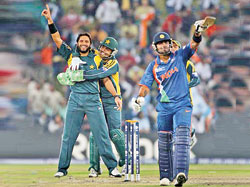
The fiercest
battle Cricket is by
far the most popular sport in the sub-continent. No other form of
entertainment creates as much excitement and enthusiasm in this part of
the world as cricket does. This excitement reaches its peak when there
is a match between Pakistan and India. People of both countries take it
as a war even if it is only a round match of a tournament. The expectations of
the people put extra pressure on both sides. Both sides have always had
huge talent, but more often than not it is more a battle of nerves than
talent. The encounter between
the two sides in the Champions Trophy on June 15 is going to be a clash
between Pakistan’s formidable bowling and India’s intimidating
batting. Records favour
Pakistan in Champions Trophy as they have never lost to India in this
tournament. On the other hand,
Pakistan and India have met four times in World Cups from 1992 to 2011
and India have always won. In the inaugural Twenty20 World Cup in 2007,
Pakistan lost to India in the final. Pakistan have been
part of ICC Champions Trophy since its launch in 1998. But till date,
the Green-shirts have failed to clinch even a single championship title.
The first encounter
between the arch-rivals came in the fourth edition of the Champions
Trophy on 14th September 2004 in England where under the leadership of
Inzama-ul-Haq Pakistan beat India by 3 wickets. Pakistan bowled out
India for 200 in the final over. Only Rahul Dravid (67) and Ajit Agarkar
(41) played well against the disciplined Pakistan bowling. Rana Naveed
ul Hassan (4-25) and Shoaib Akhtar (4-36) were the main destroyers. Chasing the modest
total of 201, Pakistan slipped to 27-3 in the 11th over but Inzamam (41)
and Yousuf (81 not out), the most dependable duo of Pakistan batting at
that time, made 75 for the fourth wicket and guided Pakistan to a
three-wicket victory in the last over. Mohammad Yousuf (then Youhana)
was declared man-of-the-match. The next
Pakistan-India clash came in the last Champions Trophy in 2009 in South
Africa when Pakistan won more convincingly, by 54 runs, and once again
Mohammad Yousuf played a vital role. Batting first,
Pakistan posted a good total of 302-9. After 65-3 in the 15th over,
Shoaib Malik (128) and Mohammad Yousuf (87) made 206 runs in just 30
overs. Ashish Nehra was the leading wicket-taker with 4-55. Chasing a tough target
against Pakistan’s strong bowling, India were bowled out for 248 in
the 45th over. Rahul Dravid (76), Gautam Gambhir (57) and Suresh Raina
(46) provided some resistance. Shoaib Malik for his
excellent batting got the man-of-the-match award. This time, Pakistan
and India will meet at Edgbaston, Birmingham. The excitement the match
has created can be judged from the fact that the tickets were sold out
in just 30 minutes and thousands of fans had to go back disappointed. Pakistan are without
the services of their most experienced fast bowler, Umar Gul (injured),
and all-rounder Shahid Afridi (dropped). India have left out
Sachin Tendulkar, Yuvraj Singh, Virender Sehwag and Harbhajan Singh. It
will be the first time in this Champion-ship’s history when India will
enter the field without Sachin. Batting has always
remained a worrying factor for Pakistan team, especially on bouncy and
seaming tracks like in Australia, England or South Africa. Batsmen get
out mostly behind the stumps or in the slips when they try to play
outside the off stump. Pakistan mostly depend
on their bowling that showed its strength in the warm-up game against
South Africa. But the batting line,
comprising experienced Mohammad Hafeez, Imran Farhat, Misbah-ul-Haq,
Shoaib Malik and Kamran Akmal, should complement the efforts of the
bowling department. khurrams87@yahoo
Obituary Last Sunday,
Pakistan golf lost a man who did a lot for the sport in this country,
both as a player and as an administrator. Azeem Khan was one of the
pioneers of golf in Pakistan. He served as the president of Pakistan
Golf Federation then known as Pakistan Golf Union. He was an eminent
mechanical engineer by profession but his passion was sports. As a young
boy, his first love was hockey, once the most popular sport in the
sub-continent. The Lucknow-born Azeem Khan actively played other games
including cricket, tennis and table tennis before finally finding the
love of his life — golf. Azeem Khan had the
honour of representing Pakistan on four occasions during an illustrious
golfing career. He captained Pakistan at Kirlosker Trophy besides
featuring in the Ceylon Championship in Colombo. Two of his sons —
Khurram and Azam — followed in his golfing footsteps and are good
players themselves. His death brought back
memories of our last meeting that took place on a pleasant afternoon at
his residence in Karachi. A soft-spoken gentleman with a flair for art,
Azeem Khan showed me some of his prized collections including a few done
especially for him by Sadequain. But soon, the conversation shifted to
golf. “It was in 1960 when
I first played golf. We used to live in front of a golf course in Lahore
at that time. Initially I hit the ball like a hockey player but soon
developed a skill for golf and haven’t played anything else after
that,” he told me. “In those days, golf
wasn’t very organised. A body called the Pakistan Golf Union looked
after the sport. Since I was completely hooked on to golf, I started
taking an active interest in developing the course in Lahore. With the
help of General Wasiuddin, we turned the browns into greens. “Personally, I made
fast progress and my handicap was down to 5 in no time. Later I became
the president of the Golf Union and tried to lift the sport as much as
possible. “Then I went
overseas and my focus was mostly on my profession. I also worked
extensively in Pakistan and today there is not a river here where I
didn’t build a bridge on. “Later I returned
home and helped form the Sindh Golf Association. We also established an
academy here at the Karachi Golf Club. “I still remember
that there was this huge demand to turn KGC’s chocolate into green.
But when we started the job, people would laugh at us. However, we did
finish the job and now KGC has one of the best courses in Pakistan. “There was a time
when there used to be snakes in the bushes on the brown course. Even now
there is a lot of wild life all over the KGC course which is one of my
favourite things about it. “I think the club
should concentrate on improving the golfing infrastructure. It should
take professional help where needed. Our senior members should unite to
lift the golf course. They should do more.” Azeem Khan used to
count Farooq Rehmatullah, Mufti Hashim, General Musa, Masud Ahmed and
Aslam R Khan among his favourite golfers while his top rivals were Sana
Qureshi, Khalid Rafi, Asad Khawaja and Mian Farid. Towards the end of the
interview, I asked him to narrate details of some of his fondest
memories as a golfer. He replied: “One
fine day while playing in Lahore, I scored a real ‘birdie’. Actually
I killed a bird with my drive. They have preserved the unfortunate bird
at the club there. Also, there was this exciting match in Lahore with
Chaudhry Nasrullah as my partner. We were up against Khalid Saigol and
his brother and were tied till the last hole. I finally made a long,
sloping putt and the match was won.” And when asked about
the one thing that he regrets the most, Azeem Khan, who had broken his
arm in a freak accident at his residence, said: “I miss my golf.
It’s my life. I just want my arm to heal so that I can go back to the
course.” Khalid Hussain is
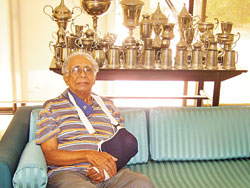
Editor Sports of The News, Karachi Khalid.hussain@thenews.com.pk caption Azeem Khan
The POA-PSB
tangle The conflict
in Pakistan’s sports is pushing the country towards suspension by the
International Olympic Committee (IOC). The world sports governing body,
the IOC, issued a warning of suspension during a meeting of its
Executive Board at St Petersburg a few days ago. The IOC said if the
Pakistan Olympic Association’s (POA) operations were obstructed
anymore or the elections were held outside the POA Pakistan would be
suspended. The issue became more
complicated when the Interim Committee announced a few days ago that it
was going to hold the POA elections on July 5. The basic purpose
behind the formation of the committee was to hold POA elections. The Senate Standing
Committee on Inter-Provincial Coordination also recommended on May 24 in
its meeting in the federal capital that the elections of the POA should
be held within 60 days. The endorsement of the
national sports policy by the Senate Standing Committee on IPC added to
the courage of the government to go for POA elections. The Interim Committee,
which has been recognised by the Ministry of the Inter-Provincial
Coordination (IPC), is also going to hold the 32nd National Games in
Islamabad from June 28 to July 4. The Interim Committee,
which has been declared an illegal body by the IOC, dramatically banned
POA President Lt Gen (retd) Arif Hasan and his secretary Khalid Mehmood
for life. Meanwhile, the trend
of forming parallel bodies is intensifying. The most recent case is that
of the removal of the Pakistan Boxing Federation (PBF) President Doda
Bhutto and secretary Iqbal Hussain by Akram Khan group. The elections of Doda
group have been endorsed by AIBA, the world boxing governing body. The IOC, which does
not tolerate government’s interference in the affairs of its
affiliated bodies, is being regularly informed by the POA about the new
developments. Arif Hasan wrote a
letter to the IOC on May 26, informing the world body of what happened
in the Senate Standing Committee’s meeting. “We would like to
apprise you of the latest situation, as it now prevails,” he said in
the letter. “The Senate Standing Committee of the IPC Ministry called
a meeting on May 24, 2013, and the agenda was given as under. “1) The detailed
briefing and discussion on the working and performance of the Pakistan
Sports Board (PSB). 2) Detailed briefing and discussion on the ongoing
dispute between Ministry of IPC and the POA regarding implementation of
sports policy and expected ban on Pakistan by International Olympic
Committee.” During the meeting the
Ministry of the IPC claimed that the POA became non-existent as the
Lahore High Court declared the elections of the office-bearers except
the president POA as illegal, wrote Arif Hasan. He said he highlighted
that the matter was sub judice as they had appealed to the Supreme
Court, but this was ignored. “The President, according to them, also
became non-existent as the tenure restriction was applied on him through
the sports policy, despite the fact that it was pointed out by me
that... para 6 of the Supreme Court’s decision clearly stated that
this is only applicable to those who desire to be affiliated to PSB. “POA, they were
informed, had no such desire and that this had been conveyed to the PSB
in writing also. “They stated that
the POA was a government body (quoting the decision of the Lahore High
Court) as it performed public functions and as such the policy was
applicable on them. “They falsely stated
that the general council of POA met and formed an interim committee.
Subsequently when pointed out by me that no such general council was
called it transpired that a few individuals got together calling
themselves with general council of POA. The PSB recognised this
committee as the body representing POA. “When I mentioned
the letter of the IOC/OCA, the secretary of IPC said he has already sent
a reply to all concerned that the policy would be implemented. “Now, it was my
turn... I started by explaining the composition and the general
organisation of the Olympic Movement... I explained to them (amid a lot
of interruptions and heated arguments) what the Olympic Charter was all
about and how out of 204 member countries, 203 members (less Pakistan),
are abiding by the Olympic Charter and that even India had relented
recently... I also covered the resolution passed during 2nd World
Olympic Sports Convention, Moscow on April 17, 2012 (as part of ANOC’s
meeting) wherein the Sports Ministers or their representatives were
present. “I then clarified a
lot of misperceptions and misinterpretations of the various judgments of
the courts. It was also highlighted that PSB itself had submitted in
writing to the Lahore High Court that POA was not a government body and
that it did not come under PSB. I also referred them to the various IOC/OCA
letters received but none had any effect. “I then pointed out
the repercussions of a suspension. This had no effect as it was
constantly being said by them that the law of the land overrides the
Olympic Charter which is not binding on them. “... one of the
senators of the Standing Committee namely Ghulam Ali is also a member of
the so-called Interim Committee formed by the government as the other
POA. The maximum opposition therefore came from him and he used his
position to influence other members. “No realisation of
any conflict of interest. To further aggravate the situation Rana
Mujahid, the so called secretary general of the so-called Interim
Committee (and also happens to be the vice-president of the Pakistan
Hockey Federation), was also invited by the IPC, and he kept feeding/
guiding Ghulam Ali. “Finally IPC gave
its implementation plan as under: There is no POA and as such the
Interim Committee is recognised by the government as the legitimate
body. Elections of the POA will be held as quickly as possible... “The outcome of this
meeting it seemed was predetermined. No discussion took place on the
effects of the suspension...” This long letter fully
demonstrates the precariousness of the situation. The new government
must resolve this issue. There is still room for reconciliation if
amendments are made to the sports policy as India, around six month
after suspension, agreed to amend the sports bill to pave way for
lifting the ban the IOC imposed on it for violation of the IOC’s
charter. But the IPC secretary
Fareedullah Khan’s statement in the senate standing committee meeting
is very interesting. He said the sports policy had been upheld by the
Supreme Court and that the chapter should close now. He informed the
committee that the IPC had approached the IOC and conveyed to them that
Pakistan’s Supreme Court and High Courts had very clearly and
categorically decided that POA or any other national sports federation
symbolised the state and the people of Pakistan. “So by virtue of that
no one can separate Pakistan’s Olympics Committee from Pakistan’s
national policy,” he said. He said the government
might review the overall policy, but at the moment the policy should be
implemented. All this shows that
the conflict is heating up and the day is not far when it will explode
with a bang. But if an IOC ban is imposed, it would not be an easy job
to clean up the mess without overhauling the entire system. The tug-of-war will
end only when the responsibilities and powers of the different sports
institutions in the country are clearly defined with checks and
balances. It’s essential for
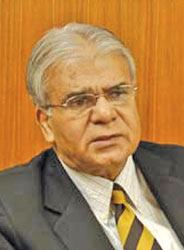
the smooth running of sports in the country. 73.alam@gmail.com caption Arif Hasan
The cricket
saviours Stories of
mismanagement, spot and match-fixing, financial embezzlement and
nepotism consistently emerge from the Subcontinent cricket, jolting its
very foundations. These stories have
disappointed people who used to believe in the competitiveness of the
game. But in this scenario,
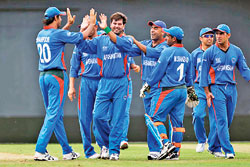
a ray of hope has emerged in the form of Afghanistan Cricket Board (ACB)
that started its journey ten years ago, only a short time before the
fall of the Taliban regime. The development of
cricket in Afghanistan has been nothing less than remarkable in the face
of seemingly insurmountable challenges. With hundreds of
thousands of players and supporters, cricket stands today as the largest
peaceful movement in Afghanistan. The game has become
one of the most valuable tools of coexistence and nation building in the
country. This all has happened
because of the correct vision, policies and strategies outlined by the
ACB under the able leadership of Dr Hazrat Omar Zakhilwal who is the
current Minister of Finance and Chairman Afghanistan Cricket Board and
Nasimullah Danish, the CEO of ACB. While unveiling the
five-year development plan of ACB the CEO of the board said, “The
strategic Plan 2011-2015 is the fruit of many hours of hard work over
the past nine months. We believe that we have created a most effective
plan that will guide our actions as we continue our journey to more
cricketing success over the coming five years.” Their vision is “To
make Cricket Afghanistan’s most popular sport, contributing to peace,
health, unity and development”. This shows that the officials not only
want the promotion of game but are equally interested in using it as a
tool of development, peace and co-existence. “Winning a match is
important for a coach but a big part of the job is helping to develop a
solid, responsible young player who is able to become an upstanding
citizen,” says Sachin Tendulkar. Thus the potential of
cricket to promote the social and civil development of the whole person,
not just their sporting ability, is of great importance to Afghanistan. Cricket Afghanistan
has spelled out five goals. Its first goal is to increase interest and
participation in cricket, use cricket’s potential as an educational
tool, develop cricket in every community, develop the cricket learning
kit in Pashto and Dari languages, and create and promote national,
regional and provincial cricket awards. Its second goal is to
build the capacity of ACB to effectively administer cricket by
developing an efficient administration and evaluation and accounting
system, developing professional management structures, developing codes
of conduct for players, coaches and umpires, promoting volunteering
concept and measurement of the cricket players’ demographics. The third and very
important goal of ACB is development of domestic cricket by improving
cricket’s physical infrastructure and developing and implementing
cricket’s domestic playing and management structure. The fourth goal is to
raise the performance of Afghan cricket to elite level through
scientific coaching and transparency in selection, improving the ICC
membership status over the coming years and development of annual
international competitions and improvement in ODI ranking. The fifth goal is the
growth of its finances by implementing the new financial policy and
developing an efficient, accounting system. Afghanistan cricket is
seeking national and international donors and sponsors and the media
rights for televising the matches are in the pipeline. The ACB is also
trying to establish cricket as a permanent budget item in the annual
budget of the Government of Afghanistan. The ACB, in
collaboration with Provincial and District associations, will develop
various programmes and activities for young cricketers, including
students and girls. The best part of
ACB’s development strategy is the development of “Cricket Education
Curriculum” based on the ICC’s Participation Pathway Guide 2010
which outlines a cricket pathway from basic through junior, senior and
national levels. This learning package in Pashto and Dari languages will
encourage education institutions to incorporate cricket in their
programmes. The ACB also plans to
provide training and resources to help school teachers and leading
educators to deliver cricket programmes, thus promoting the game as a
means of inculcating healthy lifestyle, team spirit and strong community
values in people. The ACB is also
developing an international standard coaching programme and a system of
talent hunting. The ACB is looking forward to appoint a national
coaching director to oversee all aspects of coaching and to foster an
environment in which talented cricketers are given every opportunity and
encouragement to develop their potential. The annals of history
reveal that cricket was first played in Kabul in 1839 by the British
troops but the fantasy of cricket was actually discovered by Afghan
refugees who fled to Pakistan in 1979 after the Russian invasion. This adopted game was
brought back to Afghan soil in 2000 with the approval of the Taliban.
Afghan cricket has shown the sparks of brilliance by winning the ACC
under-19 Elite Cup in Bangkok, defeating Canada in Intercontinental Cup
match with the ninth highest run chase in first class cricket, finishing
third in the ACC U-16 Challenge Cup and winning the silver medal at 2010
Asian Games. I wish Afghanistan
cricket the best of luck. It is also desired that ICC should play a
proactive role in the development of cricket in Afghanistan by
dedicating the receipts of the ongoing ICC Champions Trophy to ACB like
the first two Champions Trophies when the profits were given to
Bangladesh and Kenya for the development of the game. Afghan cricket has
been put on the right track of development in the holistic sense. It is
now up to the cricket fraternity to support their efforts, so that a new
and formidable force of cricket can emerge on the map of international
cricket, which will not only add to the competitiveness of the game, but
also act as a catalyst of peace and development in turbulent Afghanistan
in post-US scenario. sdfsports@gmail.com |
|