



|
|
|
|
 |
 |
   |
review Pakistani people are multi-talented, intelligent and hard working. They have made names for themselves in every field of life. But recently, a fallout from every department be it in politics, armed forces etc (I don't want to get further in those issues) has been seen. And the most important department, Pakistani people have shown their lack of concentration and improvement in, is sports. unconquerable Until the final of the 1983 World Cup cricket tournament played in England, the cricket fans instinctively believed that the blacks (called blacks not in a derogatory sense, rather as a mark of identity) were unconquerable; they were terrifying, aggressive and great warriors of cricket. However, they suffered a quick fall after ruling the world of cricket as the world champions for a decade. Selection
committee disappoints With the announcement of the squad, which is currently pitted against the Sri Lankan outfit in Abu Dhabi in a series of three One-day Internationals, the national selection committee have completed their first assignment. The panel, under the chairmanship of former Test cricketer Salahuddin Ahmed, has named 16 players instead of 15 for the two-team event. cricket Inzamam's captaincy towards the end of his career was not positive and unimpressive and one of the main reasons for that was because he wasn't batting well By Dr Nauman N The ideal captain just doesn't exist. How could he? What human being could possibly combine the qualities of tactical guru, military commander, thoughtful counselor, supreme man-manager, excellent player, diplomat, inspirational decision-maker and consistent motivator, skilled in media relationships and overflowing with luck? That animal has never existed, and it is part of cricket's charm that all captains try to conceal their weak links while hoping that their positive virtues will paper over the cracks and get their players performing to their full potential. One-match
wonders and Owais Shah's second chance England included Owais Shah in the final eleven for the first Test against West Indies at Lord's that started on Thursday. Shah had played only one Test until then, against India at Mumbai in 2006, and played a crucial role, scoring 88 and 38, in England's victory. His effort in the first innings is the highest by an English batsman who's played only one Test and it slots in at No 4 on the overall table. Another open letter to (the late) Bob Woolmer! Whenever we did something good we credited it into
skipper and the boys' account; on the contrary when we lost something we
burned your effigies
Pakistan once used to be a dominant force in sports, in Asia at least. At one time, they were simultaneously the world champions both in cricket and hockey Pakistani people are multi-talented, intelligent and hard working. They have made names for themselves in every field of life. But recently, a fallout from every department be it in politics, armed forces etc (I don't want to get further in those issues) has been seen. And the most important department, Pakistani people have shown their lack of concentration and improvement in, is sports. Pakistan once used to be a dominant force in sports, in Asia at least. At one time, they were simultaneously the world champions both in cricket and hockey (they won the cricket World Cup in 1992 and were hockey champions in 1994). Besides that, Pakistani cueists were on top of their game as well in the past decade producing champion players like Mohammad Yousuf and Saleh Mohammad, who made a huge impact on the world stage as well. The squash arena was Pakistan's lions den with Jansher and Jahangir Khan roaring and winning titles at will. Their only hard opponents at the international and local stage were they themselves to each other. Though football wasn't a sport Pakistan ever made a name in but they have shown footballing improvement in previous years. They are now being exposed to the international scene more often than not and their players are now touted to raise the level of the game in the country. Pakistani pugilists were still known to be the best boxers around the continent and won many laurels for the country at the regional level but a downfall has been seen in the boxing department as well recently. I have decided to take a look at few of these sports, how Pakistan performed in them in the past and what's going on presently. Field hockey, the national game, was once the mainstay for Pakistan's reputation in the sporting arena. The Olympics, the biggest sporting stage of them all, saw Pakistan's domination in the game for a very long duration. With three gold medals (in 1960 when they beat India 1-0, in 1968 when they beat Australia 2-1 and in 1984 when they beat Germany 2-1), three silver medals and two bronze medals, Pakistan hockey surely left its mark in the Olympics books. Even better were Pakistan's performances in the hockey World Cups. They were crowned world champions on four occasions (1971, 1978, 1982 and 1994). They were runners-up in 1975 as well as in 1990 and finished fourth once in 1973. The Champions Trophy is another huge tournament in the hockey calendar and Pakistan's performances in this tournament are also worth mentioning. Pakistan has won the Champions Trophy three tomes (in 1978 at Lahore, in 1980 at Karachi and in 1994 at Lahore) and have ended runners-up on six occasions. This record surely shows how dominant Pakistan used to be in hockey. But if you'll have a look at the above figures, the last time Pakistan won a major trophy was way back in 1994. It has been thirteen years now since the Greenshirts won any major title such as the Olympic Games, World Cup or the Champions Trophy. Though in the past few years Pakistan have at least been good enough to quite consistently win the bronze medals in these competitions, recent upheavals have pushed them further down the charts on the international scene. The next edition of the Champions Trophy will be held on their home soil in December this year. But Pakistan's chances in that tournament look very slim. Recently, they finished a disappointing sixth in the Azlan Shah Cup after a huge shuffle in the team's line-up which saw the change in administration with new coaching staff. They had left out players like penalty-corner specialist Sohail Abbas (who has scored the most number of goals in hockey's history) and former captain Mohammad Saqlain to name a few. Even poorer have been the team's previous performances when they finished a disappointing sixth in last September's World Cup in Germany and later flopped in the Asian Games in Doha where their campaign to reach the final was ended by minnows China. Cricket, as we all know, though isn't the national game here but is far more famous and played in every nook and corner of the country. Pakistan were crowned the world champions in 1992, have finished runners-up to Australia in the 1999 edition and produced wonderful players over the years though it is still known as the most unpredictable but dangerous team in the world. But Pakistan's stance in cricket too has been jolted immensely by recent incidents. As we have followed the team over the last year or so, Team Pakistan has only faced miseries and controversies and has given the nation nothing but to feel ashamed of their performances. Though the team started their three-match One-day International (ODI) series against Sri Lanka at Abu Dhabi on Friday under the leadership of new captain Shoaib Malik, the scenes that have been seen in the dressing room, on and off the field and in the administration have surely left a bad impact on the team's future. From The Oval Test incident in August 2006 (where Pakistan forfeited the match, the first time this had happened in Test cricket's long history, and their then captain Inzamam-ul-Haq was banned for a few matches and the match was awarded to hosts England), the captaincy drama before the International Cricket Council (ICC) Champions Trophy, the poor show at the Champions Trophy, the miserable tour of South Africa afterwards, the doping cases of pacers Shoaib Akhtar and Mohammad Asif (their bans and the overturning of them), the squad selection for the World Cup, shocking exit of the team from the quadrennial tournament (after defeats in the opening two matches to hosts West Indies and minnows Ireland), the death of coach Bob Woolmer at the World Cup (whose death was still being treated as a murder in spite of calls that he might have died of a heart attack) and the refusal of Younis Khan to take up the captaincy role after Inzamam's retirement after the World Cup, all has given just nothing but poor press to the game from every aspect. I hope there are far better days to come for Team Pakistan. Coming back to other sports: football is one sport Pakistan has not made any huge progress in their entire history and are one of the minnows of the game. Football in Pakistan has remained underdeveloped for decades due to mismanagement, lack of support and corruption. Although efforts have been made with the support of international football federation when in August 2003, FIFA and their 'Goal Project' and the new management within the Pakistan Football Federation (PFF) restructured the national football system. Efforts were made to hold more leagues and championships locally. The National Football Championship, which was the only tournament played in Pakistan before, was replaced in 2004 by the national football league, which was called the National Division A Football League. This tournament contained 16 teams from around Pakistan and was the first time Pakistan had a national league. A second division, like many other countries in the world, was also created in Pakistan. This was formally known as the National League Division B Football League before being named the PFF National League. This tournament contained 5 teams. The two bottom teams from the A league were relegated to the PFF league, while the top two teams in the PFF league were promoted in their place. But because of funding problems, relegation and promotion was an issue, as was the teams continued participation. This led to further changes in Pakistani football. Afterwards, after more reconstruction of the game, the National Division A was renamed the Pakistan Premier League, and the President's PFF Cup was reintroduced, which was postponed earlier, as the National Football Challenge Cup. The Pakistan Premier League now became a 12 team league, with the PFF becoming a round-robin competition. Although all these efforts were made but Pakistani football is still down and out and the team isn't performing as it should on the international level. Though football has been gaining popularity throughout and presently many amateur clubs are appearing playing quality football with the game becoming popular at school/college/university level, Pakistan's national football team still seems out of order. The tall claims of PFF were exposed recently when FIFA released its fresh rankings where Pakistan had slipped to the 182nd position. There are a total of 199 teams in the list of FIFA rankings and Pakistan just needs to lose a few more matches to reach their lowest-ever ranking of somewhere around 190th. According to the fresh FIFA rankings, Pakistan is going down day by day due to poor performances of the national team. Now what do you make of these stats, it's up to you. I guess we need more players like Muhammad Essa, Jaffar Khan etc to lift the team's standards up. Pakistani players have an unprecedented record in squash's history. It (squash) is another sport that has a large following in Pakistan. There have been many squash legends produced by Pakistan with Gogi Alauddin, Azam Khan, Hashim Khan, Mohibullah "Mo" Khan, Roshan Khan, Jansher Khan and Jahangir Khan to name a few. Two of the previously mentioned names who made it bigger than any other sportsperson in Pakistan's entire history are Jansher and Jahangir. Jansher and Jahangir both were household names in Pakistan for many a year. Jahangir had a record to be proud of. He won six World Open titles (1981, 1982, 1983, 1984, 1985 and 1988) and was runner-up on three occasions in these tournaments (1986, 1991 and 1993). Besides that Jahangir won the British Open, one of the most prestigious tournaments in the squash calendar, for ten consecutive years (from 1982 to 1991) and finished runner-up only once (in 1981). For all his accomplishments over the years, the Government of Pakistan honoured Jahangir with the awards of Pride of Performance and civil award of Hilal-e-Imtiaz. They also awarded him the title of Sportsman of the Millennium. Jansher wasn't far behind Jahangir on the success scale. He won the World Open title on eight occasions, two more than Jahangir (in 1987, 1989, 1990, 1992, 1993, 1994, 1995 and 1996) and finished runner-up only once (in 1988). He followed Jahangir's footsteps after the latter's retirement and continued winning tournaments for Pakistan as he wrapped up the British Open titles on six occasions (in 1992, 1993, 1994, 1995, 1996 and 1997) and ended as losing finalist three times (in 1987, 1991 and 1998). If such records are brought under consideration no one can doubt Pakistan's squash players talent and supremacy. But that isn't the only reality. Pakistan hasn't produced any more champions like Jahangir and Jansher were and the upcoming breed of squash players lack consistency, determination and the hunger of winning titles. There are few players currently representing Pakistan who are progressing well with Shahid Zaman (world no 39, Mansoor Zaman (world no 26) and Aamir Atlas Khan (world no 28) to name a few. But they need proper training and facilities to improve further and bring back laurels to the country. Pakistani women's rankings are even further down with no Pakistani girl in top-50 club in world rankings. It is just not only about hockey, cricket, football and squash but is about other sports as well where Pakistan is isn't improving by any means. Snooker has slowly and gradually brought up interest amongst the youth of Pakistan but there aren't any senior pros to help them out and provide them proper guidance and training. Famous cueists like Mohammad Yousuf and Saleh Mohammad have almost reached their prime but along with the upcoming generation of Pakistan cueists that include talents such as Naveen Perwani, Khurram Hussain Agha and Farhan Mirza, there can be done a lot to help the game reach new heights. Pakistani boxing has been recently hit by doping scandals as well. Talking about athletics and track-and-field competitions, Pakistan's performances in the recently-held Doha Asian Games were very poor as well. Though they had won many medals in the South Asian Games which were held before that and finished second on the medals table, they failed to make any sort of impression in the 2006 Asiad. The Pakistani tennis scene is in a shambles too. They were recently demoted on the Asian circuit to level three and with only a few names to have faith in for good performances, such as Aisamul Haq and Aqeel Khan, Pakistan tennis doesn't seem to be improving anyway. Pakistan in sports isn't going anywhere but downwards. The administrative people and the sporting bodies around the country have to take up immediate steps and precautionary measures to ensure that the sports at all levels are looked after and are provided proper guidance, facilities and management so that the image of sports and people related to it is reaffirmed and further decline of our sporting heroes as well of sports in brought to an end, both at the international and national level. The
writer is a staff member at 'The News' Karachi shehnu@gmail.com
Unconquerable In view of the fact that no team could dare beat Australia during the two previous World Cup mega events, should Aussies be not made lifetime cricket champions? Until the final of the 1983
World Cup cricket tournament played in England, the But now the yellow shirts are rightly believed to be the unconquerable warriors of cricket; they are Australia who have been reigning supreme over the world of cricket for more than a decade by staying as the world champions for at least 12 years (by winning the World Cup 2007, their title as world champions spans over the period of 12 years, at least, since 1999 to 2011. Undisputedly, they are matchless, unconquerable and almost faultless; the qualities they most obviously demonstrated during this Caribbean World Cup event. On the one hand, they enjoyed thrashing the real minnows like Netherlands and Scotland by heaping totals of 358-5 and 334-6, respectively. On the other hand, the greater their opponents were, the tougher their cricket was; they reduced their great rivals, like South Africa, New Zealand and Sri Lanka, to quasi-minnows. Resultantly, all their matches were, in fact, one-sided games. Of the nine ICC cricket World Cup tournaments, four fell into the lap of the Aussies, two into the Windies, and one each into those of India, Pakistan and Sri Lanka. A very simplified analysis is sufficient to show how magnanimous the Australians are. The World Cup victories of India and Pakistan were a chance occurrence; neither of the teams could win all the matches during the tournament. The invincibility of West Indies during the first two competitions comprised victories in just five matches each time. The Sri Lankan invincibility was dented by the two matches that fell into their lap without playing a single ball; Australia and West Indies preferred to lose two points each to Sri Lanka by refusing to play in Colombo on security grounds. No doubt, the Aussies were not unconquerable during the 1987 and 1999 victories, they excelled in the next two mega events of 2003 and 2007 by staying unconquerable. In the first World Cup cricket tournament held in 1975 in England, the Clive Lloyd-led West Indian team remained invincible during the five matches, including the semifinal and final matches, by thrashing Sri Lanka, Pakistan, Australia, England, and Australia in final. The second World Cup cricket tournament in 1979 was a repetition of the first one in many ways; the champions West Indies remained unbeatable in all the five matches, including the semifinal and the final, by defeating India, New Zealand, Pakistan and England while the match against the minnows Sri Lankans had to be abandoned because of heavy rain. The by-chance champions of the 1983 World Cup, India were not an undefeated team throughout the tournament; they were badly crushed by Australia and by West Indies by the margins of 162 and 66 runs, respectively. The 1987 Reliance World Cup cricket tournament in India and Pakistan is not a different story; while Pakistan were the hot favourites, Australia emerged as the new cricket champions but they were not unbeatable throughout the tournament; of the two group matches they played against the hosts India, Aussies lost the second match after they had won the first match against the hosts by a sheer margin of one run. When Pakistan won the ICC World Cup in 1992, the Imran-led cricket team was indebted more to good luck than to the charismatic captaincy of cricket legend Imran Khan. The team were packing their bag and baggage and were in the process of okaying their seats for return to their homeland, when by a good chance West Indies lost its key match, giving way to Pakistan for the semis; Pakistan had lost three of the eight league matches, and could escape from the fourth defeat when rain did not allow the English team to achieve the easy target of 75 runs only. Thus, the Pakistan team's becoming world cricket champions was absolutely unexpected. Though Sri Lanka remained unbeatable throughout the 1996 World Cup tournament, its access to the final was made easy by the decisions of West Indian and Australian teams not to play in Sri Lanka on account of safety concerns; the points of both the matches were granted to Sri Lanka. In the 1999 World Cup tournament in England, Australia succeeded to snatch the cup, but was not unbeatable throughout the tournament; they lost their first two matches against New Zealand and Pakistan. The story of the year 2003 World Cup mega event, conducted in South Africa, is simple; the defending champions Australia remained invincible throughout the tournament. It owes to the awesome performance of the world champions that their sparse defeats during the last 10 years have become historical games, letting their rival team to boast of defeating such a great team like Australia; their defeat in 2005 Ashes series after 18 years, Sri Lanka's victory in the first final of the triangular series in January 2006, Bangladesh's victory in Cardiff, South Africa's successful chase of the biggest total of 433 in Johannesburg, England's victory in the recent triangular series followed by 3-0 defeat in Chappell-Hadlee one-day series in New Zealand are a few examples. It was these recent back-to-back defeats of the Aussies ó Australia consecutively lost five one-dayers against England and New Zealand before the start of this World Cup game ó that shook this writer's confidence in the Ponting Eleven, so as to conclude that the Caribbean mega event must be an open competition with South Africa, England and New Zealand as strong teams. But the competition, ironically, proved the dullest and most one-sided World Cup tournament in the history of cricket. In view of the fact that none of the eleven teams could dare beat Australia during the two previous World Cup mega events, should Aussies be not made lifetime cricket champions?
Selection committee disappoints Pakistan cricket fans With the announcement of
the squad, which is currently pitted against the Sri When one goes through the list, one can point out three players -- Mohammad Hafeez, Salman Butt, and Imran Nazir, who have been given several chances in past, but in a surprising move the selectors have again fallen back on the trio. An ordinary cricket-lover is well aware of the fact that Imran is prone to edge outside the off-stump and getting out in the initial overs thus putting enormous pressure on the middle-order. Salman lacks consistency, while Hafeez does not have the mental toughness that is greatly required for success at international level. In the wake of the World Cup debacle, there was an ideal opportunity for the selection committee to induct fresh blood in the team and take revolutionary and bold steps to give up and coming youngsters chances to prove their mettle and credentials as Sri Lankans will be coming to the UAE capital without key players Chaminda Vaas, Muttiah Muralitharan and Kumar Sangakkara, who have opted to skip the series owing to personal and English County Championship commitments. But to the surprise of many, the selection committee have persisted with almost the same blend of players who failed miserably in the World Cup. However, the selection of Karachi all-rounder Fawad Alam and Rawalpindi pacer Najaf Shah, both of whom have performed exceptionally well at domestic level, is a very welcome sign. Although some of the
selections for the Abu Dhabi series are debatable, the recall Another move which is quite significant is that PCB Chairman Dr Nasim Ashraf has appointed Mohammad Asif as Shoaib Malik's deputy. This is a long-term decision which can pay dividend as the lanky fast bowler from Sialkot would have to feel the additional responsibility and would do his best to keep himself fit and will stay away from controversial activities. This opportunity will bring maturity in his behavior as he will closely observe and will take part in the decisions of the tour selection committee and will learn the lesson that by introducing discipline in one's life, one can achieve outstanding success as is the case with Australia these days. The withdrawal of Younis Khan and Shoaib Akhtar from the series is not the sort of behavior that is required from senior players. Younis preferred his county duties and Shoaib declared himself unfit for the Abu Dhabi series, but then took a U-turn and has expressed his desire to turn up for the Asian XI in the Afro-Asian series. It is Pakistan which has given them the fame, wealth, and worldwide recognition they enjoy these days and they should realise that by turning down the opportunity to play for their country they are not doing any good to themselves or to Pakistan cricket. Shoaib's fans were waiting anxiously for the series as they were under the impression that the injury-prone fast bowler from Rawalpindi would grab this chance after missing the World Cup and would like to have a go at the Sri Lankans. Both Shoaib and Younis should keep this in mind that if one always plays for his country with extreme dedication his career always meets a pleasant end. Glenn McGrath is the prime example. He always felt pride in playing for his country, and every international player would dream of having a send-off the Aussie received. To avoid such tactics employed by the senior players the PCB should take bold decisions and strict measures to curtail player power which still exists although the top PCB officials keep issuing denials. The PCB have taken a timely and correct decision by introducing performance-based pay structure and this decision is likely to produce positive results as anyone who is under the impression that he is not accountable will work hard to maintain his place in the team. This step was badly needed not only to regain the lost glory but to curtail player power as well. Another step which the PCB must take is to expand the selection committee. The selection committee is working with just three members and one of its members, Shafqat Rana, is also taking care of KPTís team as coach despite him being a paid selector. So this will be a good idea to have five selectors instead of three. This will help selectors in spotting the raw talent. The induction of recently-retired Test cricketers in selection committee will definitely enhance the credibility and performance of the team as they have the knowledge of modern-day techniques and technology and will bring with them aggressive approach which is not very common in Pakistan. They should be given the task to identify upcoming players from small cities and this step will result in a big pool of youngsters to choose from in future.
cricket Shoaib Malik The lessons to learn Inzamam's captaincy towards the end of his career was not positive and unimpressive and one of the main reasons for that was because he wasn't batting well By Dr Nauman N
The ideal captain just doesn't exist. How could he? What human being could One admits that Inzamam-ul-Haq, Shoaib's predecessor fell down in certain requirements of captaincy. He was rather intolerant of players who didn't do themselves justice. Inzamam expected them to show the same dedication that he had brought to his batting; he was still learning how to get the best out of the cricketers playing under him when he resigned, both out of anticipation and requirement. Inzamam's relationship and his inability to reach an understanding with Shoaib Akhtar in recent years indicated a man-management problem; and as for relationships with the media-well that was something that didn't keep him awake at nights. On the contrary, to Shoaib Malik captaincy should be fundamentally about commonsense, about influencing his team's style of play in a positive manner, building up team spirit so it isn't found wanting at crucial times and setting the right example in terms of fitness and attitude to his profession. It is also important, now that he's there, he should be able to enjoy the job. If pushed to make a choice, Shoaib would admit that he prefers batting to captaincy. That's what he's best at and so it follows that he is playing well that helps his team. He should know that he'll be totally responsible for his failures and successes, whereas as captain he will be required to carry the can at all times. How important is it that the captain should be one of the best players in the side? That was never a problem to Inzamam-ul-Haq he had scored 25 Test hundreds and every season he made a stack of runs -- but that aspect of the job should worry Shoaib at Pakistan level. He is a fine batsman, but one believes it should bother him that he still needs to cement his place in the Tests, especially as his competitor Mohammad Yousuf is a much better batsman. Shoaib may well know that he'll captain Pakistan amicably, but one is sure he would like to score more runs to reduce the pressure on him. Inzamam's captaincy towards the end of his career, particularly in South Africa and during the World Cup 2007 was not positive and unimpressive and one of the main reasons for that was because he wasn't batting well. He was distracted by his back injury and form, and he couldn't concentrate on how to beat the opposition and his personal lack of confidence was shown in the way he led us. Yes, if he was an outstanding captain, there was a case for his retention regardless of performance to an extent, because motivating the team and maximising its potential are priceless assets -- Inzamam lost his habit of run-making and once Pakistan started to lose, people had lot of axes to grind. At the same time, seeing Inzamam losing control and eventually his job, Shoaib must keep in mind that the best players aren't always the ideal captains, even though in terms of inspirational quality they would qualify. The genius in Inzamam -- that maverick approach with the bat-meant that he couldn't lead lesser mortals sensitively; one believes he didn't really understand what the players needed as individuals; he lacked that knack of fine tuning that coaxes the extra couple of percent out of someone. Inzamam's attitude to the disciplines of the job meant that the only time he would try to lead by example was out there in the middle with the bat. Inzamam was very senior to the people he was leading. In contrast, Malik must realise that his desire to remain one of the lads may well erode some of his authority (some already taken back by the PCB) because he could never be someone like Imran Khan or Wasim Akram and keep his distance at the right time. Similarly, Shoaib needs to remember Aamer Sohail. He had many excellent qualities that he brought to the job of captain. He was fearless, he'd never ask a player to do something on the field that he wouldn't also try to achieve and he had many bold, positive ideas. Even as a young player, Aamer had an excellent cricket brain. When you stripped away all the bravado, there would be a great deal of sound tactical sense. On the field he fixed up situations very quickly but Aamer was an unlucky one, his own people failed him and the other he was temperamental and self-possessed, a trait that hampers unsuccessful captains. He was frustrated and left the team midway through a series against Zimbabwe in 1998-99. Aamer was unlucky to come up against senior players like Wasim, Waqar Younis, Inzamam-ul-Haq, Saeed Anwar, Mushtaq Ahmad and even Moin Khan. With a little support from the PCB, Aamer may well have turned into a very successful captain. But at that time senior players never wanted him at the helm. On the contrary Imran Khan was lucky to have Wasim Akram and Waqar Younis at their prime -- the most talented fast bowlers and genuine match winners. He also had some other superb bowlers at his disposal -- Aaqib Javed and Mushtaq Ahmad. They could bowl at a high level of performance and maintain that standard at any stage of the day. However, tactically shrewd you are, the captain is dependent on his bowlers doing their job properly. You need the tools for the job. Imran was lucky enough to profit from a production line of excellent fast bowlers, enjoying the devastating combination of Wasim and Waqar. Imran profited from the skill and stamina of Abdul Qadir and he was also fortunate that batters like Javed Miandad and Saleem Malik were producing runs. So the successful captain must have good players. An experienced, tough captain can be very adept at avoiding defeat, a damage limitation exercise, but unless there are match winners in the team, he can't be expected to win World Cups or Tests. He is like the soccer manager: if his players perform to their capabilities, he is a miracle worker otherwise he is a candidate for the chop. One must admit that there is too much extremism attached to assessments of captaincy. There seem to be no shades of grey -- it's either 'Imran's Devastators' or 'Captain Courageous' and the next day, it's 'Captain Cock-Up' in our ruthless media. The captain can be out in the field, racking his brains, tapping into the experiences he has picked up, he tries something just for the sake of it and if he gets lucky, the media call it 'an inspired change of bowling'. Once a captain has got the side he wants (which will now be very difficult for Malik since the team manager and powerful selectors will be dictating), ensured they are solid in morale and teamwork, high on self-discipline and ideally prepared -- there's nothing he can do if they get bowled out for 100. He can't stop his best batsmen from smashing half-volleys straight to cover or his opening bowlers spraying the new ball down the leg side. What he can do is change the side if the players show no signs of fulfilling their potential. In Malik's case he'll be in a tough spot as Pakistan, currently has very little back-up resource. He can cajole his bowlers in between overs, 'drop it shorter at the left-hander', replace them after a time, but he can't bowl the ball for them. It's just like the soccer manager in the dug-out; he has told them the tactics needed, he has marked each player's card, but he can't do the passing, running and tackling for them. As Pakistan captain, Shoaib would never be telling one of his batsmen how to play. In case if Mohammad Yousuf struggles against South Africa, Shoaib will not be taking him to one side and say, 'This is how you play the short-pitched ball'. One believes each batsman has to do it his own way, the method that suits him the best. In Shoaib's case, he because of being down on the seniority list will not even be there with advice about coming to terms with the slip in form, how to cope with a bad run and how to approach an innings, and now senior batsmen will be required to sort out their own technical short comings with hand-picked technical advice from someone they respect. What Shoaib can do is influence the way the side plays, set the tone of its approach. This is one aspect of captaincy that has to interest Malik. And he also needs to understand that Pakistan have had too many captains (fourteen) since Javed Miandad in 1992. All the chopping and changing has sapped morale; there seems to have been no long-term strategy, no continuity of selection, so the players can't perform with complete confidence. As a result our record in the recent years has been poor when we consider the talent we have had at our disposal. We need to return to an atmosphere where the players aren't looking over their shoulders, wondering if they'll get another chance, or if the press were about to push another flavour of the month. Shoaib needs to focus on what makes a captain, forward planning, batting and captaincy, captaincy in the field, limited overs captaincy, captaincy on tour, setting the right example, man-management, the individualism, dealing with the media, taking lessons from some captains of his times and his own reflections. Will Shoaib be given a long-term as captain regardless of the results and problems? Will PCB be there to pull him out if there is any rebellion? But the kind of reasoning is trumped by the fans' familiarity with the board's previous record. It isn't going to be as straightforward an affair as being currently touted. If Dr Nasim Ashraf wants the holes being filled, why not put the plans on the table, let all the concerned people do the brain storming and take issues one by one. The PCB should stop fiddling with the team, only providing the support role to the captain. But without much rough to punish errant plans, the approaches to those future dreams are getting too easy for our tastes. Perhaps the men in PCB power chairs went too far this time around. Perhaps they also planted a few too many plans in the wrong places, but their basic philosophy is correct. In a game where the new is constantly compared to the old, what once was a stiff and very scenic test should remain just that. One must also admit that while Shoaib Malik is taking over Pakistan's captaincy, the PCB, as they tell us they have decided to approach international cricket in a different way. In the end, the captain has to stand or fall on his own instincts and Shoaib must know if he fails, they would wheel on someone else. One-match wonders and Owais Shah's second chance Andy Ganteaume's 112 against England in 1948 remains the highest score by a batsman who's played only one Test
England included Owais Shah in the final eleven for the first Test against
West After a year's break, Shah got close to another Test cap but there have been others who've never played again after an impressive debut. On the opening day of the Lord's Test, coming in at number three, Shah was dismissed for just six runs. Andy Ganteaume's 112 against England in 1948 remains the highest score by a batsman who's played only one Test. Coincidentally, Ganteaume played the Trinidad Test only because Jeff Stollmeyer, the regular opener, was injured. And, nearly a decade earlier, Jeff's brother Vic Stollmeyer scored 96 on debut at The Oval. It was West Indies' last Test before the war and Vic never played again. The only other player to score a hundred in his only Test is New Zealand's Rodney Redmond. Drafted into the team for the final Test against Pakistan in 1973, Redmond made 107 in the first innings and 56 in the second, cementing a spot on the tour on England that followed. However, in England, Redmond struggled to adjust to his new contact lenses and his form suffered. He scored only 483 runs at 28.41 in the first-class matches and did not play in any of the Tests. Had Stuart Law been of any nationality other than Australian, he'd have played a lot more Tests than just one. He did his cause no harm on debut against Sri Lanka at Perth, scoring an unbeaten 54, but with David Boon, Mark and Steve Waugh vying for middle-order slots, he never got another chance. Law, in fact, was overshadowed by another debutant; Ricky Ponting announced his arrival with 96 in the same Test and with Steve Waugh returning from injury, one of them had to make way. Charles Marriott, the English leg-spinner, is the only bowler to take ten wickets first up and never play another Test. He took 5 for 35 and 6 for 59 against West Indies at The Oval in 1933. His 11 for 96 in the match remains the third best performance by an Englishman on debut. Mark Benson, the English umpire, is one of 14 people to represent their country in only one Test and one ODI. He made his Test debut, replacing the injured Wayne Larkins, against India in July 1986 and scored 21 and 30. Later that month, he made his one-day debut, scored 24 against New Zealand, after which he was dumped. Few have had as torrid an ODI baptism as Michael Vandort, who was entrusted with the responsibility of opening the innings against Australia while chasing 319 in the VB Series opener in 2006. Vandort struggled against Brett Lee's pace and, once Sri Lanka were reduced to 32 for 3, he plodded to 47 off 117 balls. His pace was clearly not suited to the wham-bam one-day game and he was dropped for the rest of the series. David Lawrence made his ODI debut in the final match of the 1991 Texaco Trophy against West Indies. He managed four wickets but conceded 67 runs off ten overs. Lawrence was given his first overseas Test cap at Wellington in 1993 and in the final stages of a drawn Test; he shattered his knee cap in delivery stride, effectively ending his international career. --Cricinfo Another open letter to (the late) Bob Woolmer! Whenever we did something good we credited it into skipper and the boys' account; on the contrary when we lost something we burned your effigies
Dear Bob, You may have received lots
of letters in your life filled with accolades for your High-profile personalities like you meet many people around the world who want to tell you how good you were, and how useful your contribution to the game of cricket was. But unfortunately, this letter will not address all those issues. I am not going to say that you were brilliant then and there, or how instrumental you were in introducing a new role of coach in international cricket, or your efforts to turn the Pakistan eleven players into a unit were monumental. All I want to admit hesitatingly in this letter on behalf of my nation is that we were highly critical, rude and ignorant of your work with our team. May be many of us still don't believe that they had done something bad to hurt you, but regardless of that I want to say sorry Dear Bob. We are sorry. The biggest allegation which we impose on you is poor handling of the opening pairs. We said this umpteenth times without any developed understanding that in almost three years you failed to give us one solid opening pair. We said that you played the game of musical chairs with our young openers as if without that they would have become Hayden, Langer, Greenidge or Haynes. When we said that we overlooked one distinct fact over and over that we never had services of natural openers ever in the entire cricketing history. Sorry to say but there have been a very few formidable opening pairs in our history which did justice to their jobs. Last we had was Aamer Sohail-Saeed Anwar which had their, with all due respect, own blemishes. They were good because they handled themselves better than others. You tried everything in your power to turn all of our young openers into big names, but one thing which we forgot that you were not a magician; you were a coach, indeed! Application which we required from our youth, but which neither we nor you got till your last coaching days. Experts said it several times that we have to make some very rudimentary changes in our domestic structure to find youngsters who can face the moving ball with any degree of confidence. Instead of addressing the core issue, we got after you to find reasons of our failures. We have had a long history of 'on-the-job training' of our batsmen who learnt their traits while playing for the national side. But what was wrong with us that we kept throwing rubble on you every time we slumped. Another grudge which our former cricketers had against you was what was so special about you that the PCB preferred you as our national coach rather than having their services. From the very first day, they had that argument and on the basis of that argument threw every thing they got in their hands to hurt you deeply. As far as what our history tells us is that we lack unity. It was an intentional PCB plan to hire someone who can work independently without falling into pitfalls of favouritism, cultural and provisional problems; a person who can explore the potential of our youngsters rather than thinking from where he comes or from where he belongs to. But PCB's plan was turned into a very tough job for you because of the anger of some of our former cricketers against you. Whenever we did something good we credited it into skipper and the boys' account; on the contrary when we lost something we burned your effigies. Since your appointment in 2004, no former great said once that now you are here, so let's do it together. So the move to hire a foreign coach looked very encouraging in the beginning, a coach who can look at our boys as cricketers without any social complications, was devastated by this 'negativity' of former stalwarts. Another recent allegation which raised its head was about your columns that appeared on websites and newspapers. They said he is spending most of his time in writing than coaching. I want to tell all of those who came up with that absurd idea that you managed your own website and you were writing long before you joined our national team as coaching assignment. In a country, where presidents write their autobiographies amid all the hullabaloo, we felt inconvenient about your writing for 'Wisden' where you did nothing more than penning your intensively short tour diaries of approximately 350 or 400 words which any man who have experience of writing at some point in life can tell that it is not too time consuming at all. But we never allowed ourselves to breathe you an air of freedom without undue criticism. I want to thank you that you helped us in winning in India with probably the weakest bowling attack ever on an Indian tour, made us gutsy enough to amass a win against confident Ashes-winning English in 2005, united our boys, gained respect of the boys rather than fear that even not the most articulate present Pakistani cricketers can express love for you without any stutters. We behaved very indifferently to your services for Pakistan cricket and by leaving at this sad junction you cooled down many enthusiastic, emotive and angry hearts which can scathe your team immensely you done them lot of favour. Your death can save many faces from further humiliation and disgrace. Thank you now we don't take any hasty decision which we would have taken otherwise can be stopped. But for one last time we want to say that we are sorry, we never realised the fact that you were so sincere that you took that forgettable defeat to your heart. Dear Bob, excuse us.
|
|
 cricket fans instinctively believed that the blacks (called blacks not in a
derogatory sense, rather as a mark of identity) were unconquerable; they were
terrifying, aggressive and great warriors of cricket. However, they suffered
a quick fall after ruling the world of cricket as the world champions for a
decade.
cricket fans instinctively believed that the blacks (called blacks not in a
derogatory sense, rather as a mark of identity) were unconquerable; they were
terrifying, aggressive and great warriors of cricket. However, they suffered
a quick fall after ruling the world of cricket as the world champions for a
decade.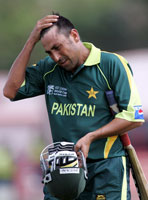 Lankan outfit in Abu Dhabi in a series of three One-day Internationals, the
national selection committee have completed their first assignment. The
panel, under the chairmanship of former Test cricketer Salahuddin Ahmed, has
named 16 players instead of 15 for the two-team event.
Lankan outfit in Abu Dhabi in a series of three One-day Internationals, the
national selection committee have completed their first assignment. The
panel, under the chairmanship of former Test cricketer Salahuddin Ahmed, has
named 16 players instead of 15 for the two-team event.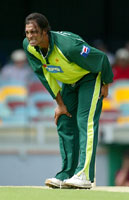 of Yasir Hameed and Abdul Rahman is a very healthy move as both are hard
working and possess talent and mental toughness which are essential
ingredients for a player to earn recognition at the international level.
of Yasir Hameed and Abdul Rahman is a very healthy move as both are hard
working and possess talent and mental toughness which are essential
ingredients for a player to earn recognition at the international level.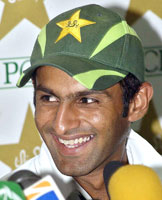 possibly combine the qualities of tactical guru, military commander,
thoughtful counselor, supreme man-manager, excellent player, diplomat,
inspirational decision-maker and consistent motivator, skilled in media
relationships and overflowing with luck? That animal has never existed, and
it is part of cricket's charm that all captains try to conceal their weak
links while hoping that their positive virtues will paper over the cracks and
get their players performing to their full potential.
possibly combine the qualities of tactical guru, military commander,
thoughtful counselor, supreme man-manager, excellent player, diplomat,
inspirational decision-maker and consistent motivator, skilled in media
relationships and overflowing with luck? That animal has never existed, and
it is part of cricket's charm that all captains try to conceal their weak
links while hoping that their positive virtues will paper over the cracks and
get their players performing to their full potential.
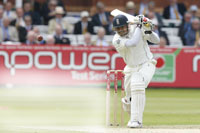 Indies at Lord's that started on Thursday. Shah had played only one Test
until then, against India at Mumbai in 2006, and played a crucial role,
scoring 88 and 38, in England's victory. His effort in the first innings is
the highest by an English batsman who's played only one Test and it slots in
at No 4 on the overall table.
Indies at Lord's that started on Thursday. Shah had played only one Test
until then, against India at Mumbai in 2006, and played a crucial role,
scoring 88 and 38, in England's victory. His effort in the first innings is
the highest by an English batsman who's played only one Test and it slots in
at No 4 on the overall table.
 cricketing services to a number of teenagers, famous cricketers, top
international units, surging forces which are famously known as minnows for
the improvement you brought in their games through innovative coaching
techniques.
cricketing services to a number of teenagers, famous cricketers, top
international units, surging forces which are famously known as minnows for
the improvement you brought in their games through innovative coaching
techniques.
