



|
|
|
|
|
 |
 |
   |
aid
Searching for common
ground rights The status quo persists,
or does it? Disaster — day by day survival industry CUnequal
distribution The failure to tap actual tax potential, which is not less than Rs8 trillion, has forced the country to rely more and more on external and internal borrowings, leading to multiple politico-economic crises. The persistence of large fiscal deficit, among other reasons, is one of the primary causes for macro-economic imbalances.
aid Who benefits from US aid to Pakistan? A critical analysis of the dynamics of aid and Pak-US relations By S. Akbar Zaidi Different possible explanations have been put forward as to why the Pakistani military would continue to so blatantly shelter insurgent leaders, perhaps even bin Laden. Some suggest that the use of these “proxy fighters” gives the Pakistani army the ability and opportunity to make use of them for the military’s regional designs, such as “strategic depth” in Afghanistan, and for destabilising India, or, in fact, even to use them as a reason to ask for more aid. Whatever the explanations, there is little doubt that the Pakistani military establishment has supported and protected individuals and groups designated as terrorists.
In the aftermath of the bin Laden raid, American policymakers have openly
wondered about the utility of military aid to Pakistan if some individuals
and institutions were either complicit or incompetent regarding the
presence of bin Laden. In either case, the Pakistani military and
intelligence agencies come through rather poorly, which further begs the
question of what purpose US aid to Pakistan serves if such colossal
failures, lapses, or outright duplicity occurs. Growing concern by US
officials and legislators has raised old questions afresh. Congressman
Howard Berman, Democrat of California and one of the signatories to the
Kerry-Lugar-Berman bill, has stated that “I don’t think our military
assistance is serving the interests we are intending it to serve” and
that aid “has not been effective.” Another Democratic congressman, Jim
Moran of Virginia, who sits on the defense appropriations subcommittee,
has gone one step further, suggesting that “we should cut off the
military aid but not the economic development aid. We should insist the
aid be used for education and economic development, but not for
subsidizing the military presence on the border with India, which is what
its [sic] being used for now.” Former US ambassador to Pakistan Anne Patterson wrote in a secret review in 2009 that “Pakistan’s army and ISI are covertly sponsoring four militant groups — Haqqani’s HQN, Mullah Omar’s QST, Al Qaeda, and LeT — and will not abandon them for any amount of US money,” as diplomatic cables released by WikiLeaks show. The US government has added teeth to these complaints by recently suspending about $800 million in military aid, including reimbursements for costs incurred fighting terrorism on the Afghan border, military hardware, and training assistance. The New York Times reported that the United States would likely resume aid if the relationship improves, but how exactly it might improve remains unclear. Americans are not the only ones disenchanted with the relationship. Many Pakistanis argue that because of the US war on terrorism, Pakistan has been drawn into “America’s war,” with grave consequences. They cite figures demonstrating that as the US role in the region has increased, and as the Pakistani military has been further drawn in, it has been Pakistanis who have overwhelmingly suffered. There were 189 deaths from terrorism-related violence in Pakistan in 2003; this number rose to 3,599 in 2007, and has grown even higher since. Pakistan’s prime minister recently stated that as many as 35,000 Pakistanis had been killed since 2001, and other officials have argued that more Pakistani soldiers have died fighting militants than the number of US troops killed in Afghanistan. Pakistani government estimates suggest that Pakistan’s economy has suffered a loss of $68 billion since 2002 on account of the war.28 Many Pakistanis would argue that because Pakistan has helped the United States, the war has been brought into Pakistani cities and towns and has even been indirectly responsible for the death of former prime minister Benazir Bhutto. Clearly, it is impossible to assess the consequences of the war through counterfactuals, but there is a great deal of weight in these arguments. The United States is blamed for not containing terrorism in Afghanistan and allowing it to spread to Pakistan. Such impressions do not make for the friendly relationship or the positive image usually expected of aid. A competing Pakistani viewpoint contends that with US support and perhaps using US pressure as an excuse, Pakistan and its military can play a leading role in rooting out terrorism and combating the rise of militancy and fundamentalism in Pakistan. The drone attacks in Pakistan’s northern frontier are a case in point. While Pakistani leaders publicly condemn such strikes for political mileage, there is evidence that they not only turn a blind eye to such attacks, but favor them, allowing the United States to eliminate terrorists that threaten Pakistan. WikiLeaks documents that appeared in the Pakistani press in May 2011 state that Pakistan’s military supports the drone attacks in private, but condemns them, as do the politicians, in public. What emerges from both countries’ perspective is that post-9/11 U.S. aid has been focused mainly on carrying out counterterrorism operations, not helping the Pakistani people or the economy, or building democracy. This assistance has not achieved the counterterrorism objectives of the United States or Pakistan, even acknowledging that the objectives have been inadequately defined. It has had the effect, however, of strengthening the praetorian state further — thus reinforcing the very weaknesses of Pakistan’s democracy that the Americans decry. The post-2008/2009 Kerry-Lugar-Berman bill has tried to change the focus of US aid to Pakistan, but the larger issues of US assistance are still unresolved, especially since the capture and killing of bin Laden, which, it seems, had less to do with US aid to Pakistan directly, and more to do with independent US espionage and counterterrorism efforts. Kerry-Lugar-Berman funds have now been used mainly for infrastructure, not civil society investments as originally intended, which highlights another example of changing objectives in midstream and speaks to the relative ease of spending money on and verifying infrastructure projects. There have been severe absorption problems in the current aid tranche, with more money than there are worthwhile projects to fund. In addition, aid is not changing the perverse structural incentives — not increasing regional integration and not forcing the state to make better guns versus butter choices or focus on revenue collection. The United States can achieve much more by thinking about how to leverage its aid and actually be a game changer in Pakistan today. Currently, the United States is so focused on the war on terrorism that it loses sight of chances to enhance regional peace, stability, and security by changing its strategies and priorities in Pakistan. By using its money more productively, lessening the waste caused by contractors and bureaucracy, and improving links with Pakistani nongovernmental organizations, the United States might see its money make a real, positive impact. American effort alone, however, will not be sufficient. Even Pakistani academics and scholars recognise that the Pakistan army has been, and continues to be, the most powerful institution in Pakistan. However, there is concern that US aid to Pakistan’s military has only strengthened Pakistan’s military instead of strengthening its weak, fledgling, but emerging, democracy. Given the limited amounts of economic aid, there is little indication that US assistance has had a marked effect on addressing Pakistan’s economic problems or its social indicators. Pakistan itself must step up if it expects to benefit from America’s largesse. A move to an accountable civilian government will be necessarily driven by Pakistanis, not Americans, and Pakistan must work to reform its military and civilian sectors so it can modernize and democratize on its own. One essential step will be weaning the state off its reliance on jihadist groups, so that Pakistan can truthfully claim to combat all terrorists, and not shelter those that it considers valuable. The question being raised in Islamabad, as well as in Washington, as to what benefits US aid brings to Pakistan, is being asked and answered for very different reasons. In Washington, the question being asked post–bin Laden is: What is or has the United States received in return for the $20 billion of aid given to Pakistan? And the answer seems to be “not very much.” In Islamabad, the question being asked by politicians and civil society members is similar: What has US aid delivered for the people of Pakistan? The answer again is “not very much, except that the military has benefited the most.”
Conclusions and policy recommendations Both Pakistan and the United States have reason to be disappointed that so much US aid has had so little positive impact. Though the United States hopes that this assistance will encourage Pakistan’s army to help in the war on terrorism in the border regions of Pakistan, there has been no real evidence that the Pakistani army was on the same page as the US administration in this regard, or that the Pakistan government and military felt as strongly about al-Qaeda and the Afghan Taliban as the US administration. American soldiers continue to die at the hands of an enemy whose leaders find sanctuary in Pakistan. Though it is difficult to speculate what would have happened if different policies had been pursued, the impact of this struggle on Pakistan has undoubtedly been severe. Despite this cost, it is also clear that the Pakistani government and its military have made efforts on the issue of domestic terrorism and perhaps even had some success. Many key issues related to sectarianism in Pakistan, militancy, and the rise of fundamentalism predate the 9/11 incident, although they have been exacerbated as a consequence of the war on Pakistan’s border since 2001 and the drone attacks of more recent years. In the past decade, it seems that there has been — perhaps even deliberately — a considerable lack of oversight in the aid relationship with Pakistan, and protocols and procedures have been ignored and not respected. Also, it seems that some amount of aid given by the United States for specific counterterrorism purposes has been used by the Pakistani military for very different purposes, such as the purchase of conventional weapons. Since military aid has been two or three times as large as economic aid, the US government has strengthened the hand of the military in Pakistan’s political economy, sidestepping the elected civilian government because there is more trust in the ability of the Pakistani military. This has been a missed opportunity to strengthen and support democratic movements and institutions. The change in the relationship since 2009 might be able to reverse this balance. Until now, direct US economic aid has not had a critical impact on Pakistan’s economy because it is too small, focused on particular areas and regions, and tied up in issues related to procedures, protocols, and contractors. Economic and financial support from the International Monetary Fund, World Bank, and other multilateral agencies has been far more critical to fostering economic stability in Pakistan. Despite this, the United States remains Pakistan’s most important trading partner and has critical leverage over the economy. Pakistan receives 20 percent of its foreign remittances from the United States (around $1.8 billion in 2009–2010). Also, 35 percent of foreign investment to Pakistan comes from the United States (around $1 billion), and 18 percent of Pakistan’s exports go to the United States ($3.6 billion). The key question, then, is why the United States continues to give aid to its ally, Pakistan, when it not only appears that much of that aid is not being used for its intended purposes, but also that dishonesty and duplicity are involved. From the Pakistani point of view, there seems to be little reason to be dependent on aid, since the Pakistani civilian and political leadership seems to get little out of it. The Pakistani military is the main beneficiary from this relationship, exploiting the pathology of too big — and too important — to fail. Since the Pakistani civilian political leadership is subservient to the military in terms of power, clout, and authority, it seems that the civilian leadership is doing the military’s bidding, either voluntarily or through coercion. Hence, it seems, the United States is paying a high price for getting just enough in return to keep it relevant and interested in continuing the aid, while reinforcing the military dominance that continues to complicate American antiterrorism objectives. Though the United States has received permission for drone attacks and NATO supplies, and occasional intelligence support, true counterterrorism cooperation has been lacking, and drone attacks and increasing violence infuriate ordinary Pakistanis. The Kerry-Berman-Lugar bill is a step in the right direction, shifting the relationship away from the myopic focus on the military and toward a more productive use of aid. Continuing this work will be a long and torturous process, but in the long run will serve the interests of both the United States and the Pakistani people, and it might just strengthen democracy in Pakistan. (Concluded)
The writer is a visiting scholar in the Carnegie Endowment’s South Asia Programme. Currently a visiting professor at Columbia University with a joint appointment in the School of International Public Affairs and MESAAS, the Department of Middle Eastern, South Asian, and African Studies, his research focuses on development, governance, and political economy in South Asia. Zaidi’s most recent book, Military, Civil Society and Democratization in Pakistan, was published by Vanguard Press, Lahore, in October 2010. Searching
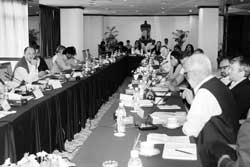
for common ground A German political foundation the Heinrich Böll Stiftung jointly carried out the Pakistani-German Media Dialogue in collaboration with the German Foreign Office (German Embassy) in Lahore, between October 9 and 11, 2011. Fifteen Pakistani and 12 German journalists participated in the Dialogue to reflect on what has happened in the last decade between the so called ‘Islamic World’ and the ‘West’. The participating journalists were senior editors and decision makers from the media industry in Germany and Pakistan. The first panel discussion started off with a short presentation about the German perceptions of Pakistan and vice versa. Marcus Pindur, Editor Deutschlandradio Berlin, stated that the German public views about Pakistan have changed over the years and become more downbeat since the between 2005 and 2009 due to the 9/11 incident and later happenings including the death of Osama Bin Laden. The German public view is that their tax money supports a ‘corrupt’ Pakistani government which is offering ‘unofficial’ help to the extremists. And these extremists are killing German soldiers who are posted in the North of Afghanistan. The perception changes could also be seen in the will of the Germans to donate money for the Humanitarian Relief after disasters like the Earthquake in 2005 compared to the Floods in 2010. Ejaz Haider, security
analyst and columnist of The Friday Times and daily Express Tribune shared
his view about the post 9/11 happenings. He stated that the US reacted
badly on the attacks on the World Trade Centre and the Pentagon, whereas
opportunities and signals to resolve the post 9/11 situation without the
military intervention in Afghanistan and drone attacks in Pakistan, have
not been taken seriously by the US. He said the failure of the US policies
is evident from the fact that the security situation has really become
more insecure. He concluded that we are now living in a world in which
security issues scare us around, both the Muslim and the Western world. Further topics which were discussed were Islamophobia and Xenophobia. Cem Sey, German-Turkish national and German correspondent for the Turkish newspaper Taraf, raised the question if the starting point of the misunderstanding between the so called Muslim and the Western world did not start with the book ‘Clash of Civilizations’ rather than with 9/11. Several journalists agreed with Daniel Bax, from the German newspaper Tageszeitung, that in fact both sides have the same topics and issues which they are discussing and facing: Threats from the extremists and security issues. During the Pakistani-German Media Dialogue, influential personalities of the Pakistani political parties Begum Abida Hussain and Hasham Baber (ANP) also participated and interacted. The afternoon explored Pakistan’s interior politics, i.e. party politics, situation in KPK and FATA, sectarian issues and how Europe can help to support the liberal forces in Pakistan. Senior journalists Jan Ross, Jan Marberg, Khaled Ahmed and Rahimullah Yusufzai spoke on the possibilities of talking peace with Taliban. Khaled Ahmed viewed that the Taliban have flouted all the past agreements. However, the participants appreciated that the Europe was increasingly looking towards the resolution of conflict through political means. It was said that high hopes can be attached to the coming conferences in Turkey and Bonn late this year. The German Ambassador, Dr. Michael Koch, met the German journalists and gave them a background briefing on Pakistan, the future of Pakistan and the Pakistan-Afghan relations and most recent developments. During a visit to the South-Asian Free Media Association (SAFMA), journalists had the opportunity to discuss with Imtiaz Alam, Director SAFMA, media policies, repression against journalists and the working environment of journalists who report on security and political issues. During a dinner debate with Ahsan Iqbal, the Deputy Secretary General of the PML-N and Shah Mahmood Qureshi, former Foreign Affairs Minister, Ahsan appreciated the media dialogue and said that it would result in better understanding for senior journalists of both the countries — Pakistan and Germany. He said that despite the current gloomy situation Pakistan will emerge into a more powerful state. He said that if Pakistan was left alone to deal with the Afghanistan situation after the US troops’ withdrawal in 2014 and was not helped out by the international community, the regional security situation will worsen. Pakistan needs international recognition for its due role in Afghanistan. Questions related to the existing Blasphemy Law in Pakistan were also raised by several German journalists. Also the debate was conducted about Pakistan’s interests in Afghanistan and its support to establish a democratic government. This was discussed against the background of the Pashto majority living in Afghanistan and their connections with Pashto communities in Pakistan. Shah Mahmood Qureshi emphasised the importance of Pakistan’s sovereignty and on how much Pakistan sacrificed during the ‘war against terrorism’. Shah Mahmood Qureshi while appreciating the event hoped that the Pak-German Media Dialogue will become a regular annual feature and would further create better understanding between Pakistan and a strong European actor Germany. —
TNS Report
rights The informal sector has acquired great significance over the years as a source of employment and livelihoods for an increasing number of people, especially women, in both rural and urban areas of the developing world. It has particularly become a key mechanism for distributing goods and services to the urban poor. The informal sector is made up of very small-scale units producing and distributing goods and services and owned and operated by largely independent, self employed producers employing family labour or a few hired workers and apprentices. Informal sector enterprises are extremely diverse and are to be found in great numbers in all the main economic sectors, most of all in trade and services but also in manufacturing, construction, transport and urban agriculture. They operate with very little capital or none at all, and utilise a low level of technology and skills. Employment in these enterprises is highly unstable and incomes are generally very low and irregular. Home-based work done on
piece-rate is generally viewed by different sections of society,
manufacturers, and the state as an acceptable mode of productive work for
women to engage in. In view of social and cultural constraints,
particularly in Pakistan, private informal space of one’s home is
considered appropriate for productive work as it spares woman of the
hassle of moving into the public sphere. For manufacturers, home-based
work is cheap as the cost of rent, utilities, and tools is borne by the
worker. Also, the employers/manufacturers do not have to bear the cost of
social protection, including occupational safety and health. A dual and
contradictory nature characterizes home-based work. It provides the family
with the much-needed income to ward off extreme poverty and improve its
living. It also has the potential of turning into a profit generating
small or medium sized enterprise. On the other hand, home-based work is
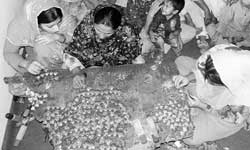
deprived of social protection. According to a recent study by PILER, “Status of Labour Rights in Pakistan” an increasing number of women are engaged in the informal economy in diverse sectors, mostly as home-based, piece-rate or casual workers on exploitative wages under poor working conditions. Unofficial estimates put the figure of home-based women workers in the informal sector as 75 percent of the total informal labour force. Official data do not include the category ‘home-based’ but only indicate that women comprise 53.7 percent of the informal sector labour force in the manufacturing sector. Home-based workers include both own account and piece-rate/sub-contracted workers. In Pakistan, the percentage of own-account home-based women workers, who fall under the category of self-employed, is only 13.4 percent. Most of the home-based women workers are either unpaid family workers (61.9 percent) or employees (24.6 percent) working on piece rate. The home-based sector of informal economy constitutes almost 65 percent of the total 73 percent informal sector in Pakistan, majority being women. Living in almost every low-income urban locality in the country, as well as in remote rural areas, is amongst the most exploited group of workers today. They constitute a major segment of labour deployment in the informal sector of the economy. The bulk of these worker producers live and work in tough conditions and do a variety of jobs for industry and trade, ranging from sewing garments, assembling electronic components to simple jobs of sorting, packaging and labelling goods. As a workforce, home-based workers have remained largely invisible. In many developing countries, and lately increasingly so in many industrialised countries, the vast scale and rate of growth of the informal sector presents a dilemma and a challenge for governments, social partners and the civil society alike. The growing informalisation of the economy has caused a rise in the number of women who work — participation rates of women in the informal sector. The selfless back-breaking effort of women home-based workers is not recognised by those who make development plans and policies and allocate resources. We have no law on our statutes that recognises them as workers and we have hardly any surveys that claim to give any reliable statistics about women home-based workers. Despite the fact that informal employment comprises one half to three-quarters of non-agricultural employment in developing countries, the impact of economic trends, urban planning trajectories, and other major forces (such as privatisation processes and climate change) on the informal economy are not well understood. Unlike some of their formal counterparts, those working informally have no cushion to fall back on. Working at home has always been the reality of work for many people in developing countries. However, statistics on this phenomenon remain very poor. Homework is often associated with low pay, especially among home workers engaged in manual work. Compounding their often low wages is the fact that home workers have to pay for many of the non-wage costs of production: notably, the overhead costs of space, utilities, and equipment. A holistic approach in community development is required as far a the HBWs issues is concerned. It is also important that all the members of the society benefit equally. Pakistani NGOs need to network, both to share their knowledge and experience and to cooperate in order to make a real difference. Programmes like National Rural Support Programme (NRSP), Punjab Rural Support Programme (PRSP), Benazir Income Support Programme (BISP), and social welfare schemes all need to cater to the needs and betterment of HBWs. Organisations involved in credit needs to extend its entrepreneurship training to others target groups. NRSP and its all provincial chapters can share its network and many years of experience and resources with the other NGO’s. More generally, it is believed that each of the programmes would benefit from regular strategic reviews and from re-assessing their overall missions. They should have regular evaluative exercises, including discussion of results and actions to be taken. Training is an important component of all the programmes and which would be strengthened if they involve more awareness-raising and focused on women’s human rights, as well as existing labour legislation. It is also important to change the attitude of the society to the issue. It is not possible to break the vicious cycle that home-based workers are in without the support of their families and communities.. The
writer is Development Manager and can be reached at laila.azhar@gmail.com Homebased Workers’ Day is to be observed on the 20th of this month The
status quo persists, or does it? Is there a possibility that the politics of violence goes limping away after the Supreme Court’s decision about the Karachi situation? Intelligentsia groups had expected from the court to give specific judgment against the culprits in Karachi politics, but the decisions that came are more generalized, throwing the ball in federal and provincial governments’ courts to resolve the crisis administratively and constitutionally. Following points may be considered: Committee headed by Chief Justice of Sindh High Court should ensure indiscriminate action, police force has to be de-politicised, political parties asked to expel criminal elements from their ranks, across the- broad actions against criminals ordered, no- go areas should be eliminated, licensed arms be registered with NADRA, display of arms at ceremonies be banned, comprehensive law urged to punish land- grabbers and encroaches, illegal strikes and shutdowns be prohibited. The Supreme Court wants
peace and stability in Karachi. It claims both the governments have failed
to control the Karachi situation. The SC declares that political parties
are engaging with criminal elements. So, how the coalition government will
deal with the matter politically and legally? The critical question that still exists in the country politics related to credibility, transparency, accountability and responsible behaviour of both federal and provincial governments. We should not forget the coalition government in Sindh, including the PPPP, MQM, ANP, PML (Q), PML (F) JUI all are the part of the whole crisis in Karachi politics. The reconciliation process between the PPPP and MQM is also stated to be a bargaining chip on ministerial issues, powers and administrative authority in the city. So, again, the coalition government in Karachi and all political parties in the provincial assembly are part of the power structure. But the question is if the provincial political parties and federal government can accept change in Karachi politics? The answer is very critical. The relations show a trust deficit because all three major power players — MQM, ANP and PPPP — still believe in capturing the city on linguistic lines. The surgical operation in Karachi is also very critical and most of the groups have serious reservations on it. Rehman Malik still hasn’t presented target killers in the media and is reluctant because the genuine target killers have still not been arrested. If the MQM joins the federal and provincial governments then it’s a clear message for the intelligentsia groups that no real change will come to Karachi. We should not forget that during the court proceedings no one from citizens or any intelligentsia group or the business community appeared before the court and presented or recorded their concerns related to target killing in Karachi. Karachites know very well the price of raising voice against the criminal elements. The business community has met the Army Chief and other authorities but didn’t appear before the court. The court said in the decision the 40 percent of the Karachi police is purely politicised and the local political party workers part of the police. So, how can the coalition government take a major step and deal with the issue. The political parties’ role is more important compared to the legal and administrative ban or any actions. But the question is if there is a political process in the country, especially in Karachi? Political process in a country is meant to create enabling environment for people to participate in an activity and do politics. People are living under threat from different groups and think twice before participating in politics without fear. Unfortunately, the political process in the city has been kidnapped by the mafias and their support groups. Now no one goes beyond the existing rule of game. Due to the affirmative actions of the Supreme Court, the Karachi situation is much better as compared to the last few months. Still, more powers are being given to the rangers. The mafias wait for a new situation to emerge and then the situation turns in their own favour. Lack of political will and commitment from the ruling elite and political parties is disturbing. All the political groups are doing is indulge in a blame game. The problem is that no one accepts failure. The court request has ordered political parties to dissociate from criminal elements and kick them out for the sake of political and economic stability. The turning point would come when the political parties admit to have criminal elements within their ranks. It looks very difficult presently when most of the parties are part of the government structure, enjoying power politics. The court statement says it is the duty of the federal government under article 17(2) to make a declaration about any political party working against the sovereignty or integrity of the country and refer the matter of the court within 15 days of such a declaration. Actually, ban on a political party is not the real solution, we should try to deal with the issue politically and with some affirmative action. The role of citizens is very important and people should come out of their blind political association and disassociate themselves from the party if it’s not working for the democratic practices in the country. But one should not target just one party because more political parties are involved in violence. So it’s an important lesson for our ruling elite and the political parties to learn from the Supreme Court’s decision and re-visit their own current policies. The write is a political analyst and a human rights campaigner. He can be reached at salmanabidpk@gmail.com
Disaster
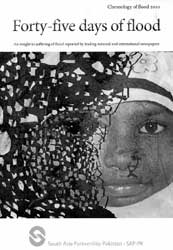
— day by day Forty-five days of flood Published by: South Asia Partnership, Pakistan Hard-cover, Pages: 235 Price not mentioned The year 2011 is well on
its way out, and the last year seems to be an old story. But it should not
be. And there is one solid reason for that. The common theme running
through both the years is the floods that have affected lives of millions
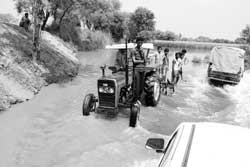
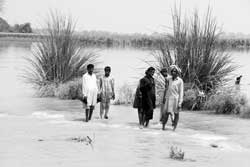
of people, and continue to do so. Whether we have learnt any lessons from the two episodes of calamity seem to be an odd query now. Shall we ever wake up to our negligence is perhaps the right construction. The answer to this question is definitely not in the positive as sufferings of the people are too enormous to ignore. The impact of massive destruction on the people refuses to go away, especially if the magnitude of catastrophic floods is as big as the one that struck the people during the year 2010. As it happens in our part of the world, much is lost to poor governance, inefficiency and, red-tapism. As days go by, unfortunately, the focus of our attention wanes to the detriment of millions affected by a climate disaster. But the practice of losing one’s sight from duties and responsibilities can be highlighted, if not reversed, by putting details and data in one compact form. The book under review does the right thing in compiling the information and details about the ravages of flood in chronological order. The publication has been divided into two sections — one mainly comprising of newspaper reports and articles while the other one documents rehabilitation and relief efforts undertaken by South Asia Partnership (SAP) and its partner organisations. The book, among other things, would certainly serve to inform and guide researchers, policy-makers, and general readers as a helpful reference. The book rightly claims to be “an insight into suffering of flood reported by leading national and international newspapers”. While the book carries reports on the first forty five days of 2010 floods, it indirectly points to a broader picture which shows the rapidly changing environment patterns in the region and our lack of a proper response to deal with a crisis of this type. The book also uncovers the rough fabric of our society where politicians and political parties fail to come out of a mindset that works on ethnic and religious lines. Harrowing reports of floods have been marked with relevant and moving pictures, effectively highlighting the agony of the people who find themselves at the mercy of a violent nature. The information and the inherent call for action contained in the book would be even more accessible if it is also printed in Urdu language. The book is a welcome addition to the limited amount of material available with non-governmental organisations and in libraries across the country about a problem that we have so far ignored at the cost of our peoples’ plight and survival.
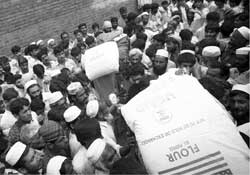
survival Floods have ravaged hundreds and thousands acres of arable land and crops in many parts of Pakistan during the last couple of years, Sindh being the recent victim to torrential rains. One of the most visible losses, besides life, is the standing crops across hundreds of acres of land. That simply means food
inflation, even starvation. Signs of food deficiency are already very
obvious in Sindh where peoples’ entire belongings have been swept away
and days go without eating food to one’s fill or drinking clean water.
But food inflation is not just the problem of Pakistan; many developing
countries in this part of the world are struggling to feed the teeming
millions. When showing displeasure, the old Chinese would say, ‘may you live in interesting times’. Apparently, our displeased Mother Earth has asked us to live in interesting times as well as try to have a peaceful society perching on inequitable distribution of food-related resources. So, the developing world, especially the South Asian region finds itself in a situation of frail food security system stressed under food inflation, and climate change related intense weather conditions, such as floods and other natural hazards. Burden is multiplied onto the fragile institutional arrangements deployed for research, development and innovation, social protection, ensuring agriculture finance, and providing access to land and other input resources. Under the circumstances, South Asia, which accommodates 40 percent of the world’s poor even before spike in food prices in 2008, needs special attention of donors, governments, and civil society organisations. While analysing the grim side of the food situation, a recent global report ‘Growing a Better Future: Food Justice in a Resource Constrained World’ by Oxfam argues the case for a new prosperity. It argues for new global governance for agriculture which improves trade rules for the poor economies, new future for agriculture which witnesses improved investment agenda while ensuring a resilient ecological foresight which includes equitable distribution of scarce resources. At this point, before discussing the food issues any further, it is worthwhile to have a cursory look at the dynamics of the agriculture system. By the
middle of the previous century, the Malthusian fear was effectively
confined to texts books rather than frightening people in streets.
Production was increased with high-yielding varieties. Under a complex
system of macro-economic interventions and structural transformation, the
farmers of the now-developed countries were able to get financing as well
as technology to produce at reduced costs and in abundance. Those who could not remain in agriculture went to industry in urban areas and enjoyed fruits of opulence and rapid growth in agriculture, industry, and lately in services. The standards of living improved in the now-developed countries with substantial impact on demand for variety in food basket. Ultimately, the local became global which transformed the food economy around the world. However, there were divergent effects of the development elsewhere. Some countries were able to reap productivity benefit from the surge in finances and technological diffusion under the Green Revolution while many others were left out not being able to compete in the market on quality, ensured delivery, and prices. The crowded out, mostly living in the less developed countries, either fell into net food importers club or remained food importers with never-ending struggle to move out of the food insecurity trap. In addition, especially in Africa, the thinking that industry must be promoted at the expense of agriculture, led to stagnation of growth in agriculture which ultimately adversely affected the industry as well. Such ambivalent developments set a stage for global inequalities in production and consumption of food around the world as well as within societies and different players in economy. Some studies argue that a host of factors, including agriculture and land management policies, and large scale industrial-food companies limited the space for small farmers and, thus, destroyed the local systems of subsistence farming, leaving people food insecure amid plenty of food production. In the absence of a consistent human development approach and active labour policies, the economies could not sufficiently integrate people from farms to high-end modern sector of the economy which required skilled and educated human resources. The human insecurity which emerged from coordination failures of the government and under-developed private sector created a number of problems ranging from unplanned urbanization to conflicts of ethno-political nature. However, the world is a place of ‘hunger amidst plenty’ as Amartya Sen calls it. Currently, in the words of Watts and Goodman, with global demand and internationalisation of the agro-food industry, the giant food companies and large retailers have aggressively transformed world agro-food economy. Now the designer organic vegetable serves the tables of the rich. On the contrary, in 2009, the world witnessed one billion people going hungry owing to price and supply shocks in food sector.
The first is equity challenge which hands over land, food, and power in few hands. The second is production challenge which needs strengthening of productive capacity in agriculture to respond to population and growing demand for food. It also eyes for the need of effective human development strategies to attain productivity growth amongst the small farmers. The third is resilience challenge which is testing the resilience of social and physical infrastructure under climate change and disaster situations amid supply side constraints and food price volatility. To respond effectively, the report suggests that a new vision in South Asia must guarantee the universal right to food, support smallholder agriculture, protect against climate change, and improves regional cooperation. One form of regional cooperation is to have a SAARC food bank. While the above-mentioned reports have both the elements of warning and opportunities, it must be noted that in countries like Pakistan the food price escalation can worsen the poverty situation as well. The fact is that food is a major item of household budgets of the people living close to poverty line. It has been estimated that a 10 percent increase in food prices can lead to 2.2 percent increase in poverty while a 30 percent increase to 6.7 percent of poverty. While the province of Sindh has witnessed 50 percent destruction in its agriculture produce owing to floods, it must be urgent and important for the policy makers to pay a serious heed to the advocacy by civil society organisations. Otherwise, a food insecure population is a more conflict-prone entity which Pakistan cannot afford. The write is a development policy specialist and can be reached at abbasi.zubair@gmail.com
industry Haji Zaman, the owner of Hill City Hotel in Fizaghat, Swat, is relieved to find tourists swarming his place once again after a prolonged lull. Situated at an elevated piece of land, the hotel provides its customers a view of the majestic Swat river and hills full of vegetation in the background. The location is ideal for tourists as the expanse of the river increases here considerably allowing tourists to indulge in activities like dining at huts set up along the bank, fishing, bathing while being at a safe distance from the river, playing various games and chatting with each other. Zaman’s a hotel is a
preferred location to stay for a night or two for local and foreign
tourists visiting Swat. They would make a stop-over here and then proceed
to places like Bahrain, Malam Jabba, Miandam and Kalam. The business
flourished over time and Zaman always felt the need to increase the number
of rooms, till the time this valley known for its hospitality and peace
was overtaken by the forces of extremism and militancy. Tourism sector suffered heavily during the Taliban regime as there were no visitors during the military operation. As if that was not enough, the floods of 2010 destroyed the infrastructure in Swat at a large scale and swept away dozens of hotels situated along the river. Careful estimates put these losses somewhere around Rs8.5 billion over the last decade which saw closure of hotels and restaurants, loss of jobs, transport sector’s decline, handicrafts industry becoming non-viable and what not. Immediately after the completion of military operation in Swat, the Pakistani government and the global community started stressing the need for reconstruction of the area and provision of livelihood to the masses. This was termed a means for stopping the resurgence of militancy in the area as abject poverty is directly linked to militancy and extremism in a society. Luckily, the sector got the attention it needed and an initiative called the Malakand SME Recovery Assistance Programme was launched by USAID through the FIRMS Project with the approval of the government to support hotel industry in the valley. Hotels were identified through a detailed business census by the project team in March-April 2010. Under the project, a total of $2.7 million was earmarked for tourism sector to be released to 239 beneficiary hotels on the satisfactory completion of deliverables. Of this amount, $1.3 million was meant for cash grants and $ 1.4 million for in-kind hotel procurements/supplies of $1.4 million. The project was underway when floods hit and worsened the situation, and work on it had to be started afresh. Zaman is one beneficiary of the project. His hotel Hill City is a category B hotel which was badly damaged during the floods, and has received assistance from the project in the form of cash grants and hotel supplies such as beds, blankets, mattresses, TV sets, etc., as well as trainings on various aspects of hotel management for the manager and other hotel staff. He tells TNS that “though it will take foreign tourists time to return, locals are visiting the valley in large numbers. The weather is pleasant here at this time of the year and the tourists mainly comprise of families coming from Lahore, Islamabad, Faisalabad and even Karachi,” he says. Zaman says he has charged between Rs2,500 to Rs 4,800 per day from families depending on the quality of the rooms they were offered. “All of them paid the amount happily. They were pleased to find internet facility, generators, TV at our premises.” While hotel owners like Zaman have welcomed the assistance provided under the project, there are those also who feel deprived. Some of them claim they were not included in the programme and categorisation of hotels was not done properly. However, the project team claims many of the hotels opted not to join the survey for two reasons. First, they were skeptic about the outcome of the project and, secondly, they thought the survey was a clandestine attempt to register them for taxation purposes. Now, when they are seeing cash and kind transfers actually taking place, they are disturbed. The project team has also claimed categorisation of hotels was done in accordance with The Pakistan Hotels and Restaurants Act, 1976. This was necessary as different amounts were to be given to hotels falling in different categories. Coming to the project details, all the 239 beneficiary hotels are owned by private parties and the public sector hotels and guest houses, including Pakistan Tourism Development Corporation, Kalam and Pakistan Austrian Institute for Tourism and Hotel Management (PAITHOM) are not included in the programme. Both these buildings are still under the occupation of Pakistan army and, so far, no schedule has been provided for their vacation. So far, cash grant amount of around $1.095 million, which is 84 percent of the total allocation for this purpose, and hotel supplies worth $1.076, which is 76 percent of the amount earmarked for this purpose, have been disbursed to the beneficiary hotels in Swat upon successful completion of deliverables and recovery milestones. The destruction of Malam Jabba Chairlift and resort has also led to a considerable fall in the number of visitors, especially those who would come here during winter. A report on Malam Jabba Chairlift and its on-site condition assessment and procurement requirements was also prepared by the project team in May 2010. This included a draft request for proposal to tender design/build solicitation to reconstruct the chairlift which was submitted to the Provincial Reconstruction, Rehabilitation and Settlement Authority (PaRRSA) and Tourism Department, Khyber Pakhtunkhwa (KPK) for further necessary action. Muhammad Ali Syed, Manager, Tourist Information Center (TIC) & Events at Tourism Corporation Khyber Pakhtunkhwa (TCKP) tells The News on Sunday (TNS) that his department, through Ministry of Foreign Affairs, Islamabad and Pakistan Embassy in Switzerland has approached Swiss Authorities for import of a chairlift (offered free of cost) from Switzerland to Pakistan for installation at Malam Jabba. The chairlift, he says, will only involve the cost of dismantling, transportation and installation at Malam Jabba. “We need funds to materialise this plan and are trying to approach potential donors for this purpose,” he adds. Inamullah Khan, Programme Manager at USAID FIRMS Project tells TNS “the grants money and in-kind support is released to the partner hotels in installments against satisfactory completion of recovery milestones/deliverables by hoteliers. The project’s technical experts also carry out periodic field visits to hotels to see the progress on rehabilitation against the targets of business recovery plans for the concerned hotels,” he adds. Inamullah shares it with TNS that as per project obligations tourism sector experts are regularly assessing the current conditions of Swat hotels’ readiness, cleanliness, and hygiene for delivering quality services to tourists. The project has completed the data analysis process for the 5th round of site visits for non-Kalam hotels in end September 2011. This round of site visits depicted highly encouraging results — 96 percent of the hotels surveyed have shown improvement in their readiness conditions compared to findings in the first round of assessments. He says the census of hotels was conducted during March-April 2010. At that time, some of the hotels were either closed or there was no staff present at the site and some were occupied by the Army which did not allow the project staff to survey the hotels, he adds. Besides, he says, there were other hotels which had removed their display boards for security reasons and were not picked up in the business census. Of the 265 selected hotels, 26 did not respond to request for applications (RFA) issued by the project to them in September 2010 and were, therefore, not considered for inclusion in the programme. Nasir Jamal, the owner of Paying Guest Hotel and Restaurant, Malam Jabba Road, Speenay Oba, hopes things will improve by the advent of winter season when tourists come for skiing etc. He tells TNS their business had picked up around Eid and there were a lot of tourists but the numbers fell down on the third day of Eid. That day curfew was imposed in the area after some skirmishes between Pakistan Army and the Taliban. “Things are under control till then but tourist’s confides takes some time to build.” Nasir says a large number of people come here from the close-by cities like Charsadda and Mardan. Though they cannot be termed tourists in true sense of the word, they do bring in revenues and keep the wheel running. He hopes that with peace and writ of the government restored in the valley and hotel infrastructure upgraded, tourists from other provinces will also start visiting this heaven on earth.
Unequal
distribution The failure to tap actual tax potential, which is not less than Rs8 trillion, has forced the country to rely more and more on external and internal borrowings, leading to multiple politico-economic crises. The persistence of large fiscal deficit, among other reasons, is one of the primary causes for macro-economic imbalances. In these columns, we have time and again presented concrete and detailed proposals for coming out of the debt prison by rationalising taxes and ensuring proper enforcement through an autonomous revenue authority comprising capable and competent persons. Unfortunately, none of the proposals has been considered and debated till today. We will be pushed towards more miseries if emergent measures are not taken to revive the economy. In his recent column,
noted economist Dr. Akmal Hussain noted with concern that “the economy
at present is in Our existing economic and tax policies are the root cause of all ills. Economic policy is not at all aimed at rapid industrialisation and employment generation. Revenues can only be increased through better economic results — whereas we are overtaxing the ailing economy. This is the real problem. Tax policy is focused on irrational and oppressive tax collections rather than to act as a catalyst for economic growth. Despite resorting to all kinds of highhandedness and figure fudging, the Federal Board of Revenue (FBR) has failed to improve the tax-GDP ratio — rather it has deteriorated during the last three years. In 1991, our fiscal deficit was just Rs80 billion. After twenty years, it has reached the figure of Rs1314 billion — 6.6 percent of GDP. During the current fiscal year, it will not be less than Rs1450. Irrational taxes cannot avert fiscal disaster. Oppressive taxes, in fact, pave way for anarchy and economic retardation. In 2004, the FBR promised 0.2 percent per annum growth in the tax-to-GDP ratio for the next five years while submitting ‘tax projections’ and ‘revenue-to-GDP ratio’ to the International Monetary Fund (IMF) on the conclusion of 9th review by the Fund under the Poverty Reduction Growth Facility (PRGF). FBR informed IMF that it would increase tax-to-GDP ratio from 9.2 percent to 10.3 percent in 2008-09. In 2008-2009 instead of improvement there was decline (tax-to-GDP ratio was 8.8 percent)! In 2010-2011, it dipped to 8.2 percent and the scenario for current year is also bleak. The question is where does the fault lies? Even millions of dollars of World Bank loan for tax reforms and IMF “guidance” have failed to bring the desired results. Who is responsible for the prevailing pathetic state of affairs? Our debt burden is increasing monstrously: fiscal deficit is unsustainable, inflation is crushing the poor, taxes are evaded and avoided by the rich and whatsoever is collected is wasted by those who matter in the land. The rich not only evade taxes but also thrive on taxpayers’ money. They are the de facto beneficiaries of all the State’s resources—generated mainly by the landless tillers and industrial workers. Pakistan is not a poor country—the State’s kitty is empty because of unwillingness of the rich to pay taxes. An unholy anti-people alliance of trio of indomitable civil-military bureaucrats, corrupt and inefficient politicians and greedy businessmen, controlling and enjoying at least 90 percent of the State resources — contribute less than 5 percent towards national revenue collection. In the face of this grim reality, can we ever improve tax-to-GDP ratio to a respectable level of 25 percent? The armies of ministers, state ministers, advisers, consultants, high-ranking government servants (sic) are not willing to cut down their perquisites and privileges. The existing regressive tax system is rapidly widening the existing divide between the rich and the poor. The sole stress on regressive indirect taxes [even under the garb of direct taxation through presumptive and minimum tax regimes] without evaluating its impact on the economy and lives of the poor and lack of political will to tax the rich is the real issue. Equity demands higher taxes from those who have higher income and wealth, but in Pakistan since the first martial law all fiscal policies have decreased tax burden on the rich and increased its incidence on the poor. We cannot increase our tax-to-GDP ratio unless the following steps are adopted: Absentee landlords should be taxed heavily as they earn millions by exploiting landless tillers. Capital gains arising from movable and immovable assets should be taxed at the rates applicable for other sources of income. All assets created out of untaxed money be confiscated. All kinds of tax exemptions and tax amnesty schemes be abolished. Provisions facilitating whitening of black money e.g., section 111(4) of the Income Tax Ordinance, 2001 be deleted. Stringent provisions introduced to counter money laundering, tax evasion and rent-seeking. We can easily generate taxes of Rs6-8 trillion if above measures are taken. It would increase our tax-to-GDP ratio to at least 25 percent. At the same time, we must have a Taxpayers’ Bill of Rights ensuring that taxes collected would be spent for the benefit of the masses and not for the elite. The dire need in today’s Pakistan is removal of economic inequalities through redistribution of income and wealth. Rich must be subjected to higher rates of income tax and capital transfer taxes as has been done by many countries in the wake of economic meltdown. The poor are paying an exorbitant sales tax of 16 percent (in fact 40 percent on finished imported goods after mandatory value addition and income tax at source) on essential commodities but the mighty sections of society — absentee landlords, corrupt politicians, rich generals and civil bureaucrats and greedy businessmen — are thriving on these very taxes. For achieving the goal of self-reliant economy, the starting point is taxation of the privileged classes — ruling the country for the last six decades. They are the culprits who do not pay personal taxes and on the top of that are beneficiaries of politically-motivated loan write-offs. The State has become so callous that the people living below the poverty line are subjected to 16 percent sales tax on the purchase of salt sold under brand names, but the rich having wealth of billions of rupees are paying nil or meagre taxes. Economic revival cannot be achieved by mere rhetoric discourse resorted to at the recent All Parties Conference. All party leaders must sign an agreement that they would collectively support a crackdown on tax evaders. The writers, tax lawyers and authors of many books, are Adjunct Professors at Lahore University of Management Sciences (LUMS)
Home|Daily Jang|The News|Sales & Advt|Contact Us| |
|
 The
Oxfam, in ‘Nourish South Asia – GROW a Better Future for Regional Food
Justice’ has argued that the current food crisis has some windows of
opportunity in which some seeds of change can be sown. The report argues
that South Asia is actually passing through three challenges.
The
Oxfam, in ‘Nourish South Asia – GROW a Better Future for Regional Food
Justice’ has argued that the current food crisis has some windows of
opportunity in which some seeds of change can be sown. The report argues
that South Asia is actually passing through three challenges.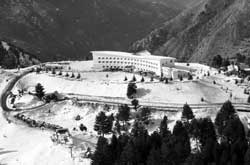
 a protracted recession combined with a high average inflation rate (14
percent), with food inflation being 25 percent; over one third of the
population is living below the poverty line and the majority is deprived
of basic services. The fiscal and balance of payments structures are
fragile: the budget deficit at 7.8 per cent is unsustainable and the gross
foreign exchange reserves in spite of being at an apparently comfortable
level of $17.6 billion can deplete rapidly due to panic capital
outflows”. How to come out of this mess? What are the obstacles for
becoming a self-reliant economy?
a protracted recession combined with a high average inflation rate (14
percent), with food inflation being 25 percent; over one third of the
population is living below the poverty line and the majority is deprived
of basic services. The fiscal and balance of payments structures are
fragile: the budget deficit at 7.8 per cent is unsustainable and the gross
foreign exchange reserves in spite of being at an apparently comfortable
level of $17.6 billion can deplete rapidly due to panic capital
outflows”. How to come out of this mess? What are the obstacles for
becoming a self-reliant economy?