



|
|
|
|
|
 |
 |
   |
analysis Newswatch firstperson The city
of fights economy Legitimately
lost! trend Resisting
subjugation The
looming crisis
analysis The IFIs have never called for a fundamental restructuring of Pakistan's political economy By Aasim Sajjad Akhtar Amidst the furore
surrounding the repeated American incursions into Waziristan, a familiar
'friend' of It was the IMF that offered the military regime of Pervez Musharraf its first big break after the coup of October 1999. Prior to September 2001, Musharraf's government was struggling for recognition in Washington and the IMF duly obliged by providing a modest $500 million in the form of a so-called 'standby arrangement'. After 9/11 Pakistan's allocations increased dramatically; under the Poverty Reduction Growth Facility (PRGF), $1.3 billion was pumped into the economy. The IMF's sister institutions, the World Bank (WB) and the Asian Development Bank (ADB), followed this up with multi-billion dollar commitments. In early 2005, the
then-prime minister and the blue-eyed boy of the international financial
institutions (IFIs), Shaukat Aziz, triumphantly announced that no more
loans would be taken from Pakistan's is an extremely aid-dependent economy and has been virtually since the beginning of the first aid package offered by the US in 1954. The IFIs have also been major donors, loyally following the example of successive American administrations (mostly Republican). Those who follow the methods of the IFIs know that no assistance comes without a dose of conditionalities. In recent times, Pakistan has been told that it must liberalise its trade and financial markets, sell off its public assets, eliminate subsidies and provide all possible incentives to foreign capital for making inroads into the economy. As has been blatantly evident over the last nine years, the IFIs do not hesitate to support illegitimate military regimes; Ayub Khan and Ziaul Haq were also patronised heavily by the IMF, the WB and the ADB. In positing that the IFIs are part of a larger imperial project to maintain the client status of states like Pakistan, I am only narrating the obvious facts. Never have the IMF and its sister institutions called for a fundamental restructuring of Pakistan's political economy, regardless of how often they rhetorically talked up 'structural reform'. For the IFIs, 'structural reform' really means reducing the economic role of the Third World state (while bolstering its coercive apparatus) and the opening up of Third World economies to multinational capital. They have advocated this neo-liberal paradigm all over the Third World, with typically disastrous effects. But this does not stop them from continuing to insist on such policies. With the unprecedented collapse of two of the four biggest investment banks on Wall Street (and therefore the world), the neo-liberal consensus is now subject to a serious legitimacy crisis. In short, neo-liberalism licenses the criminal greed that motivates investors and speculators to pass on debt in the most irresponsible way, such that the amount of money in circulation far exceeds the real value of the productive economy. Eventually this gap between the real and the virtual economy has grown so big that the real estate bubble in the US has burst and 150-year old banks and insurance companies have folded. Interestingly, there have been suggestions that the IMF needs to bail out the US economy, but how exactly would this happen? America's deficit is more than a trillion dollars and its trade deficit is also approaching a similar figure. On the other hand, an average American consumer is simply a microcosm of the government; living well beyond means and always willing to fall back on the adage 'spend your way out of trouble'. The IMF never wastes time preaching to Third World economies that their basic problem is the fiscal deficit ñ its prescriptions then reflect this obsession with fiscal discipline. Yet the most important decision-maker within the IMF (as it is within the WB and the ADB) is not subject to the same rules. Meanwhile, there is no tolerance for Third World economies that dare challenge neo-liberal orthodoxy or dispute the right of the United States to conquer the world. The latest evidence of this fact is the unrest in Bolivia, which is widely believed to be supported by the CIA. The crime of the Bolivian government? It has nationalised its abundant natural gas resources and refused to support the Bush administration's Empire-building policies in west and central Asia. Bolivia, Venezuela and other left-wing regimes in the American continent have also clearly said no to IFI impositions. So while it is being rightfully demanded that the American incursions into Pakistan are halted, it is just as important to resist the predictable set of conditionalities that will accompany the next IMF loan. Ideally the new government would refuse to take IMF 'assistance' altogether, and embark on a genuine plan of structural change in the economy that reduces not only our dependence on aid but also takes economic and political power away from the landed and industrial classes (the military cutting across both) and the trading middlemen that continue to dominate state and society. But this is not about to happen, so the IMF and its sister institutions will have a major role to play in Pakistan's economic fortunes in coming years. Perhaps the most important question to ask then is why Pakistan's economy is in the doldrums in spite of the enormous aid and policy 'assistance' that the IFIs have provided over the last seven years or so. Until only a year or so ago, the IFIs were still issuing public statements lauding Pakistan for skillfully negotiating the 'structural reform' process and emerging with its head well above water. It has only been in the last year or so that their tune has changed and, lo and behold, Pakistan is now drowning. It is drowning because of the neo-liberal policies that were adopted by Shaukat Aziz & co. And now that these policies are all set to be consolidated with the return of the IMF, all of Pakistan should be clear that even if things do get 'better' in the short-run, the working people of this country will continue to get the short end of the stick while capitalists of all denominations are given license to pillage. In the long-run, even the illusion of progress will dissipate and our dependence will become ever more acute.
Newswatch Do Asian tigers have electricity breakdowns? By Kaleem Omar Back in January 1989, during the early days of Benazir Bhutto's first term in office as prime minister, the government organised a conference of potential foreign investors at the Islamabad Hotel in the capital. Prime Minister Benazir Bhutto inaugurated the conference. She began her inaugural address by asking the potential foreign investors: "Give me one good reason why you shouldn't invest in Pakistan?" Just then, as if on cue, all the lights in the hall went out due to a power failure and didn't come back on for an hour or more. The sound system, too, packed up. The prime minister's question had been answered. And that, to the acute embarrassment of the conference's organisers, was the end of her speech. The meeting broke up, with the invitees groping their way out of the hall, stumbling over each other in the dark. As the invitees emerged out of the hall, many of them were seen with smirks on their faces. It was almost as if they were taking a perverse delight in the situation. Fast forward, now, to mid-July 2004, when then-Finance Minister Shaukat Aziz told journalists in Islamabad that he wanted to make Pakistan an "Asian tiger". That goal, he said, was going to be the "main focus" of his government's economic policies when he took office as prime minister later that year. Well, his term as prime minister, too, has come and gone, but Pakistan is still no closer to becoming another Malaysia or another Thailand or South Korea than it was back in 1989. So much for the tall claims made by successive governments in this country! This, however, does not mean that no efforts should be made in that direction. On the contrary, we should all work together to try to transform Pakistan into a tiger economy, and the sooner we start out on this path the better. At the same time, however, we have to be realistic in our aims and be prepared for a very long haul indeed. Just as there is no free lunch, there are no quick-fix solutions either. When Singapore's Lee Kuan Yew (the man responsible for pulling the small island nation up by its bootstraps into the ranks of developed countries) was on a visit to Karachi a few years ago, a reporter asked him that if there was one piece of advice he could give Pakistan to get its economy moving, what would that piece of advice be? Lee Kuan Yew replied: "Just make sure you don't have electricity breakdowns." They don't have electricity breakdowns in the Asian tiger countries. There is, of course, much more than electricity to what Lee Kuan Yew said; his comment was, in fact, a pithy way of summing up what a developing country's approach should be to the whole issue of economic development and the methodologies it needs to adopt to achieve continuing high rates of GDP growth. It took the United States 50 years (1850 to 1900) to double its GDP. China achieved the same result in only 10 years (1980 to 1990). The point is that if a developing nation like China (burdened with a huge population) could do this, so can we. Even at China's scorching nine percent rate of GDP growth, however, it will take us many years, if not decades, to achieve GDP per capita levels equal even to those of Malaysia today, let alone those of Taiwan or South Korea. A beginning must be made, however. In this context, one area we should focus on for starters is the very thing that Lee Kuan Yew mentioned: ensuring uninterrupted power supplies to the agricultural, industrial, commercial and domestic sectors of the economy. A country where power cuts are a regular feature of life, and disrupt economic activity with depressing frequency, can never become an Asian tiger. Factories rendered idle by power cuts for hours at a time, day after day, month after month, become factories forced to produce well below capacity. Quality control in factories also suffers as a result of irregular power supplies and fluctuating voltage, resulting in the production of substandard products. This, in turn, has an adverse affect on the country's export earnings, since foreign buyers are unwilling to buy products that are below international standards. Thompson's Law states: The greater the emergency the lower the charge in your cell-phone battery. A corollary to this is the Dowload Factor, which says: If a file takes an hour to download, someone in your office will pick up the phone in the 59th minute. This is another way of saying that no amount of IT technology is likely to convert Pakistan into an Asian tiger. To become a tiger economy, we must still go the route of investing heavily in education and other social services, increasing agricultural and industrial productivity and output, diversifying the range of manufactured goods, improving the quality and competitiveness of our export products, upgrading and expanding infrastructure, and putting in place mechanisms to ensure greater economic distributive justice. That the law and order situation also has to be far, far better than it is at present goes without saying. It is only when all these elements come together to form a well-conceived, cohesive economic and social structure that we will be able to realistically aspire to become an Asian tiger. Even then, however, it's going to take time and is going to need continuity of well-conceived policies. Chopping and changing policies every time a new government takes office is not a formula for success. This, of course, does not mean that our planners and policymakers should be rigid in their approach to economic and social problems, ignoring changing ground realities and the global economic climate. It does, however, mean that those policies that are seen to be working reasonably well and boosting GDP growth on a continuing basis should not be thrown out of the window merely because they were initiated by previous governments. If a policy is not working, change it by all means (indeed, it must be changed); but if it is manifestly seen to be working, don't throw the baby out with the bathwater. In this context, it also needs to be remembered that no country has ever borrowed its way to prosperity, and Pakistan is unlikely to be the exception to this rule. In other words, when it comes to economic development, there is no substitute for self-reliance. Borrowing money from other countries or international aid agencies only creates a dependency psychosis. In China, they have self-reliance. In Pakistan, we have seminars on self-reliance. That's the difference. We have to get out of this dependency trap and learn to stand on our own feet. It's not going to be easy, of course, but, as the experience of the Asian tiger economies has shown, it can be done.
A lifelong passion Iqbal believes that the Islamic political system has sufficient adaptability to meet contemporary exigencies By Zubair Masood Dr Parveen Shaukat Ali
is an accomplished scholar and educationist, and a prolific writer. She
has Following in the footsteps of such distinguished forebears, Parveen has had a lifelong passion for learning. She did her graduation from St Anne's College, Rawalpindi, and then joined University of the Punjab, Lahore, from where she did her Master of Arts in Political Science. Thereafter, she joined the academia as faculty, to which profession she is still associated as part-time teacher at the Women and Gender Studies Department, University of Vermont, US. Parveen's quest for knowledge has taken her to far off places across the globe. Soon after joining the academia, she got a Fulbright scholarship to pursue postgraduate studies in Political Science at the Stanford University in the US. Later, she landed a Commonwealth scholarship to do Master of Literature from Durham University UK. She followed these studies by a seminal work on Allama Iqbal's political thought and was awarded a PhD degree by University of the Punjab in 1968. However, her academic pursuit did not end there and, in 1972, she did Barrister at Law from London's Lincoln's Inn. Parveen has all along been a prolific writer. In addition to countless articles in newspapers and journals, she has authored eight books. Her first book, entitled Political Philosophy of Iqbal, is based on her doctoral dissertation and gives the reader a soulful insight into the poet philosopher's deep felt concern for the Muslim Umma's plight. Her latest book deals with the life and dark times of Gen Ziaul Haq. Her other books -- Pillars of British Imperialism, Legal Status of Women in the Third World, Human Rights in Islam, The Holy Prophet under the Torchlight of History, Status of Women in the Muslim World and The Prophet as the World's Great Law Giver -- as their titles suggest, deal with subjects of singular relevance to the Muslims. Her books -- a testament to her reverence for Islam -- won her the Presidential Seerah Award in 1987. Moreover, because of her work for the betterment of women, she was made a member of the Women Rights Committee in 1976. In 1980, Pakistan Women Institute declared her woman of the year. She was recently in Toronto, where The News on Sunday interviewed her. Excerpts follow: The News on Sunday: Would you like to tell us something about Allama Iqbalís political philosophy? Parveen Shaukat Ali: Allama Iqbal derived his political philosophy from Quranic precepts that were lying under the debris of centuries of superimposed interpretations of jurists, mystics and commentators. Iqbal cleared this debris to rediscover the basic principles. He then examined these principles, analysed them in the light of latest upsurge of human knowledge, synthesised them through ijtihad (independent reasoning) and finally transformed them into something more workable for the present times. TNS: Is Iqbal's political philosophy relevant for Muslims in the post-9/11 world? PSA: While believing in Islam's fundamental values, Iqbal advocates the importance of ijtihad to restructure Islamic thought according to evolving socio-political conditions. He believes that the Islamic political system has sufficient adaptability to meet contemporary exigencies. TNS: Is Iqbal's political philosophy of any use in the modern pluralistic societies? PSA: Iqbal was not a narrow-minded theologian and his ideas on politics are useful for modern pluralistic societies. He was fully conversant with Eastern and Western philosophies and he approached Islam's basic principles with clarity of vision. His unbiased attitude offers a contrast to the narrow sectarian interpretations of the priestly classes. Iqbal regarded rigidity and stagnation as contrary to the spirit of Islam. TNS: We claim that Islam has given due rights to women, but Muslim communities are notorious for maltreating their womenfolk. What are the causes of this outrageous situation? PSA: Islamic egalitarianism should ordinarily leave no room for discrimination between the sexes. However, due mainly to illiteracy and ignorance, women are not aware of their legal rights. Moreover, most societies in the Muslim world are patriarchal and, due to male chauvinism, women are maltreated and exploited. The women are getting a raw deal because of prevalence of indigenous tribal customs in backward Muslim societies. Islam does not support barbaric customs like karo kari, vani and honour killings. TNS: Most developing countries currently have little to offer their women by way of legal status. How can we make life easier for women in these countries? PSA: In the developing countries, women do need legal protection against the constraints of customs and male notions of superiority. The United Nations Universal Declaration of Human Rights must be strictly implemented in all countries to enable women to have equality of opportunity in education, professions, and all spheres of social, economic and political life. TNS: Do you support separate schools, colleges and universities for girls? PSA: There is nothing wrong with coeducation per se, except that at school and college levels it might distract young boys and girls. Moreover, some conservative families are reluctant to send their girls to coeducational institutions, thus depriving them of benefits of education. It is, therefore, better if the students and their parents have a choice between coeducational and segregated institutions. But, resources being limited, this may not always be possible especially at the university level, in which case resort can be had to coeducational institutions. TNS: Are you satisfied with the state of higher education in Pakistan? PSA: No. I am not satisfied with the state of higher education in Pakistan. There has been a rapid deterioration in academic standards all across the country. Most university teachers come unprepared to the classes and they often dish out a rehash of their class notes written years back. Their knowledge is hopelessly outdated. University libraries do not have the latest works of eminent modern scholars in the arts and sciences. The emphasis, unfortunately, is more on rote memory than on critical thinking and independent research. TNS: How can we improve the standard of higher education in Pakistan? PSA: For that, we need a stringent quality control over both teachers and students. More often than not, a majority of people joining the teaching profession are those who could not get into more lucrative and prestigious professions like the civil service. There should be a careful search for people with genuine love for learning. Similar sifting process should be applied to students aspiring for higher education at the postgraduate level. The teaching methodology should also be changed to include active learning with greater participation of students in classroom discussions and the learning process. The examination system should also be upgraded to the semester system, because it ensures year round commitment from students. TNS: What are your views on the mushrooming of private schools, colleges, universities and tuition centres in the country? PSA: Education is what civilisation is all about, but our successive governments have not accorded due priority to it. They have never spent enough on this important state function. Thus failure on the part of the government to provide adequate schools and colleges for an ever-growing population has resulted in a mushrooming of sub-standard private educational institutions in the country. Some private institutions are good, but they are very expensive and not within reach of even the so called well-to-do. The government has also not evolved any foolproof method to regulate and monitor the working of private institutions. This does not mean that we have any proper monitoring system for government-run schools. Tuition centres, I think, are real anathema. They are increasing because most teachers are unwilling to do any meaningful teaching during normal classes, due mainly to financial reasons. TNS: During the last four decades, there has been an ever-increasing emphasis on technological education at the cost of liberal education in the humanities. How do you view this development? PSA: The emphasis on technological education is understandable. It has greater potential to provide livelihood in the present world and more and more people are, therefore, viewing liberal education in the humanities as a luxury. But this is an unhealthy trend and must be arrested; and even while imparting technological education, the students must be exposed to some bare minimum instruction in humanities to sensitise them about human values and the beauty and splendour of life. TNS: Should we Islamise education in the Muslim world? PSA: Giving our students some knowledge about Islamic ideology and practices should be helpful in creating a more law-abiding and more civic-minded society. Islam teaches that all human beings being equal should get equal opportunities and those who are deprived amongst us should receive the highest priority. Islam states that all human beings should be treated with dignity. If these abiding values are made part of our curriculum, it shall help students achieve a higher moral character. TNS: How do you view madrassa education in Pakistan? PSA: Madrassa education in its present state has serious flaws. It is confined to rather orthodox type of religious instruction, giving birth to narrow-mindedness and ethnic bias. But we can improve madrassa education by bringing it in line with mainstream education, by reforming its curricula to include subjects like mathematics, modern sciences and literature in addition to Islamic Studies. This shall give madrassa students a multi-disciplinary knowledge and help them understand the modern world they are living in. This shall also make them more relevant and acceptable to the present day job market. TNS: Pakistan's literacy rate is said to be one of the lowest in the world. How can we improve literacy in the country? PSA: Pakistan's literacy rate is certainly one of the lowest in the world. Actually, our successive governments have on average spent less than two percent of GNP on education. In order to improve literacy, the government shall have to commit itself to this all important task. Moreover, I feel that well-to-do families should voluntarily come forward and set up literacy centres in the country on self-help basis. They should also run schools for poor children. TNS: You have been a student of political science almost all your life. What exactly is wrong with the political situation in Pakistan? PSA: The political system in Pakistan suffers from many defects. One of the major problems is too many political parties, which only serve to divide and confuse the people. Feudalism is another curse faced by our poor nation. Democracy can never function properly in a feudal system, where the rich and influential waderas treat their tenants as no better than slaves. Voting in such a system becomes meaningless, because it throws up the same self-seekers and unscrupulous opportunists in the assemblies. Drastic land reforms are, therefore, needed to restructure the political system in the country. Moreover, our army top brass -- through repeated interventions, coups and takeovers -- has created a political vacuum, which is becoming hard to fill. (Email:
zubairmasood@hotmail.com)
The competing political interests in Karachi, and the disappointing governance as their outcome, need immediate attention By Dr Noman Ahmed According to one
perspective, Karachi has been a direct beneficiary of the devolution plan
due to its Sadly, this could not be done due to a variety of reasons. Nepotism and corruption, shrinking execution capacity of the bureaucracy in respect to public policy implementation, absence of a holistic vision, disregard of weaker stakeholder groups and internal political wrangling landed the city into an inescapable morass of poor governance. In short, Karachi continues to suffer despite tall claims of flashy development by successive governments. Since recently, a split is visible between key interest groups that wield an influence and nuisance value in the management affairs of the city. Macro stakeholders comprise the major political parties that have representation in the city council, the National Assembly and the Sindh Assembly. Though the MQM is part of the PPP-led coalition government in the province, the working relationship between the two parties displays a discord of rising proportions. The MQM wants to retain an undisputed control over the policymaking and governance of Karachi and other urban strongholds in Sindh, as it did during the previous regime. However, this is unacceptable to the PPP, which considers itself to be the sole representative political force of Sindh and is, therefore, unwilling to completely give up Karachi's management. A musical chair has been going on in the Karachi Water and Sewerage Board for the last several months on the same count. The board's managing directors are being replaced at the whims of the power-that-be in Sindh or Karachi. Similarly, the authority and jurisdiction of the Karachi Building Control Authority is now being openly challenged by the CDGK. In terms of policing the city, the MQM has been promoting the concept of metropolitan police under the CDGK's control. However, the Sindh Police, controlled by the PPP-led coalition government in the province, thinks otherwise. Traffic management is another key issue. The CDGK and its controlling godfathers have rendered traffic police to a non-entity. Already understaffed, the traffic police have been overshadowed by the CDGK-controlled community police staff and youth volunteers. The latter are not only helping in the maintenance of smooth flow of traffic or assisting the pedestrians in road crossings, but also in sideline jobs, such as rounding up drug addicts from city streets. It seems that the CDGK's godfathers want to move towards a parallel law enforcement system at an opportune time. It goes without saying that the competing political interests in Karachi, and the disappointing governance as their outcome, need immediate attention. To bring about a change, the roles need to be rationalised and working relationships properly defined. The foremost issue is the future of the devolution plan. While the federal government has repeatedly announced that it plans to retain this tier of the government, its actions show that the system will only survive till the time it does not pose a hurdle to the PPP's larger political objectives. In real terms, the structural changes brought about by the devolution plan need to be re-assessed. Overlapping of power and jurisdiction between various provincial departments / authorities, and provincial control of various agencies are the core matters that await a firm response from the government for smooth management of Karachi. The city enjoys extraordinary status due to the fact that it has one of the two ports, as well as the busiest airport, in the country. However, the potential for capitalising on transportation and logistics has resulted in an unhealthy competition between competing interest groups. Through a historical process, the land transportation has come under the control of a quasi-formal sector manned by Pakhtuns from the NWFP, FATA and other northern parts of the country. The fact that Karachi has the single largest urban concentration of Pakhtuns anywhere in the country is an important factor worthy of full attention by the country's political leadership. A political consensus of all the competing and heterogeneous interest groups in an open and transparent manner is perhaps the most appropriate solution to this state of affairs. Karachi's sources of revenue are largely under federal and provincial control. Over a period, the city has lost its local potential for revenue generation due to the Centre's policies. During the second tenure of Nawaz Sharif as prime minister, octroi tax -- the largest source of revenue for Karachi -- was abolished and replaced by federal transfers. Karachi is, thus, dependent on grants and subventions from the federal government for managing its routine affairs and development projects. It goes without saying that financial subordination ultimately results in administrative subordination to the higher tier of government. Creative ways of independent revenue generation and tax sharing must be worked out to acquire financial independence for the city. The options may include a revised version of property tax, motor vehicle tax, environmental levies and taxation on logistics. Political interest groups will be able to provide relief to the masses only after securing a sustainable revenue base for Karachi. There is no denying the fact that Karachi occupies an extraordinary position in the administrative and political landscape of the country. This must be recognised in a systematic manner. A basic issue is related to the city's planning. The Karachi Strategic Development Plan 2020, notwithstanding its various functional and technical shortcomings, has been turned into a local statute. A rational way of planning and developing Karachi for the future is to establish an independent planning agency for the city. It should be entrusted with the responsibility of translating political objectives into viable planning and development options; and urban planners, economists, sociologists, architects, financial experts, engineers and legal experts may form its core team. (Email:
nomaniconn@hotmail.com) economy It
is hardly surprising that agriculture has always been treated differently
under the multilateral trading system By Hussain H Zaidi The collapse of
multilateral trade negotiations, held in Geneva in the last week of July,
has hardly Although trade in agriculture accounts for not more than six percent of the global trade, its liberalisation has serious implications for both the developed and the developing countries. One, agriculture is a source of employment for nearly half of the world's population. In particular, for a large number of the developing countries, agriculture is the backbone of the economy and provides jobs to the majority of the labour force. Therefore, liberalisation of farm trade will significantly affect the economy, employment and incomes in these countries. The effects may be both beneficial and harmful. Trade liberalisation is likely to have beneficial effects for countries like Brazil, Argentina and Uruguay, which have a high potential for export of agricultural goods but currently find it difficult to compete with cheap, subsidised food exports from developed economies like the US and the EU. On the other hand, the developing countries having a limited export potential, those whose interests in agriculture are essentially defensive, may lose from the opening up of their markets for agricultural imports. Therefore, these countries want to retain the cushion of increasing their tariffs on agricultural imports in case world food prices fall significantly, in order to protect their farmers and to increase domestic production. Two, food being the primary human need, countries want food security. Food deficiency can have serious social and political consequences, as shown by the current world food crisis. Therefore, countries want to ensure a minimum level of domestic food production. Three, several developing countries, particularly the least-developed countries (LDCs), depend on cheap food imports from the developed countries; therefore, increase in world food prices will adversely effect consumers in these countries. Four, in the developed countries, the landed class, though small, exercises a lot of political influence. It is in large measure the need to protect the interests of this class that accounts for the high level of protectionism that characterises the agricultural policies of most of the developed countries. The protectionism takes the form of high tariffs, tariff quotas and subsidisation. On the other hand, there are some developed countries like Australia and New Zealand that would benefit from the liberalisation of trade in agriculture. Therefore, they have been pressing for an expeditious approach. Given the abovementioned factors, it is hardly surprisingly that agriculture has always been treated differently under the multilateral trading system. The original GATT -- the WTO's predecessor -- rules, which provided for liberalisation of international trade in goods, only partially applied to agriculture. There were three major exceptions. One, whereas Article XVI of the GATT prohibited export subsidies on industrial products, the same were allowed on agricultural products. Two, whereas GATT rules (Article XI) prohibited quantitative restrictions on industrial products, the same were allowed on agricultural products ñ albeit subject to certain conditions, which are often disregarded. Besides, there were very high, and in some cases prohibitive, tariffs on import of agricultural products. Three, GATT / WTO rules allow countries to take safeguard measures ñ in the form of additional duties -- to protect the domestic industry from serious injury caused or likely to be caused by a surge in imports. However, even here the trade rules discriminate between industrial and agricultural products. Whereas for industrial products, authorities in the importing country need to establish a causal link between the surge in imports and injury to the domestic industry before invoking the safeguard measures, in case of agricultural products no such causal link is required. Thus for agricultural products, the safeguard mechanism -- called special safeguard mechanism (SSM) under Article 5 of the Agreement on Agriculture (AoA) -- can be invoked more easily than that for industrial products. Two types of special safeguards apply: price-based and quantity-based. Price-based safeguards can be adopted when prices fall below a fixed trigger price, while quantity-based safeguards allow additional duty on imports if they exceed a certain trigger level. The WTO tries to address these issues, but in vain. Article 20 of the AoA, however, contains the commitment by WTO member countries to continue the reform through fresh negotiations. These negotiations were launched in 2000, but have remained largely inconclusive to date. The Doha declaration also provided for negotiations on non-agricultural market access (NAMA) to reduce or eliminate tariffs, including tariff peaks and tariff escalation, particularly on products of export interest to the developing countries. Full account was to be taken of the special needs and interests of the developing countries and the LDCs, including through less than full reciprocity in reduction commitments. Thus, in NAMA negotiations, the basic thrust is on bringing down industrial tariffs significantly and then binding them at that level, so that they cannot be increased again. The major issues are the level of tariff reduction, the timeframe and flexibilities that may be available to the developing countries. There is a consensus that tariff reduction will be done through the mutually agreed Swiss formula, rather than through individual approach. The advantage of the Swiss formula is that it cuts higher tariffs deeper than lower tariffs. The lower the coefficient in the Swiss formula, the greater the reduction and, thus, the lower the final tariff. Coming back to the July negotiations, which were held in the shape of a 'mini-ministerial' conference, WTO member countries were able to significantly resolve their differences on many thorny issues, such as reduction in agricultural tariffs and trade-distorting subsidies, and increased market access for industrial products. However, unexpectedly the talks stumbled on the issue of SSMs for farm products: What should be the minimum surge in imports (trigger) to warrant safeguard action? What should be the maximum level of safeguard duties? India and China, who were representing the developing countries, wanted lower trigger (10 percent increase in imports) and higher safeguard duties (up to 30 percent or 30 percentage points higher than the bound duties), while the US wanted a higher trigger and lower safeguard duties. WTO negotiations are held on the principle of single undertaking, which means that nothing is agreed until everything is agreed. Hence, disagreement over SSMs meant that there was no agreement, not even in those areas where there was convergence of views. What are the implications of the collapse of the 'mini-ministerial' conference for the developing countries like Pakistan? The developing countries have higher stakes in the continuation of the multilateral trading system than the developed countries. The alternative to multilateralism is bilateralism. While the developing countries can successfully take on the developed countries at the multilateral level, as they did during the Doha round of global trade talks, it is difficult for them to do so at the bilateral level. The developing countries are open to enter into free trade agreements (FTAs) with the developed countries, but on the latter's terms. The developed countries insist on comprehensive FTAs that go beyond trade in goods to include services, investment, intellectual property rights, competition and public procurement. Moreover, the FTA partners are required to undertake WTO-plus commitments, which may be difficult for the developing countries to fulfil. This is borne out by some recent FTAs concluded between the US and several South American countries. However, the implications are different for the LDCs. These countries already have duty-free, and in some cases quota-free, access in the markets of the developed countries for most of their products. For instance, the 27-member EU grants duty-free and quota-free market access to exports from the LDCs for almost all of their exports under the Everything But Arms arrangement of its Generalised System of Preferences (GSP). The US, Japan, Australia, Switzerland and Norway also grant duty-free treatment to exports from the LDCs under their GSP schemes. Hence, the LDCs already have duty-free access to the world's major importers. If multilateral negotiations succeed and WTO member countries agree to reduce significantly their tariffs on most-favoured nation (MFN) basis, the margin of preference (MoP) -- the difference between MFN tariffs and preferential tariffs -- will reduce. An example will make this clear. The average EU MFN (for all WTO member countries) tariff for textile garments is 12 percent, whereas export of garments from the LDCs to the EU is duty-free. This means the MoP for the LDCs is 12 percent, giving export of garments from these countries a clear advantage over that from non-LDCs. Now suppose that NAMA negotiations succeed and the EU reduces MFN tariffs on garments to five percent, the MoP currently enjoyed by the LDCs will be reduced to just five percent. This means a successful conclusion of the Doha round will reduce the LDCs advantage in the form of duty-free access to markets of the developed countries. Hence, the stalemate in the Doha round suits the LDCs. The stalemate, however, does not suit non-LDC, such as Pakistan, which continue to face higher tariffs in markets of the developed countries. Textile and clothing are our major exports and these products carry high tariffs in our major markets: on average, eight percent in the EU, nine percent in the US, 11.3 percent in Canada, 6.7 percent in Japan, 6.6 percent in Switzerland and seven percent in Norway. Importantly, several competitors of Pakistan in textile and clothing, such as Sri Lanka, Bangladesh, Turkey and Mexico, have duty-free access to the EU market -- the largest importer of these products. In case industrial tariffs are reduced, Pakistan will be better placed to compete with other countries enjoying zero or lower duty in markets of the developed countries under the GSP or a bilateral arrangement. Thus, an early conclusion of the Doha round of global trade talks is in the interest of the developing countries, which need a level playing field for their exports. (Email:
hussainhzaidi@gmail.com) Musharraf's departure owes largely to the fact that he failed to handle the superior judiciary properly By Foqia Sadiq Khan As someone who is
sympathetic to the Marxist worldview of materialistic basis of the
happenings in Sure, inflation and price hike have skyrocketed since the last year. Sure, people are sick of being in never-ending blackouts due to the poor planning as concerns the country's power generation requirements. Sure, it is not amusing to find flour missing from the markets. However, people knew Musharraf's ouster was not going to solve any of these problems in the near future. Unlike Ayub Khan's ouster, Musharraf's departure owes largely to the fact that he bungled in his handling of the superior judiciary and the cry for rule of law made him more unpopular with each passing day since March 9, 2007, when he 'deposed' Chief Justice Iftikhar Muhammad Chaudhry. In his 1994 article entitled Development Planning and the Indian State, Partha Chatterjee compares 'accumulation' with 'legitimisation'. He views that development planning for economic development of the masses gave legitimacy to the post-colonial state in India. However, the problem with post-colonial states like India is that, because of representative democracy, forcible extraction cannot be legitimised beyond a certain extent. Hence, the state has to be interventionist to play the role of a mediator between the declared objective of catching up with industrial development and the political process of democracy. Since accumulation does not organically take place because of the political process, a centrist "development bureaucracy" is needed to keep the "social whole" and to integrate "particularist" socio-political interests in it. The political process, through the accommodation of concerns and allocative needs of various social groups, provides the very legitimacy that is required for accumulation and economic development. Henceforth, both the processes of accumulation, represented through centralised planning by the government, and legitimisation, granted because of allocative politics, are the "inseparable parts of the very logic of this (Indian) state conducting the passive revolution of capital." Musharraf used the mantra of 'economic development' to draw legitimacy. He used the same script even in his farewell speech to the nation: how Pakistan was nearly a failed state when he took over; and how his regime achieved record economic growth, foreign direct investment, foreign exchange reserves and buoyancy in the stock market. Of course, Musharraf used Pakistan's role in the so-called 'war on terror' as a legitimising strategy abroad, particularly in the West. In line with Chatterjees' argument, he also made deals with 'particularist' groups and accommodated them in his government. His close association with the MMA and the MQM substantiates this argument. Not to forget that since 2002, he tried to run a pseudo-democracy through another reincarnation of the King's party, this time in the form of the PML-Q. Musharraf made allowances, he bargained, he took some decisions and stood by them, he made decisions and backed out of them. He used the craft of realpolitik to run his government, as much as a dictator could. However, he grossly miscalculated how pro-rule of law forces, mainly lawyers, would not let him make a complete mockery of the judiciary. This is something that has never happened before in the history of Pakistan. As economist Asad Sayeed points out in his doctoral thesis, the agitation movement against Ayub started in small towns. Students, lawyers, professionals and other members of the middle class, who had been uprooted due to the 'Green Revolution' in the country's rural areas, stood up against the dictator. The 'accumulation first, distribution later' economic strategy had led to massive concentration of wealth. Wages were kept low through repression and the middle class was turned into a captive market for high-priced consumer goods produced by the new capitalist class. Ayub pursued a nearly successful accumulation strategy, but miserably failed to distribute the economic pie across the country and particularly to the then-East Pakistan. Of course, there were ideological reasons like the floundering of democracy in the country, yet his loss of legitimacy has sound material basis. This does not imply that Musharraf has been able to distribute the economic pie in a just manner. The Musharraf regime also saw emergence of cartels, yet the retired general did not lose legitimacy because of his economic policies and accumulation patterns. He lost legitimacy because professionals like lawyers (as representatives of the middle class) lost patience with his subversion of the superior judiciary through autocratic means. Notions of Westminster democracy, rule of law and independence of the judiciary, were the supposed ideals for Pakistanis. In fact, these de jure principles of post-colonial states were imposed on authoritarian-centrist structures. Hence, they never became the rallying force for the people in Pakistan in a way they have been since March 9, 2007. An ideological notion like 'rule of law' has made a constituency for itself; it is a vocal and well-mobilised constituency that has booted Musharraf out through the power of parliamentary democracy. President Asif Ali Zardari needs to learn from Musharraf's experience of (mis)handling the judiciary; otherwise, he might incur irreparable damage to his party. Now a good Marxist would point out to the materialistic basis of rule of law. One cannot deny that rule of law is rooted in a particular form of economic system, yet it has become an ideological force in post-March 9, 2007, Pakistan; a strong enough force to throw out Musharraf, who was hoping to be at the helm of affairs, at least, till 2013. (The
writer is a doctoral candidate in the School of Oriental and African
Studies, London. Email:
foqia.khan@gmail.com)
trend By Aftab Ahmed Awan Welcome to the world of
five-star hotels, huge conference halls, flashy progress reports,
high-tech Perhaps you do not know it yet, but the solutions and answers to all your problems and questions have already been discovered, and are hidden in the laptops and flash drives of development organisations and consultants. They have the ability and capacity to make all your problems disappear within no time, if you could provide them enough funding and resources. Though mostly resources disappear much faster than the problems, it is not something 'worthy' of consideration. You might object that if you had resources you could easily do the job yourself, but you are mistaken. Only development professionals can tell what is wrong with you and what kind of strategic framework you ought to develop if you want to adopt a holistic approach for the solution to that problem. Even if you do not have resources, it is no big deal. Institutions like the World Bank are always there to give 'soft loans', which can then be used to hire the services of development organisations and consultants. Your grandchildren and their children can then worry about the repayment of the loans and other similar 'petty' issues. The issue with backward countries like Pakistan is that mostly they do not really know what their actual problems are. They spend their time, resources and energy on addressing poverty, illiteracy, lack of basic amenities and human rights, etc, which are in fact only offshoots of the real problems. When international organisations come to your rescue and hire development consultants to find out the actual problems of your country, the latter spend months in doing hard-core research, meeting stakeholders, analysing the actual situation and performing SWOT analysis, only to inform you that your real problems are in fact poverty, illiteracy, and lack of basic amenities and human rights. If you have objections like what is the use of hiring consultants if they only tell us things that we already know, it means you have never had the opportunity of working with consultants, and especially with development consultants. They usually do not believe in reinventing the wheel. They build on what is already there, and if there is good enough structure already existing then just whitewash does the job. Why waste time on things that are already known and are available on the Internet? If the text in their reports seems unusually familiar to you, you only have to blame Microsoft for that. Why has the company provided the 'facility' of cut and paste in its software? Once the consultants have identified your real problems, you can start solving them. However, there is also a strong probability that all your problems have already been solved, but you are unaware of this. To overcome this lack of knowledge, you only need to have a look at annual reports of some development organisations working in your area. The figures and graphs will clearly illustrate that your area has undergone a huge transformation and is now only one or two more multi-million dollars projects away from utopia. These reports will also reflect the huge change that has occurred in the behaviours of the people as the result of the project being implemented by the concerned organisation. The reports will include many examples of the positive changes in the behaviour of the people, by documenting that as a result of the project now women are not being buried alive on are demanding their rights. You might wonder why all this progress and prosperity is not visible to the common people. But let me tell you that you are being unfair. If you have never challenged the claims of your chief ministers and prime ministers about the progress made by the country in their golden era, what wrong these organisations have done against you to invite your wrath and inquiry. I admit that you might face some problems in getting inside their offices and laying your hands on their reports. The offices need to be heavily protected to save the staff from those who consider education of girls and vaccination of children as the greatest vices of this century. As a result, most of the time, the staff has to operate from inside the office to bring about the miraculous changes. So there is no question of commoners getting inside the office if the staff cannot go out. Also the reports are not meant for the common people like you. Only donors and funding agencies can appreciate the real beauty and worth of these reports, and decipher the facts and figures presented by experts in them. That is why they (I mean the reports not consultants) are kept away from the common people to avoid misunderstandings and misconceptions. There are cynics who raise useless objections, such as that too much money is being wasted on conferences and seminars, which are often held in five-star hotels. They do so without realising the fact that conducive and supportive environment is prerequisite for giving maximum output and generating great ideas. Where else can one get a better environment then these hotels and resorts? Also, when one has spent so much time stuck inside the office in Islamabad while fighting poverty and gender injustice in Dera Ghazi Khan, one deserves a bit of respite. Moreover, these conferences and workshops provide a good opportunity for meeting colleagues involved in the same type of 'crusade' in some other organisations and for sharing ideas with them. If the workshop is international, so much the better! The international exposure will bring the wealth of knowledge which no amount of field work can get. There is no need to raise hue and cry over the wastage of resources. The capacity built through these workshops can be used in future projects. After all, neither has problems disappeared nor have donor agencies said they would not fund projects in future. So why worry about a few thousand dollars? To sum up my advice to you, if are young aspiring professional, is to forget the corporate world. The development world promises much more and is more fun too. At the same time, you can always claim to be serving the humanity and contributing to the cause of development. (The
writer is chief executive officer, Pakistan AIDS Control Federation,
Islamabad. (Email:
aftabmalik6@gmail.com)
The neo-colonialists want to engage nations in brutal wars to achieve their nefarious designs By Huzaima Bukhari and Dr Ikramul Haq In the classical
colonial era, armed resistance against subjugation earned the national
freedom The armed struggles against occupant forces in Afghanistan, Kashmir and elsewhere, though in their substance movements against subjugation, are now successfully labelled as militancy or terrorism by the media that matters and shapes the international opinion at the behest of the United Stated and its allies like the United Kingdom. In these circumstances, one needs to reconceptualise struggle against subjugation and re-devise methods for liberation through peaceful means, rather than armed conflicts. It goes without saying that the neo-colonialists want to engage nations in brutal and bloody wars to achieve their nefarious designs. In Pakistan's context, we are faced with multi-faced subjugation. Our subjugation is, largely, a self-inflicted phenomenon. The leadership -- military or civilian -- has surrendered completely to foreign masters. Though moral sinking of the leadership is becoming deeper and deeper every day, the people of Pakistan have not surrendered and are showing resilience even in extreme hardships. The economic subjugation, dictates of the IMF and other donors, wrongdoing of the people at the helm of affairs, unprecedented luxuries enjoyed by the rulers at taxpayers' expense -- all collectively -- have culminated in a situation where a nuclear state has become toothless. Political and economic subjugation is now complete with control over federal government by the PPP, led by President Asif Ali Zardari. His recent appeal to Britain's Prime Minister Gordon Brown to recommend Bush not to violate territorial boundaries of Pakistan is a slap on the face of the nation. It is not diplomacy but utter submission before those who are the main cause of crisis in our tribal areas and Swat. The forces of obscurantism are being used by these imperialist forces to make us subservient. The need of the hour is to mobilise people against imperialists and their cronies -- the militants who are exploiting religion for self-interest. For resisting subjugation, we need to pay immediate attention to pressing issues: foreign forces' attacks in our tribal areas, rising wave of militancy, discord amongst coalition partners, horrifying debt burden, worsening balance of payment position, rising inflation, undesirable increase in wasteful public expenditure, growing unemployment, social unrest, widening trade and fiscal deficits, rising cost of doing business, burden of new taxes, increases in utility bills, economic stagnation, failure of revenue authorities to tap actual revenue potential of more than Rs3 trillion and industrial meltdown to name just a few. The economy is fast plummeting and worse is still to come, if curative measures are not taken on war footing. People's purchasing power is diminishing, banks have less liquidity, lending rates are going high and activities at stock markets are sluggish. The investors are shy and afraid, mainly due to perpetuation of political instability and economic uncertainty. Life for the common people is becoming a misery leading to social restlessness. Although we claim to be an agricultural economy, a vast majority of the people do not have enough to eat. It is tragic that we even import agricultural products and have miserably failed to develop any worthwhile agro-based industry in the last 61 years. What a decline from the times when this region (for example, United Punjab before the partition) had the undisputed position of being the granary of the entire subcontinent. Look at the mess created by our successive governments, military and civilian alike, on the debt front. The figure of foreign debt is a monstrous $48 billion after devaluation of rupee in the last few months and that of domestic debt is more than Rs3.4 trillion now. Both external and internal debts are increasing at a threatening rate. The way we are managing our resources is criminal and is leading us to self-annihilation. The deficit of Rs777.2 billion during fiscal year 2007-08 testifies to bankruptcy of our political leadership, which keeps on relying on the incompetent and corrupt bureaucracy. The policy of appeasement towards tax evaders, money launderers and plunderers of national wealth is showing its impacts in all spheres. In this bleak scenario, our political leaders have no definitive plans and they are still relying on adhocism. The most worrisome sector of the economy is agriculture. The rural population is constantly being pushed below the poverty line, making all the targets of growth unachievable. If we have to develop economically, agriculture will have to play a critical role in the fight against poverty. Vital areas like mechanisation, irrigation, plant protection and improved seeds have not been given proper attention, though on papers there are many departments (including agricultural universities) spending millions of rupees on research. In reality, even the issue of loans to small farmers is nothing but just another scandalous affair where a few are making huge money in the name of poor farmers. The industries are already over-taxed but instead of getting any relief, these are being asked to pay exorbitant taxes and also act as withholding agents for the state. All the fiscal laws now impose a number of obligations on them to file periodic reconciliation statements of taxes withheld and deposited in the treasury. This work is to be done without any reimbursement of cost for the withholding agents. On top of it, a draconian sword hangs for any default not committed willfully. There is no political will to tax the mighty sections of the society and the entire tax burden is being shifted on the poor through indirect taxes, either in the form of sales tax, federal excise duty or presumptive taxes in the so-called direct taxes. The most disturbing and painful reality is unabated and shameless indulgence of rulers and bureaucrats in wasteful expenditures. Look at their lifestyle when the vast majority of the people is starving. The grim truth of Pakistan is the habit on the part of the rulers and their lackeys to indulge in self-deception, self-praise and self-perpetuation at the time of crises without realising how disastrous these acts can be. All the governments, including the present one, pretend that serious economic problems can easily be disguised by statistical sleight of hand. This might be understandable from the political point of view aimed at cheating the voters, but it is certainly a disastrous and suicidal act. We cannot come out of subjugation unless we first become an economically self-reliant nation. For this, the rulers will have to take the first step by starting living at the modest level and then mobilise the masses for common struggle to take a great leap forward. (The
writers, tax advisers and authors of many books, are visiting professors
at LUMS. Email:
ikram@huzaimaikram.com) The
looming crisis By Asma Rashid Agricultural production
and climate change are intricately linked. Despite the technological Importantly, changes in the average patterns of temperature and precipitation have in a matter of a few decades -- coupled with increase in frequency and intensity of extreme events (heavy rains, droughts, cyclones, etc) -- become detrimental, because they allow no room for biota adjustment and adaptation. It is important to remember that the effect of climate change or weather extremes on agriculture is related to variability in local climate resulting from global climate changes, rather than to global level changes directly. Thus, agronomists consider local area assessment to be of critical importance. The scientific community is generally of the view that the average global temperature is expected to rise by 2-4 degrees Celsius in the current century. The temperature increases may be even greater in countries like Pakistan. Research shows that substantial losses are likely in the rain-fed wheat crops in South and Southeast Asia. In South Asia, according to a World Bank report published in 1998, the loss in farm-level net revenue will range between nine and 25 percent for a temperature rise of 2-5 degrees Celsius. Under the most conservative climate change scenarios, the net cereal production in South Asian countries is projected to decline by 4-10 percent by the end of this century. Agriculture is the linchpin of Pakistan's economy, contributing one-fifth to GDP and two-thirds to country's exports, according to the Economic Survey of Pakistan 2006-07. More than 43 percent of the country's population earns its livelihood directly or indirectly from agricultural activities. Increasing temperature due to global warming, erratic and unpredictable rainfall patterns and water shortages have deep-seated agricultural consequences. Poverty and illiteracy among farmers further exasperate the situation. The rise in temperature will not only affect growth, maturity and productivity of crops, but would require additional amount of irrigation water to compensate the heat stress. Agricultural activity in mountainous and arid and coastal regions is likely to exhibit increased vulnerability to the effects of climatic change. Hence, climate change raises the crucial questions of livelihood and food security for the people of Pakistan. The studies conducted by an Islamabad-based research centre, using crop simulation models specially designed for wheat and rice, show a notable reduction in their yields due to climate change. Leaving aside other factors, such as water provision, fertiliser input, use of modern technology and pests' attacks, the yield of wheat in Pakistan is estimated to reduce by 6-8 percent by the end of this year due to expected rise in temperature. One can, therefore, safely deduce that the plains of Punjab and Sindh, the food basket of Pakistan producing 90 percent of the country's total wheat, will produce about 10 percent less wheat by the end of this year, compared with what they could have produced had the climate remained unchanged. Although the rise in temperature shall have a positive impact on wheat yield in the Northern Areas, resulting in about 50 percent increase in productivity, this will only have a minor impact on the country as a whole; the Northern Areas contribute only 5-6 percent to the total wheat production in Pakistan. The scenarios for rice production are much more alarming, because the rise in temperature and water deficit shall affect the rice yield to a much greater extent. The yield of basmati rice is projected to decrease by 15-18 percent by the end of this year because of temperature increases associated with the expected climate change. Pakistan is already facing food crisis with an expected domestic production of about 22 million tones. This means that there will be a shortfall of about 2.5 million tonnes to be met by imports in order to meet the domestic food requirements. Erratic weather patterns and shortfall in the targeted sowing of land by 0.37 million hectares, according to the Ministry of Food, Agriculture and Livestock (MINFAL), have resulted in failure to meet the target of 24 million tonnes. Long queues outside utility stores to buy flour recently are only glimpses of what might happen more frequently in a matter of a few years. Pakistan is among the group of countries that currently face severe food crisis and need immediate external assistance to prevent further deterioration in the situation. Increasing demand of bio-fuel, rising prices of fertilisers and growing demand for food have created food shortage and pushed up the prices of commodities. According to a recent report of the World Bank, wheat prices rose by 181 percent and general food prices by 83 percent globally over the last three years. The price of wheat rose by 120 percent just over the past year. Correspondingly, in Pakistan, wheat price have been sky-rocketing, currently touching the official rate of Rs625 per 40 kilograms (50 percent higher than 2005). Coupled with the rising food prices and food shortage is the likelihood that there is no immediate remedy or solution to the problem and it is likely to persist. The scenario raises grave concerns regarding food security in Pakistan in the coming years, coupled with reduced yields due to climate change impacts for a population increasing at a rate of 1.9 percent per annum. Therefore, a comprehensive coping strategy has to be devised to reduce the impacts of global climate change on crops in Pakistan. (The
author is scientific information officer at Global Change Impact Studies
Centre, Islamabad. Email:
asma.rashid@gcisc.org.pk)
|
|
 Pakistan has quietly returned to the country after a three-year hiatus. A
high-level mission of the International Monetary Fund (IMF) has been in
Pakistan for a week now meeting government officials, trying to ascertain
just how it will 'help' Pakistan's sagging economy. If the American
military machine is the face of the Empire, then the IMF is surely its
stealthy partner in crime.
Pakistan has quietly returned to the country after a three-year hiatus. A
high-level mission of the International Monetary Fund (IMF) has been in
Pakistan for a week now meeting government officials, trying to ascertain
just how it will 'help' Pakistan's sagging economy. If the American
military machine is the face of the Empire, then the IMF is surely its
stealthy partner in crime.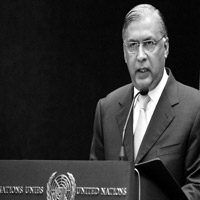 the IMF following the conclusion of the PRGF agreement. It was said that
Pakistan had finally broken the begging bowl and that self-sufficiency was
now genuinely within reach. It has taken only three years for Shaukat Aziz'
claims to be proved wrong.
the IMF following the conclusion of the PRGF agreement. It was said that
Pakistan had finally broken the begging bowl and that self-sufficiency was
now genuinely within reach. It has taken only three years for Shaukat Aziz'
claims to be proved wrong.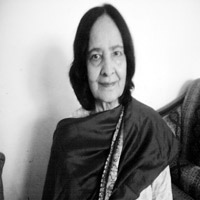 served as professor and vice-principal in two of Lahore's prestigious
institutions: Forman Christian College (1982-86) and Lahore College for
Women (1986-90). She was born in Lahore's famous Walled City in one of the
city's most illustrious families. Her paternal grandfather Syed Faizul
Hassan Shah was Lahore's superintendent of police in the British period,
while her maternal grandfather Hakim Ahmad Shuja was a famous playwright.
Parveen's father Feroze Hassan Shah was an Aligarh Muslim University
alumni and her uncle Syed Fida Hassan has the honour of being the longest
serving chief secretary of Punjab.
served as professor and vice-principal in two of Lahore's prestigious
institutions: Forman Christian College (1982-86) and Lahore College for
Women (1986-90). She was born in Lahore's famous Walled City in one of the
city's most illustrious families. Her paternal grandfather Syed Faizul
Hassan Shah was Lahore's superintendent of police in the British period,
while her maternal grandfather Hakim Ahmad Shuja was a famous playwright.
Parveen's father Feroze Hassan Shah was an Aligarh Muslim University
alumni and her uncle Syed Fida Hassan has the honour of being the longest
serving chief secretary of Punjab.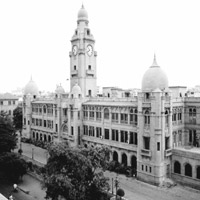 peculiar sociopolitical status. The previous regime managed a smooth
working relationship between all the echelons of power, including the
president, the prime minister, the federal government, the Sindh
government and the City District Government Karachi (CDGK). Minor
irritants notwithstanding, the decision-making and institutional
architecture extended maximum opportunity for development and
transformation of the city into a prosperous and progressive metropolis.
peculiar sociopolitical status. The previous regime managed a smooth
working relationship between all the echelons of power, including the
president, the prime minister, the federal government, the Sindh
government and the City District Government Karachi (CDGK). Minor
irritants notwithstanding, the decision-making and institutional
architecture extended maximum opportunity for development and
transformation of the city into a prosperous and progressive metropolis.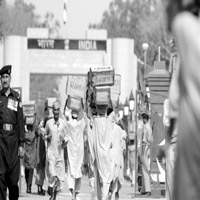 come as a surprise. What is surprisingly, however, is the cause of the
breakdown: disagreement over special safeguard mechanisms that allow WTO
member countries to impose additional duties on agricultural imports for
preventing their farmers against the effects of falling prices in the
international market. The negotiations were held with a view to sorting
out modalities for further liberalisation of trade in agriculture and
non-agricultural products under the Doha round launched in November 2001.
The Doha Declaration, which set forth the agenda of the round, provided
for negotiations aimed at substantial improvements in three areas in trade
in agriculture: market access, export subsidies and trade-distorting
domestic support.
come as a surprise. What is surprisingly, however, is the cause of the
breakdown: disagreement over special safeguard mechanisms that allow WTO
member countries to impose additional duties on agricultural imports for
preventing their farmers against the effects of falling prices in the
international market. The negotiations were held with a view to sorting
out modalities for further liberalisation of trade in agriculture and
non-agricultural products under the Doha round launched in November 2001.
The Doha Declaration, which set forth the agenda of the round, provided
for negotiations aimed at substantial improvements in three areas in trade
in agriculture: market access, export subsidies and trade-distorting
domestic support.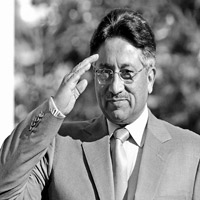 the world, I need to concede that General (r) Pervez Musharraf's exit does
not really fit into my neat little categorisation. He lost the
'legitimacy' and that was the crucial factor in his departure. In other
words, there were predominantly ideological reasons, rather than merely
the material basis, that drove him away.
the world, I need to concede that General (r) Pervez Musharraf's exit does
not really fit into my neat little categorisation. He lost the
'legitimacy' and that was the crucial factor in his departure. In other
words, there were predominantly ideological reasons, rather than merely
the material basis, that drove him away.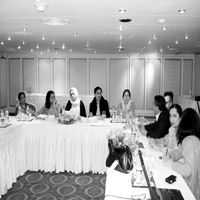 presentations, stiff neck professionals and globetrotting consultants! No,
I am not talking about the world of multinational corporations and
business companies. I am talking about various national, international and
multilateral development organisations busy in 'eradicating' poverty,
'fighting' HIV and gender injustice, 'advocating' for better environment
and 'protecting' human rights across the globe.
presentations, stiff neck professionals and globetrotting consultants! No,
I am not talking about the world of multinational corporations and
business companies. I am talking about various national, international and
multilateral development organisations busy in 'eradicating' poverty,
'fighting' HIV and gender injustice, 'advocating' for better environment
and 'protecting' human rights across the globe.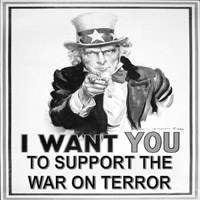 fighters praise and kudos from the great thinkers of their times, many of
whom inspired such revolutions through their writings. The great
literature of resistance is part of our common human heritage. It has long
been a source of resilience and self-esteem for the nations, who defeated
imperialists and earned liberation after a long protected struggle.
Unfortunately, in the post-9/11 era, the imperialist forces cleverly
managed to counter genuine liberation and resistance movements against
their occupation and hegemonic designs under the pretext of the so-called
'war on terror'. This is, no doubt, the most lamentable strategy of
neo-colonialists, in which religious fanatics are their main soldiers.
fighters praise and kudos from the great thinkers of their times, many of
whom inspired such revolutions through their writings. The great
literature of resistance is part of our common human heritage. It has long
been a source of resilience and self-esteem for the nations, who defeated
imperialists and earned liberation after a long protected struggle.
Unfortunately, in the post-9/11 era, the imperialist forces cleverly
managed to counter genuine liberation and resistance movements against
their occupation and hegemonic designs under the pretext of the so-called
'war on terror'. This is, no doubt, the most lamentable strategy of
neo-colonialists, in which religious fanatics are their main soldiers.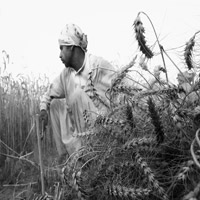 advances, such as improved crop varieties, efficient irrigation practices
and genetically modified organisms, weather and climate are still the
dominant factors in agricultural production. The phenomenon of global
warming has grave implications for the agriculture sector and more so for
Pakistan that has an agri-based economy.
advances, such as improved crop varieties, efficient irrigation practices
and genetically modified organisms, weather and climate are still the
dominant factors in agricultural production. The phenomenon of global
warming has grave implications for the agriculture sector and more so for
Pakistan that has an agri-based economy.