



|
|
|
|
 |
 |
   |
cricket cricket Pakistan
cricket: Protracted, complex and painful
cricket In 14 matches, Ashfaq Ahmed has totalled 353 runs at an average of 27.15 with three half-centuries and his magnificent career strike-rate of 179.18 is even better than Shahid Afridi's... in fact, he is among the top five batsmen internationally in this category! By Gul Hameed Bhatti So little is generally
known about Pakistan's cricket players, apart from those who Recently, when the Pakistan Cricket Board (PCB) website published the names of the players chosen for the impending 2008-09 Royal Bank of Scotland National Twenty20 Cup Cricket Championship by the various regional associations, it was not long before a section of the press began printing critical news stories and the private television circuit immediately followed suit, lapping up the controversy and creating half-baked stories of their own. Of course, it is a
newspaperman or an electronic media journalist's prerogative to If you believe that my small intro has slid into some kind of pontification, let's come to the brass tacks then. First things first. A PCB spokesman has clarified that the various teams for the National Twenty20 Cup event, to be played in Lahore over five days from October 4 to 8, have not been chosen by selectors appointed by the Board. Rosters of all 13 outfits, complete with the names of the reserves, were received at the PCB Headquarters duly signed by the heads of each regional cricket association. So, perhaps, the associations' officials did know in the first place what exactly they were doing. In this day and age of
the internet, websites and a huge collection of databases, it is LAHORE TEAMS SELECTION UNFAIR? Press reports recently have suggested that the selection of the two Lahore teams -- the Eagles and the Lions -- for the Twenty20 Cup is not what it should have been. The television channel circuit went a step ahead and 'revealed' that favouritism was rife even in the selection of the two Karachi teams. Nothing can be farther from the truth. True, there have been
rumblings about certain players picked for the Lahore outfits. In a story printed last week, the names of three players -- Fahad Masood, Khaqan Arsal and Mohammad Khalil -- have been mentioned as a trio which has been unfairly treated by the Lahore selectors. None of the three have found a place in either the Eagles or the Lions outfits. Those who have made their way in, and have been vehemently criticised as being the favourites of someome or the other, include Ashfaq Ahmed, Mohammad Naved, Sunny Irshad and the little-known Shahab Basharat. The Lahore selectors
may really have acted unjustly in certain cases, but a historical Let's start with Fahad Masood first. The 27-year-old right-arm fast-medium bowler who plays for Lahore and Habib Bank, has in fact only once appeared in the National Twenty20 Cup and that was in the inaugural event in 2004-05. In four matches, he took only three wickets for Lahore Eagles at 37.33 runs apiece and gave away 11.20 runs per over. Fahad has never been in the picture since as regards the Lahore selectors for twenty20 tournaments, so one doesn't know what the fuss is really all about. Of course, players are chosen keeping in mind their utility for a particular kind of cricket, thus perhaps Fahad has no place in the T20 game. On the first-class
level, Fahad is a successful bowler though. Since his debut in The left-arm pace bowler Mohammad Khalil has, perhaps, outlived his utility. His two Test matches (with a return of 0-200) and three One-day Internationals were played back in 2004-05. Relieved from the pressures of national representation, the still 26-year-old Khalil has done well in first-class cricket in subsequent years though. In the 2006-07 season, he captured 52 wickets at just 23.01 runs apiece and, in 2007-08, he picked up a further 44 at a rate of 23.11 each. Again, his display at the twenty20 level, although its reasonably encouraging, is another matter. Khalil played in the
National Twenty20 Cup in two seasons for Lahore Eagles, 2005-06 The Lions team has a potent pace bowling attack. With internationals Junaid Zia and Wahab Riaz, the hat-trick hero of the recent Nissar Trophy match in Delhi Imran Ali, the quite effective Waqas Ahmed and the returning strong-willed Aizaz Cheema, the Lahore selectors may be justified in keeping Khalil on the fringes. THE CURIOUS CASE OF KHAQAN ARSAL The case of middle-order batsman Khaqan Arsal is a curious one and needs to be probed a little further. After having played for Lahore Eagles in 2004-05 and then again in 2006-07 -- having missed the season in between, Khaqan finds himself among the reserves this year. In his defence, his recent performance in a twenty20 tournament in India, at the Jannayak Chaudhary Devi Lal National Cricket Academy (JCDNCA) in Haryana's Sirsa town, has been quoted. Eight teams, including three international sides, participated in the JCD International Cricket League. One of them was the Lahore Lions team from Pakistan, another the Saracens Cricket Club from Sri Lanka and the third the national team of United Arab Emirates. Khaqan did quite well in the tournament, played from September 5 to 15. He won the Man of the Match award in the Lions' win over Life Insurance Corporation of India, with a knock of 52 off 41 balls with seven fours and a six and had bowling figures of 2-19 with his medium-pacers. Although he captured just one wicket for 24 runs and scored 10 runs in the final against Indian Air Force, which the Lahore Lions won to lift the trophy, Khaqan was declared Man of the Series and was awarded a Honda Hero Hunk motorcycle! Perhaps, he should have been among the main Lahore Eagles team for the national competition. But his previous record in T20 cricket has not been quite assertive -- 55 runs in five innings with three not outs, a highest of 22 (unbeaten) and a strike-rate of below 100 -- 82.60 to be exact. To be fair to the Lahore selectors, Khaqan's form at the first-class level has continued to drop. Over the last three seasons, his best average was a rather poor 18.46 in 2006-07. Perhaps, his being sidelined at this particular juncture was justified... till he finds his bearings, of course. LAHORE EAGLES INCLUDE 'PLAYERS FOR THE FUTURE' What one can easily see in the composition of the Lahore Eagles squad for the National Twenty20 Cup is that they have gone for youth and players with an eye on the future. Incidentally, of the main 15-member line-up as many as 10 have yet to play in any kind of twenty20 fixture. These players include the captain, and wicket-keeper, Ali Raza! The 31-year-old Ali Raza is a senior player by several standards and is a capable captain too. He led the Dewan Farooq Motors Limited (DFML) in the Patron's Trophy Grade-II tournament in the 2006-07 season and in early 2008 switched over to Pakistan Railways as captain in the same tournament. In the 2007-08 Quaid-e-Azam Trophy Championship, he was the Lahore Shalimar skipper and then led Lahore Lions in the ABN AMRO One-day Cup National Championship. All other players in the Eagles outfit range from ages of 17 to 25. Most of them have been chosen on the basis of their performances in either first-class cricket or limited overs matches over the last season and they had all done quite well. One really can't find much fault with their selection, as they do deserve the chance they'd been provided. The players include batsmen Suleman Khan, Asif Khan, Junaid Malik, Ahmed Butt, Azhar Ali, Ali Haider and the brilliant Adnan Raza, getting ready for his fourth twenty20 season. In addition, there are pace bowlers Mohammad Saeed, Mohammad Naved, Shahab Basharat and Asif Raza, wicket-keeper Zulqarnain Haider and off-spinner Usman Malik. The criticism of opening batsman and off-break bowler Ashfaq Ahmed is rather unfair. The 23-year-old has played in all three previous national twenty20 contests and run up a fair record. In 14 matches, he has totalled 353 runs at an average of 27.15 with three half-centuries and his magnificent career strike-rate of 179.18 is even better than Shahid Afridi's... in fact, he is among the top five batsmen internationally in this category! Playing for Pakistan Air Force (PAF) in April earlier this year in the Patron's Trophy Grade-II, Ashfaq scored centuries in three successive innings, including two in the same match. In twenty20 cricket, where centuries are still quite rare, Ashfaq scored an unbeaten 99 for Lahore Eagles against Rawalpindi Rams in Karachi in February 2006 before his team won. Ashfaq took a mere 58 balls to score 99 not out, with 10 fours and four sixes, as the Eagles hit 160-3 in 17.5 overs to beat the Rams. The next highest score was the 21 runs by Extras. Thus quoting his first-class record only to criticise his selection was not right in the first place. Moreover, saying that Mohammad Naved has scored 21 runs only in five first-class matches was really amazing. The fact that the 20-year-old is not a specialist batsman but a right-arm fast-medium bowler was completely overlooked. It's true that Naved scored just 21 runs in his five first-class matches last season, but he captured as many as 33 wickets in these appearances! In his debut match, for Lahore Shalimar against Rawalpindi in the 2007-08 Quaid-e-Azam Trophy Championship, he attained figures of 6-91 and 3-90. In his next match against Karachi Blues, he picked up 11 wickets -- six for 51 and five for 74. Against Pakistan International Airlines (PIA), his figures were 3-184 and 0-32 but in the first innings he sent down 48.2 overs. Against eventual champions Sui Northern Gas Pipeline Limited (SNGPL), he took 6-91 and against Abbottabad 4-77. How can he be someone whose selection may be doubted? In September two years ago, Naved had retained his place in the Pakistan Under-19s squad in both the Youth Tests and all four Youth One-day Internationals against the touring team from India. The right-arm medium-fast Shahab Basharat, now 20, has played usefully at the under-19 and other levels. Of course, he has yet to make his mark in higher forms of cricket. But maybe, the selectors believe he has some kind of potential. I, for one, may have opted for Pakistan Under-19s pace bowler Azhar Attari instead, who has been put among the Eagles reserves. Suuny Irshad is, of course, a cousin of Pakistan player Mohammad Yousuf and that could be one reason why he's playing top level cricket. A 21-year-old left-handed middle-order batsman and useful right-arm medium-fast bowler, Sunny has however impressed in his few appearances. I believe he deserves a chance here, for the Lahore Lions of which Yousuf is the captain, and if he is found wanting he could well be on his way out. If he succeeds, then it is his own luck that will decide his future. MOVE OVER MENDIS, MANGANHAR IS HERE In an extremely bold move, the Hyderabad Hawks have included in their line-up a spin bowler called Aslam Manganhar. A total unknown, the young lad has not played at any level for either his district or his region. But the selectors in Hyderabad insist that he could well be a bowler in the mould of Sri Lanka's new sensation Ajantha Mendis. This is, of course, a tall claim which could become very tall in the days to come. Aslam can bowl both off-breaks and leg-spin and is said to even have a 'carrom ball' a la Mendis, one that is pipped out of the hand via the index finger. Well, it still remains to be seen whether Aslam Manganhar becomes a household name or a tragic experiment. No eyebrows have been raised among the enthusiasts here in Karachi about the composition of the Karachi Dolphins and Zebras squads for the Ntional Twenty20 Cup. All expected players have been accommodated in the two line-ups, Shahid Afridi will lead the Dolphins and Faisal Iqbal the Zebras. Two players who might find themselves a trifle unlucky are the Pakistan Under-19s star middle-order left-handed batsman and wicket-keeper Ali Asad and left-handed opener Agha Sabir. But both are seen among the reserves named. A welcome addition to the Karachi Zebras line-up is the name of experienced batsman Saeed Bin Nasir. With a first-class career spanning a little over a decade, the prolific Saeed has been chosen for a twenty20 event for the first time! The only conspicuous players missing from the two Karachi teams are fast bowler Mohammad Sami, because of his Indian Cricket League (ICL) connection, all-rounder Rizwan Saeed and wicket-keeper Amin-ur-Rehman. No objections have been raised about any players yet though. The
writer is Group Editor Sports of 'The News' gulhbhatti@hotmail.com bhatti.gulhameed@gmail.com
cricket No Test team from Down Under has played in the country during the last few years, and it seems it might take a decade or two before the Aussies change their mind regarding touring Pakistan By Imran Farooqi Former captain
Inzamam-ul-Haq's assertion that International Cricket Council's inaction The colour of skin does play a major role whenever there is a crisis confronting international cricket, and the ICC invariably sides with white nations, with India being the only exception sometimes. Regrettably Pakistan has lost a huge volume of international cricket, specially Test matches, this year owing to the cancellation of a visit by Australia and the Champions Trophy. No Test team from Down Under has played in the country during the last few years, and it seems it might take a decade or two before the Aussies change their mind regarding touring Pakistan. Though the Australians constantly refuse to play in Pakistan citing security concerns, they are always prepared to come to India. Their frequent trips to India are not just limited to cricketing assignments. Be it starring in a movie, or appearing in TV commercials, or coaching junior players the Aussies are always at ease flying into India. Money, of course, does play an important role and serves as the single greatest temptation. Contrary to Pakistan India boosts a huge economy and holds a massive appeal for tourists. It pumps a lot of money into the sport through sponsorships and purchase of media rights. The country's awesome marketing potential attracts a lot of international stars, specially cricketers, from around the world and makes it difficult for them to resist the pull. These days everybody who is somebody in sport and showbiz seems to be flattered with the idea of performing in front of Indian fans. The money they get for a brief appearance is too big. Former and current international cricketers are leading the pack and cashing in on the people's love for the game. The Indian Premier League is a prime example. Players from almost all Test-playing nations figured in the last tournament and never once showed any concern regarding the security situation in that country and its proximity to two seemingly 'turbulent states' Pakistan and Sri Lanka. Though the two countries' record in this regard is not that impressive, no place in the world seems safe today. But the lure of money was so appealing that even the blasts in Jaipur could not dampen the enthusiasm of the foreign players during the IPL. Even the Australians, including Shane Warne and Andrew Symonds, who's always the first to express his reservations regarding touring Pakistan, did not raise an eyebrow. Several white players were in the city when the blasts occurred, but nobody threatened a pull-out. Why? Because they knew they would suffer heavy monetary losses if they aborted the tour. During the last couple of months Bangalore and Ahmedabad have experienced similar tragedies, and New Delhi has become the latest victim of such attacks. But these incidents of violence where hundreds of people lost their lives or sustained serious injuries could not stop the Australians from honouring their commitment of figuring in the Test and one-day series and have already landed in India. Won't the ICC be justified in asking the Aussies why they have agreed to play in India soon after the Delhi blast although they had cancelled Pakistan's citing security reasons? Should not the ICC be seeking a clarification from Cricket Australia as to why they were reluctant to send their side to Pakistan for the Champions Trophy and what had made them take a U-turn and play in India? The answer is simple: money. People still remember that at the 1996 World Cup also, Australia along with the West Indies had forfeited their games that were scheduled to be held in Sri Lanka amid security fears. Even then the ICC had watched in silence and could not force the two teams to travel to the Pearl Island. Since then the Aussies have also refused to tour Zimbabwe over political issues and have also snubbed Pakistan on a regular basis. Such actions by a member nation certainly render the Future Tour Programme (FTP) meaningless as last-minute tour cancellations affect Pakistan badly with no alternate plans in place. Is it not tragic that Pakistan will not have played a single Test during 2008? With cricket being played round the year these days it's almost impossible for the Pakistan Cricket Board to make alternate arrangements if a series is cancelled or postponed. The financial implications in such cases could be disastrous. The ICC still claims that Pakistan will host the Champions Trophy in October, 2009, but the Indians have already rejected the idea stating that at that time they would be hosting the Aussies in a one-day series. The India-Australia series was planned well in advance and therefore nobody can force the two teams to reschedule the tournament to accommodate the Champions Trophy. Though the ICC has insisted that the tournament would go ahead next year, the chances are fairly bleak as the situation in Pakistan does not look like improving in the coming months. India always gives an impression that it backs Pakistan, but does it really? The BCCI could, and should, have used its influence and tell Australia, New Zealand, England, and South Africa to make the trip to Pakistan for the Champions Trophy and make it a success, but it did not. It's a sorry fact that today Pakistan finds itself in total isolation with none of the above-mentioned four nations willing to play in Pakistan. It's a situation where the PCB must approach the ICC instead of looking at its neighbour, the BCCI. Pakistan needs to sort that issue out itself. In order to have a competitive side who're regularly engaged in playing cricket at home and abroad and a financially sound cricket board, the PCB needs to devise a plan in consultation with the ICC for countering the threat of cancelled events. Pakistan has already suffered a lot because of the ICC's inability to effectively deal with this issue. But this matter is not as simple as it looks. Currently, the PCB is without a chief as the president has yet to nominate a person for this job owing to more important issues the state is facing currently. Appointments on political basis have brought the game where it lies now, mismanaged and in sheer mess. A shrewd personality having a cricket background and possessing true leadership skills is essential for fighting Pakistan's case at the ICC. Unless we have one cricket is bound to sink further provided thereís still some room available! Pakistan cricket: Protracted, complex and painful Practically, the late Bob Woolmer or Lawson didn't provide the lift that foreign coaches were expected to give as in case of John Wright helping India to negotiate their problems and rapidly growing in stature By Dr Nauman Niaz On reflection, Dr
Nasim Ashraf's tenure was rather more turbulent than those of his From Nasim to Shaharyar M Khan, Lieutenant General Tauqir Zia, Dr Zafar Altaf and Mujeeb-ur-Rehman before him, no one managed to penetrate the bubble wrap insulating the organisation from radical change. General Tauqir despite organisational barriers felt that his skills could be more than adequate to turn things around, and he fell to it purposefully, mandating himself to channelise spending, prepare a strong team for the World Cup 2003, install state of the art cricket academies and restructure the board. He couldn't have imagined how ornery the chairmanship could be, and he didn't accept that his style would be considered abrasive, arrogant and autocratic to those around him. Tauqir experimented by
abrading the power-base of senior pros within the team and Understandable, there was a resistance to change and the Tauqir-Aamer-Rashid Latif and Javed Miandad nexus succumbed to petty politicking of people in the fray. The structuring was flawed and Gen Tauqir and his team became a victim to growing unpopularity within his ranks. It is no secret that most of his trusted advisors shot him down. Shaharyar Khan's tenure was a lull, significantly bureaucratic and essentially based upon rhetoric and promises, half filled with imperialistic grandeur. And then Dr Nasim Ashraf, more of an expatriate having exhausted his best years in the United States of America started his dramatic rein. He stepped into the chairmanship of the PCB after Shaharyar's somewhat angry resignation. He presumably didn't like the tone of the criticisms that were made in the media and by other experts. Shaharyar who tried to live on rhetoric saying that everyone had problems all the time in every organisation but once he waffled at a wrong time with the Oval Test controversy hanging like a hound. With Dr Nasim in, it wasn't the same story as the one told by other parties, but nevertheless he took control. He picked wrong people that resulted in no love lost between him and the critics as evident in their responses. His proposals for a new structure and constitution of the PCB were not well-received. There were people who thought he was petulant leaving him irate and a man without moral authority in the end. Unfortunately, despite taking several brave steps he lost by deepening the mistrust that already plagued the PCB. The cabinet which Nasim formulated didn't have people adequately equipped to drive him through turbulent times. Nasim's tenure saw PCB shaping up as an organisation managed mainly to demonise its inhabitants, to facilitate and pamper the cronies, and his tenure throughout remained protracted, complex and painful. Recently, the Government marred by a myriad of geo-political, religious and ethnic problems entrusted the Ministry of Sports to administer cricket until a new chairman is named. A decision that came as a rude shock to the conventionalists as it is evident from history that a monotheistic form of government is much needed than a poly-consensus democracy in cricket in Pakistan. In the first place there are all these dysfunctional relationships to be healed. How will a very busy minister manage the wheels into wheels and feuds within the PCB are million dollar questions. New relationships will have to be built, and it may require changing personnel from within. And now if a new chairman is appointed overruling the writ of the Ministry of Sports, he will have to deal with the declared intention of politically strong people of seeing to have a greater say in the PCB given the image of the game itself. Finding the balance there will be as delicate a task as any demanded from such a man, whosoever he is going to be. The new man would have loads of problems. He would also have to address issues surrounding sponsorships, and must find it disturbing that major contracts with several corporate concerns were sewn up only in patches. Such issues may well reduce his maneuverability, and he could reasonably expect that intense negotiations would be left to him to lead the team. The new chairman would also be required to address one issue holding public attention about how he treats the recommendations and interests of the Board of Governors of the PCB. There have been proposals about giving way to a more representative body. Arif Ali Khan Abbasi, to one's mind a hardcore cricket management expert has also been propelling the concept of poly-consensus and delegation of powers, though in the present scenario an option that may well be hugely contestable. Even if the most revered Abbasi gets the job, it would now be a difficult proposal to execute even if he is willing to do so, because the rest of the board will fight it down to the end for varying reasons. And that people like Abbasi would need a functional group to savour his moments before any constitutional changes helps him maneuvering. And with a purely elected democratic government in place, a bit of connivance, a little flexibility and a few compromises here and there would see a strong-minded seasoned man like Abbasi having frustrations staring him head on. Whosoever takes over as Chairman PCB, in the present scene would need to answer the following questions: 1. How can the governance of Pakistan Cricket be made more effective? 2. How can the current performance of the flagship team be taken to a higher level? 3. How can the broad base of the game, and its immediate prospects, in the country be strengthened? 4. How can the fragile geo-political base of Pakistan cricket be improved and secured on a lasting basis? Any structure to move forward must ensure full accountability and transparency. Precise goals must be established, so as to measure performance at every level on a regular basis. And these, more or less, are the issues that stare a new chairman in the face, just as they confronted those before him. Waters may be even muddier now, given the level of mistrust (never low in this swamp), but concentrating on issues, not egos, will make a difference. Here one would like to repeat that unlike in the past grandiosity or stature or political base of a man will not answer the identity questions rampantly popping up every morning. It is difficult to say whether a politician or an incumbent minister will be up to the challenge, simply because it is not a responsibility and domain for any non-technocrat to bear. A thoroughbred gentleman, not ideally a former cricketer, but a cricket professional would be needed to concentrate on fostering partnerships and nurturing relationships as his primary task. If he has the philosophical centre to enable this, and can build trust, then he may find that support can outweigh the opposition. On the cricketing front, he'll need to see a pleasant change considering that Shoaib Malik's captaincy provoked more bitter criticism for his lack of strategies, and even his reaction time was rated unresponsive. Then is the question of Geoff Lawson, not a so well acclaimed coach. The notion that preceded the arrival of Lawson who was not given as much broader scope of authority than his predecessor Bob Woolmer, and still expected to become the architect of an Australian-modelled team, one that would produce Australian results with Pakistani style-the search seemed to be for a model that would provide a structure within which to develop the Pakistani character. Regrettably the authority was not supposedly vested in Lawson, several other factors have railed wildly against smooth progress. Practically, the late Bob Woolmer or Lawson didn't provide the lift that foreign coaches were expected to give as in case of John Wright helping India to negotiate their problems and rapidly growing in stature. On the contrary Pakistan cricket has sunk without a trace. Not to be unforgiving, Lawson could hardly hit the ground running. Added to that is the lack of clarity. It appears that the player still don't know what they want to be. They don't know if they should be Pakistani and proud; or a team trying to gain experience; or try and emulate the winning team of 1980s and 1990s. They don't know if they should see themselves as professionals, especially when every series comes with a stream of incompetence surrounding performance, payments and contracts. How do they feel about themselves? They don't know. It's become a big mystery now to define what it means to be on the Pakistan team. So it is for the cricket public that is drifting away in distress. The cricketers are at the heart of it, but until they can figure out what they want to be, how much they are prepared to do to get there, and how much support they will get from the administration, the losing formula will remain -- because that has been the one constant in their lives.
|
|
 make it big and go on to represent the country or play on the
international circuit, that it is very easy to spread rumours about
their abilities -- or a lack of that -- and eventually end up producing
unfairly lop-sided stories in the press and related media about how
poorly they are generally treated when the time comes to select local
teams. The truth really has to be put in the proper perspective.
make it big and go on to represent the country or play on the
international circuit, that it is very easy to spread rumours about
their abilities -- or a lack of that -- and eventually end up producing
unfairly lop-sided stories in the press and related media about how
poorly they are generally treated when the time comes to select local
teams. The truth really has to be put in the proper perspective.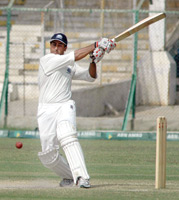 criticise, but one cardinal principle has to be kept in mind. The
criticism has to be fair and based on water-tight research. The
inference deducted could still be the same as originally intended, but
the argument must not be tilted unnecessarily in favour of one party and
against another.
criticise, but one cardinal principle has to be kept in mind. The
criticism has to be fair and based on water-tight research. The
inference deducted could still be the same as originally intended, but
the argument must not be tilted unnecessarily in favour of one party and
against another. really not all that difficult for the 'accusers' who plant derogatory
stories in the press and the media to first find out what the truth
actually is. The 'victims' are generally unsuspecting sports
journalists, who much of the time don't have enough opportunity at their
disposal to go to the root of every matter and it is only later they
realise that they had been fed incomplete and somewhat sinister
information, which was supposed to favour only a certain viewpoint.
really not all that difficult for the 'accusers' who plant derogatory
stories in the press and the media to first find out what the truth
actually is. The 'victims' are generally unsuspecting sports
journalists, who much of the time don't have enough opportunity at their
disposal to go to the root of every matter and it is only later they
realise that they had been fed incomplete and somewhat sinister
information, which was supposed to favour only a certain viewpoint. No one has said anything yet about the Karachi teams though. Perhaps,
this ploy was simply to flare up a little more fire and add interest to
a story which really had no substance in it to start with.
No one has said anything yet about the Karachi teams though. Perhaps,
this ploy was simply to flare up a little more fire and add interest to
a story which really had no substance in it to start with. perspective must also be kept in mind. Totally unknown players have
walked even into Test match elevens right here in Pakistan and gone on
to become prominent cricketers in the international game. Off-spinner
Tauseeef Ahmed is a case in point. Medium-fast Aamer Nazir is another.
Pace bowler Yasir Ali played in a Test match, even before he had
appeared in a first-class fixture, only on the recommendation of skipper
Rashid Latif.
perspective must also be kept in mind. Totally unknown players have
walked even into Test match elevens right here in Pakistan and gone on
to become prominent cricketers in the international game. Off-spinner
Tauseeef Ahmed is a case in point. Medium-fast Aamer Nazir is another.
Pace bowler Yasir Ali played in a Test match, even before he had
appeared in a first-class fixture, only on the recommendation of skipper
Rashid Latif.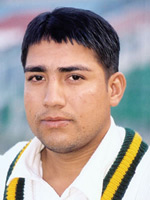 1999-00, he has captured 265 wickets at just 22.21 runs each. The last
season, 2007-08, was the best of his career as he bagged 43 wickets at
an average of 20.97.
1999-00, he has captured 265 wickets at just 22.21 runs each. The last
season, 2007-08, was the best of his career as he bagged 43 wickets at
an average of 20.97. and 2006-07, and has nine wickets overall in this kind of cricket at
25.33 apiece in eight matches. He has been placed among the Lahore Lions
reserves this time round and there may still be a possibility of his
playing in the actual event.
and 2006-07, and has nine wickets overall in this kind of cricket at
25.33 apiece in eight matches. He has been placed among the Lahore Lions
reserves this time round and there may still be a possibility of his
playing in the actual event.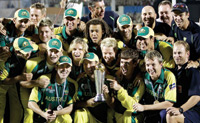 has allowed Australia to pick and choose tours of its choice, does make
a lot of sense. The sport's governing body always seems helpless and
acts as mere spectator whenever Pakistan needs its support on a
particular case.
has allowed Australia to pick and choose tours of its choice, does make
a lot of sense. The sport's governing body always seems helpless and
acts as mere spectator whenever Pakistan needs its support on a
particular case.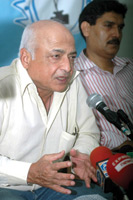 predecessors. As with the others, he entered an organisation fraught
with problems, and he left with only the permutation slightly changed:
the problems continue to outlast every intervention.
predecessors. As with the others, he entered an organisation fraught
with problems, and he left with only the permutation slightly changed:
the problems continue to outlast every intervention.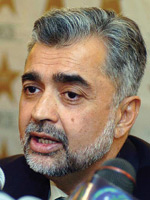 appointed dynamic people like Aamer Sohail as Chairman of the Selectors.
He was presumably the only chairman who actually stepped in to
practically starting a process of rebuilding. Regrettably, he regressed
within betrayals of his own people. Aamer with his usual tinge of
arrogance and no-nonsense style hugely contributed in focusing on
youthful talented cricketers and tried to induct them into international
cricket early.
appointed dynamic people like Aamer Sohail as Chairman of the Selectors.
He was presumably the only chairman who actually stepped in to
practically starting a process of rebuilding. Regrettably, he regressed
within betrayals of his own people. Aamer with his usual tinge of
arrogance and no-nonsense style hugely contributed in focusing on
youthful talented cricketers and tried to induct them into international
cricket early.