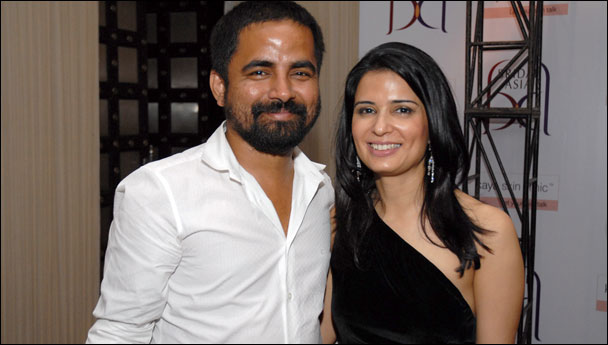
It's a long distance call that connects us to Sabyasachi Mukherjee in Delhi and the energy plus exhaustion that follows his showing at this year's Bridal Asia is palpable. Yet the soft spoken designer that has undoubtedly put a new era of Indian fashion on the map - one that reincarnates the romance of a bygone era into an equally enigmatic present - is as humble as he would ever be. He has shown in Milan and in New York and is touted as the future of Indian fashion, yet one is impressed by the humility in his voice that lacks both arrogance and over-confidence. Straight off the Bridal Asia runway, with deafening applause in the background, he takes a moment out to speak to Instep…
Instep: You have chosen to stay away from fashion weeks this year but are committed to Bridal Asia. What's the reason for that?
Sabyasachi Mukherjee: You cannot really ignore the bridal market in India; it's tantamount and it drives business.
Instep: As a forward thinking fashion designer, one that has undoubtedly put India on the fashion map, do you think you are changing the way we perceive bridals in the East? What was this collection about?
SM: The bridal is all about tehzeeb and that should never change. There's always a certain, strong element of romance and history to it. But my collection was not necessarily totally bridal. I would call it a collection celebrating the wedding and it was as much for the women at the wedding as for the bride.
Instep: Fashion week season will begin (in fact has already started in India with Kolkatta Fashion Week) as soon as Bridal Asia finishes, and India has several fashion weeks on the calendar now. Yet you have chosen to stay loyal to Lakme Fashion Week despite Willis Lifestyle India Week being touted as the most important. Why?
SM: Delhi Fashion Week (WLIFW) constantly divides and mitigates and I can't show my work under a political climate. Lakme Fashion Week (held in Bombay) is all about new designers and less about politics. Plus, LFW is managed by the IMG (International Management Group) as is New York Fashion Week and the alliances are more beneficial. My shops in India know all about my new collections every season so I don't really need the publicity within India; what LFW does is that it makes showing at NYFW easy and that's important.
Instep: Other than Bridal Asia, you have been busy with Bollywood. Tell us a little about the new films you are working on…
SM: I have done the entire wardrobe for Raavan, Guzarish and Paa and all three experiences have been different. Guzarish has the fashion forward, retro feel to it. Raavan was extremely complex as far as characters were concerned and therefore the challenge was fulfilling. Paa was comparatively easy to do because it was set in the modern day. But the fun was reinventing Vidya (Balan's) image.
Instep: Vidya Balan has been suffering a terrible style freeze and she is often attacked for her lack of it. How did you find working with her?
SM: I think Vidya is an extremely beautiful girl who has been mismanaged by people. She has an earthy quality around her and she easily morphs into the kind of clothes that I design. I think people will associate her to her initial film (Parineeta) after they see Paa.
Instep: You have been a 'champion of khaadi' and homespun fabric (as written in a recent BBC article) and yet you are critiqued for the not so humble pricing of the khaadi clothes you design. Do you think fashion will ever be affordable for the middle class in this part of the world?
SM: The BBC forgot to mention that I was talking about embellished khaadi, which obviously does become slightly more expensive. But to answer your question, yes, fashion is getting increasingly affordable. I have just started a prêt line of embellished saris which will retail at 7500 (Indian) rupees, which I think is quite affordable.
Instep: There's a lot of cross border infiltration happening between India and Pakistan in the world of fashion. How do you see Pakistan fashion faring in India?
SM: I think Pakistani fashion has a huge following here. There's a strange sense of dignity in sharing the kind of history and culture we have; there's a folklorish touch to it which I love because it makes women look absolutely regal. I love Faiza Samee and Rizwan Beyg's clothes, as well as many others whose names I forget.
Instep: And would you look at coming over and stocking or showing in Pakistan?
SM: I've had spells of bad luck every time I've tried to come; I've fallen sick most of the times. But I'm absolutely dying to come to Pakistan.
– Sabyasachi Mukherjee was talking to Aamna Haider Isani (via telecon) from Bridal Asia in New Delhi |