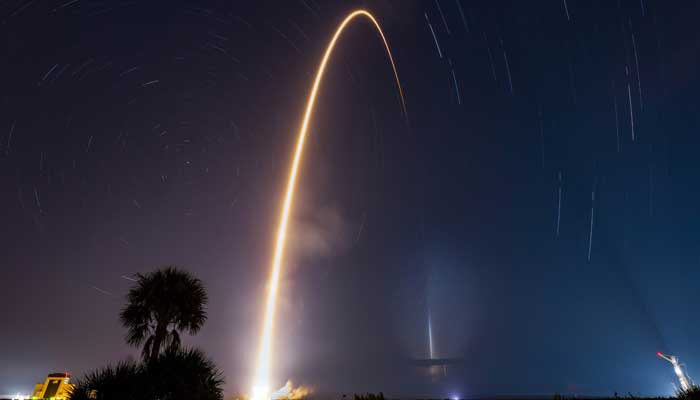
In a significant milestone, SpaceX has successfully made a new record in rocket reusability after a Falcon 9 booster completed its 37th launch and landing, while carrying 29 Starlink satellites into orbit from Florida.
The mission underscored the growing role of reusable rockets in the Elon Musk owned space enterprise’s launch operations, aiming to achieve its fundamental goal of colonising Mars.
After delivering the Starlink payload toward orbit, the Falcon 9 first-stage booster successfully returned to Earth and landed on the droneship A Shortfall of Gravitas.
The successful landing extended the booster’s record to 37 launch-and-landing cycles, making the mission notable beyond the satellite launch itself.
SpaceX has been depending on recovered Falcon 9 boosters to support frequent lift offs while minimizing the need to use the latest hardware for every mission.
Falcon 9 completes record 37th landing
The major moment came after the booster separated from the Falcon 9’s upper stage. It followed its planned trajectory back toward Earth ahead of performing a controlled landing.
The significant accomplishment represents a new demonstration of SpaceX’s approach to rocket reusability, with the similar hardware repeatedly being flown, prepared and recovered for future missions.
29 Starlink satellites reach orbit
Notably, the Falcon 9 carried 29 Starlink satellites, adding a new batch of spacecraft to SpaceX’s expanding satellite network.
The mission combined two essential figures: 29 satellites lifted off and 37 completed launches and landings by the booster.
With its 37th successful launch and landing, the Falcon 9 booster has highlighted the durability of SpaceX’s reusable rocket technology.