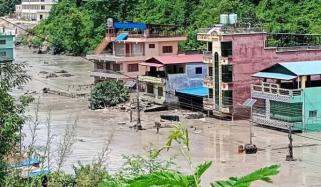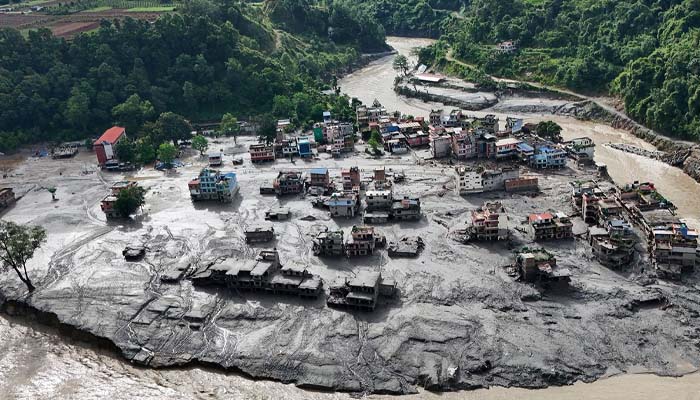
Catastrophic flash flooding hit Nepal boarder area killing at least 177 and leaving more than 1,000 missing.
According to CNN, more than 1,300 people are missing after catastrophic flash flooding hit China and Nepal on Wednesday, August 26.
Dramatic footage shows a torrent of water hitting the mountainous region, submerging villages and wiping out bridges.
The latest tally from Nepal’s Tourism Board shows at least 517 foreign nationals are now listed as missing.
Countries with the largest numbers of missing nationals are India (178), the United States (65), Ukraine (53), Malaysia (51), Australia (35), United Kingdom (33) and Canada (25).
Many of the foreign nationals who are missing were on trekking tours or religious pilgrimages in the remote valleys of northern Nepal.
What caused the Nepal flash flooding?
The US Geological Survey said a glacial collapse, a large section of ice breaks off a glacier and falls down a slope, was behind the catastrophic flooding in Nepal and China.
Glacial collapse was so strong that it was initially reported the event as a magnitude 4.4 earthquake on Wednesday, but later confirmed the incident "was instead a glacial collapse and debris flow" that "caused subsequent catastrophic impacts downstream."
The USGS in a later update said, “Additional analysis of nearby seismic stations, long period seismic waves, and satellite imagery led to the determination that the seismic event was instead a glacial collapse and debris flow, and that no earthquake had occurred,” adding the collapse caused “catastrophic impacts downstream.”
Nepal’s glaciers are receding at a rate of up to 15 meters (50 feet) per year, according to the World Wildlife Fund. These changes destabilize mountain slopes and create unstable bodies of water, which can lead to deadly flooding.