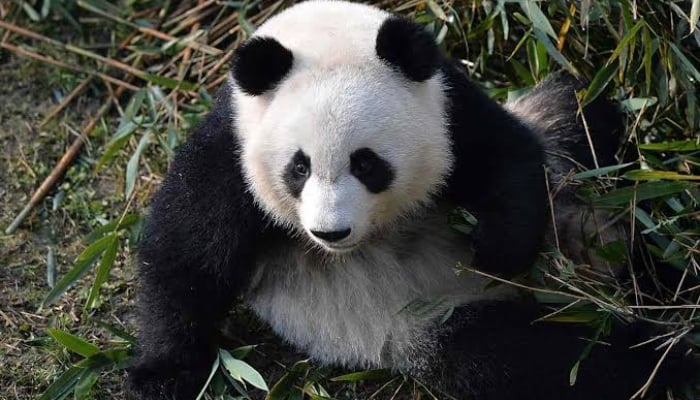
Two giant pandas, Ping Pong and Fu Shuang, have left China for their new home at a zoo in Atlanta in the latest update in "panda diplomacy" to strengthen ties with other countries.
Ping Pong and Fu Shuang en route to Atlanta
As reported by CNN, they departed Chengdu, in southwestern China, at 2:55 a.m. Sunday morning, and the flight came just a day after Chinese President Xi Jinping's state visit to Washington concluded.
_updates.jpg)
China has arranged for several veterinarians and breeders to remain at the zoo in Atlanta as the pandas enter quarantine upon arrival.
History of Panda Diplomacy
Panda diplomacy, the practice of the Chinese government gifting their rare animals to other countries as a symbol of friendship and to strengthen diplomatic bond and a source of China's "soft power", dates back to the Tang Dynasty (618-907 CE) and became prominent in the 20th and 21st centuries.
In recent times, China has offered pandas as diplomatic gifts to countries like the US, Japan, the UK, France, and Germany, among others.
A practice shift: From gifting to loaning
The practice has shifted from gifting to loaning pandas, often accompanied by a set of terms and conditions.
These terms can include fees for the loan, provisions for the care of the pandas, and agreements to return any offspring born to the pandas back to China.
Notable panda diplomacy acts in 20th century
Ping Ping and Qi Qi's arrival in the USSR
Chinese Communist Party leader Mao Zedong sent his first "panda ambassadors" as gifts to the Soviet Union in 1957 when he gifted the Ping Ping and Qi Qi to the USSR to mark the 40th anniversary of the October Revolution in Russia.
He also gifted pandas to other socialist allies such as North Korea, in an effort to strengthen ties.
A significant move for the US and China ties
One of the most notable instances occurred in 1972 when China gifted two pandas, Ling-Ling and Hsing-Hsing, to the US following President Richard Nixon's historic visit to China.
This gesture was a part of the broader effort to normalise relations between the two countries. The pandas were housed at the National Zoo in Washington, D.C.
US-China Panda diplomacy in the 21st century
In the 21st century, the US has continued to be a significant recipient of pandas through loan agreements.
For instance, in 2000, the National Zoo in Washington, D.C., received two pandas, Mei Xiang and Tian Tian, on a ten-year loan, which extended multiple times; however, they have returned to China in November 2023 with their cub, Xiao Qi Ji.
Economic impact of panda diplomacy
The economic impact of panda diplomacy is significant, as zoos that house pandas often see a significant increase in visitor numbers, translating to higher revenue from ticket sales, merchandise, and donations.
Panda diplomacy: A soft power tool
Panda diplomacy is a unique and effective form of soft power utilised by China to foster international relationships and project a positive image globally.
The giant panda, an iconic symbol of China, serves as a powerful diplomatic tool due to its universal appeal and rarity.
Pandas: A rarity of China
Due to human encroachment and climate change, pandas' habitat has shrunk to just six mountain ranges above the Sichuan basin, deep in China's hinterland.
Hailed in imperial times as the "land of heavenly abundance," Sichuan is now better known as the "hometown of pandas".
The mountainous province has a number of panda nature reserves and breeding centres, all built in recent decades as China.
Provincial capital Chengdu's panda breeding base is the largest in the country, housing more than 240 bears, or a third of the world's captive panda population.