On the morning of June 30, 1908, a powerful explosion rocked a remote part of central Siberia near the Podkamennaya Tunguska River. Around 7:14-7:17 a.m. local time, witnesses saw a bright fireball streak across the sky.
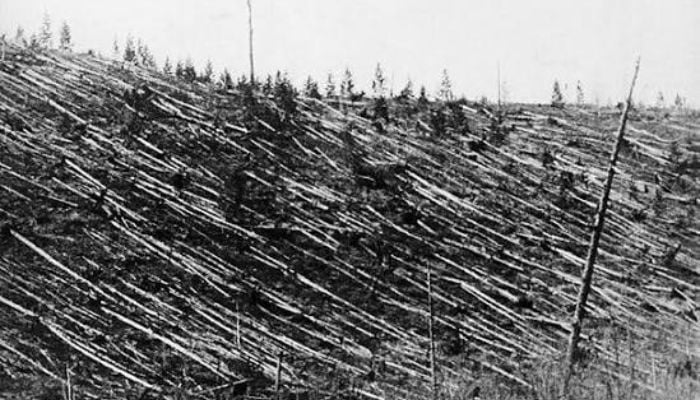
Moments later a massive blast flattened trees across roughly 2,000-2,150 square kilometers – about the size of a large city – and scorched many more.
Around 80 million trees fell outward from a central point like spokes on a wheel. Shock waves were felt hundreds of kilometers away and strange glowing skies appeared as far as Europe that night.
What caused the blast?
Scientists now agree it was an airburst. An object from space – most likely a stony asteroid 50 to 100 meters across – entered Earth’s atmosphere at high speed. It broke apart and exploded 5 to 10 kilometers above the ground.
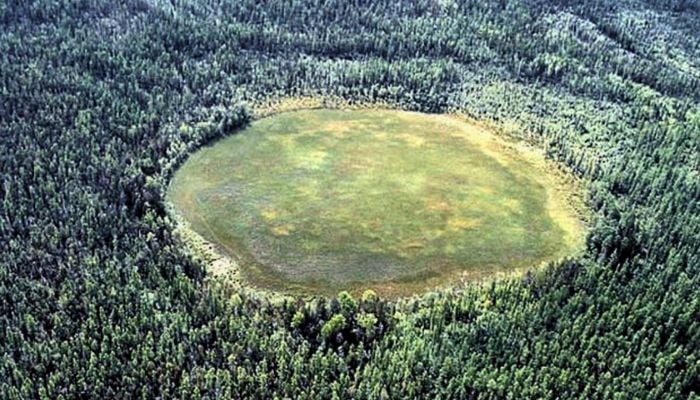
The energy released is estimated at 3 to 15 megatons of TNT (some studies say up to 30), hundreds of times stronger than the Hiroshima bomb. Because it blew up in the air, almost nothing reached the surface. That is why no large crater has ever been found.
First scientific visits came late
The area was so remote that the first proper expedition led by Leonid Kulik, only arrived in 1927. Researchers mapped the radial pattern of fallen and burned trees.
Tiny particles and chemical traces later recovered support an extraterrestrial origin, though debate continues over whether it was a rocky asteroid or a comet fragment linked to the Taurid meteor stream.
Recent studies keep refining the picture
Energy estimates vary, Lake Cheko is no longer widely accepted as a crater and magnetic surveys plus sediment analysis continue. The event remains the largest known cosmic airburst in recorded history and a reminder of the risks from near-Earth objects.
Today the site is a nature reserve and the story of Tunguska still fascinates scientists and the public alike.