California has turned to high-tech cameras and artificial intelligence to deal with wildfires.
PetaPixel in 2023 reported about the growing ALERTCalifornia web of connected cameras established to detect wildfires and give firefighters a chance to contain them before they grew and became deadly.
Over three years later, the network continues to grow, and California is even using space-based cameras to detect wildfires as quickly as possible.
As per the New York Times firefighters on the ground in California as they install new cameras.
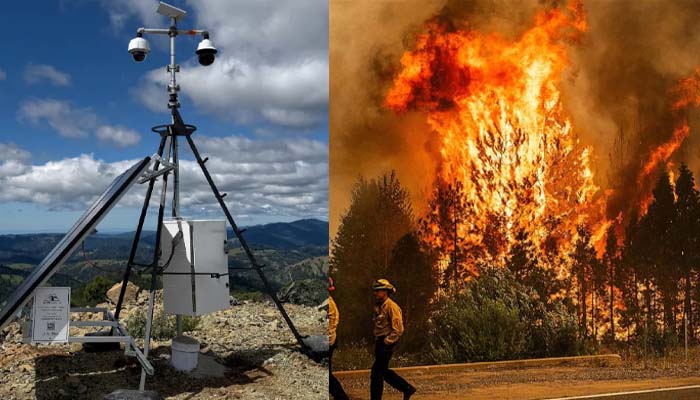
In this case, 41-year-old Colby Nicholson alongside three other firefighters set up a pair of cameras atop a 12-foot tripod 1,500 feet above vineyards and small towns in Napa Valley.
What was a network of about 1,000 cameras in 2023 is now nearly 1,300 remote cameras, constantly monitoring some of California’s most wildfire-prone areas.
People at home can view live feeds from all the cameras online at any time.
Remote cameras like this often provide the clearest, swiftest views of disasters as they start. In many cases, these cameras and their accompanying AI alert authorities to a fire long before the first human call reaches a dispatch center.
J.C. Greenberg, deputy chief of the Napa County Fire Department, told The New York Times, “This system has changed the world of response. We have instant visibility and instant information that we need to make response decisions.”
As disasters like last year’s Eaton and Palisades fires show, information alone isn’t always enough. But in many other cases, ALERTCalifornia’s cameras have been the difference between containment and destruction, life and death.
Dr. Neal Driscoll, principal investigator at ALERTCalifornia and professor at the University of California, San Diego, believes that the camera network still has plenty of room to grow. He hopes to expand the network to around 1,800 cameras and fill some remaining gaps.
Each installation has two cameras, providing redundancy, and each camera also does slightly different things.
One might see better at night or through smoke, while the other may be higher resolution and can see farther. One camera rotates automatically, capturing a 360-degree view every two minutes. Firefighters can remotely control the other to investigate something suspicious.