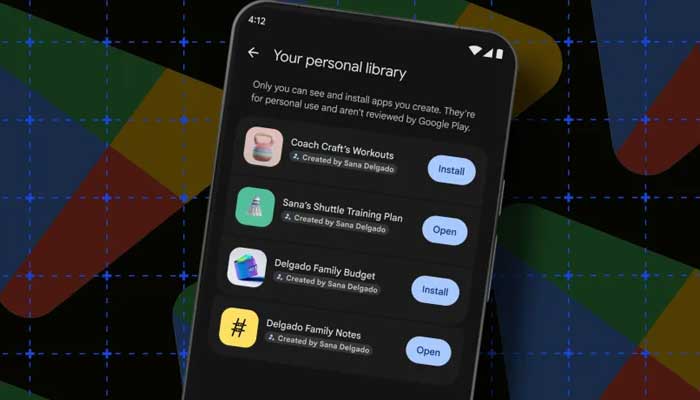
In a significant update. Google has launched the latest feature that lets users create and operate personal artificial intelligence (AI)-centric apps on Android devices without publishing them publicly on the Google Play Store.
The Alphabet-owned Google’s new feature lets users build apps via Google AI Studio and release them on their Android smartphones using their standard Google accounts.
These latest apps will remain private, meaning they will not appear in Play Store search results or public listings and will only be available to their creators.
The significant aims to expand the accessibility of app development as people experiment with AI tools to create applications tailored to their individual needs.
Previously, users seeking to run native Android apps generally had to navigate the process of publishing them on Google Play, encouraging many to rather develop web-based alternatives.
According to Google, personal applications must still comply with existing Google Play policies. The feature will initially be available to users aged 18 and above in the United States.
Additionally, Google plans to launch options for sharing these apps with trusted friends and family soon.
Users whose creations gain popularity will eventually be able to publish them publicly following the completion of the platform's trust and safety reviews.
Alongside the announcement, Google revealed multiple updates to its gaming and app discovery services.
These include Game Finder, an AI-centric feature, which is particularly designed to recommend games depending on users' preferences and insights from its gaming community.
Moreover, the company launches Community Posts, letting users to ask questions regarding games, create personalised game lists and participate in 48-hour gaming challenges called Sprints.
Meanwhile, Google Play's built-in AI assistant, Ask Play, is being updated to compare similar apps.
Additionally, Google plans deeper incorporation between Play Store apps and games and conversations with Gemini.
The updates coincide with a new age-range feature that lets parents share their children's age ranges with developers without disclosing their exact birthdates.