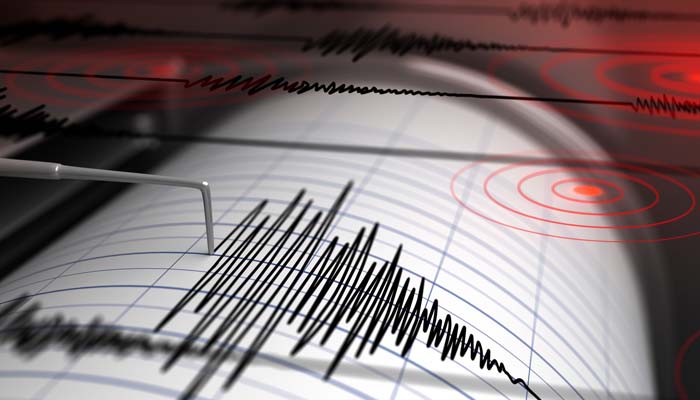
China was jolted with two back-to-back earthquakes within less than 20 minutes.
According to The Independent, the United States Geological Survey said a magnitude 5.7 earthquake struck a remote province in China, with a second quake of magnitude 5.8 following just 18 minutes later on Tuesday, July 28.
The earthquakes in Xinghai county in the northwestern Chinese province of Qinghai struck at 11.16am and 11.34am on Tuesday at a depth of 10 kilometres (6 miles), with the epicentre located in a sparsely populated, high-altitude area about 244 km (152 miles) from Xining, the capital of Qinghai.
Public order remains stable after two earthquakes
State-run Xinhua agency reported that noticeable tremors were felt in Xining. However, there were no immediate reports of casualties or building collapses, and "public order remains stable overall.
Citing preliminary checks by local authorities Xinhua said but some buildings and roads in at least seven nearby villages have been damaged to varying degrees.
It also said emergency response team were heading to the epicenter and the tremors had also triggered limited landslides on nearby mountainsides.
Qinghai province in China’s northwest is sparsely populated and often experiences earthquakes.
The earthquakes also impacted Lanzhou in neighbouring Gansu province, one of the largest cities in the area.
Social media videos showed lamps swinging inside residences in the city.
Earlier this month, an earthquake of magnitude 5.0 struck the southwestern Chinese province of Yunnan at a depth of 6km (3.7 miles), according to the China Earthquake Networks Centre.
The quake's epicentre was in a village of around 1,300 residents in the mountainous Mojiang county, part of the city of Pu'er in the southwestern border province.
The village is around 100km (62 miles) from China's borders with Laos and Vietnam.
Japan earthquake
Hours after Chinese remote province twin earthquake, a preliminary magnitude of 7.1 struck Japan's southern Kumamoto prefecture on Tuesday, knocking out power to thousands of homes, snarling travel and triggering evacuation orders and warnings for aftershocks.
Speaking to reporters at her office in Tokyo, Japanese Prime Minister Sanae Takaichi said the extent of casualties and property damage was being assessed.