In a breakthrough development, researchers have made the first viruses designed by artificial intelligence, marking a major leap forward the field of medicine.
Notably, the development ha also raised concerns over bioterrorism and hopes that the technology remains safe.
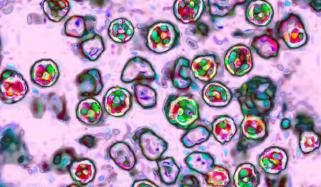
The artificiality developed viruses are specific kinds known as bacteriophages thar only causes infection in bacteria and are used around the world for the treatment of patients suffering from persistent infections
In lab tests, a cocktail of the AI-designed viruses killed E-coli bugs that remained resistant to natural bacteriophages
Dr Brian Hie, a chemical engineer at Stanford University in California, efficiently used genome language models, the genetic equivalent of the large language models behind AI-centric chatbot to design functioning genomes for bacteriophages.
These viruses were developed in the lab and pitted against E.coli in a dish.
The ability to quickly design genomes for particular bugs while overcoming resistance could "transform phage therapy."
In another article, Prof Tom Inglesby and Dr Moritz Hanke at the Center for Health Security at Johns Hopkins University in Baltimore, reinforced the warning, stating, “Although this is promising for life sciences applications, it also raises urgent biosafety and biosecurity questions. The ability to compose viral genomes using generative AI now exists; the governance to safely steer it does not.”
The AI-generated genome designs, with scientists choosing up to 300 for laboratory experiments.
Only 16 proved viable: however, a cocktail of these AI-designed bacteriophages killed E.coli bacteria that became resistant againt natural phages, underscoring their potential for enhancing phage therapy againt difficult infections.
Experts warn of biosafety and biosecurity risks
Despite excellent results, experts issued a warning that the ability to develop microorganisms through the cutting-edge AI also underscores the biosafety related challenges that may come up with the new development.
The study highlights the rapid spread, efficiency and role of AI in synthetic biology and could speed up the development of targeted treatments for antibiotic-resistant infections.