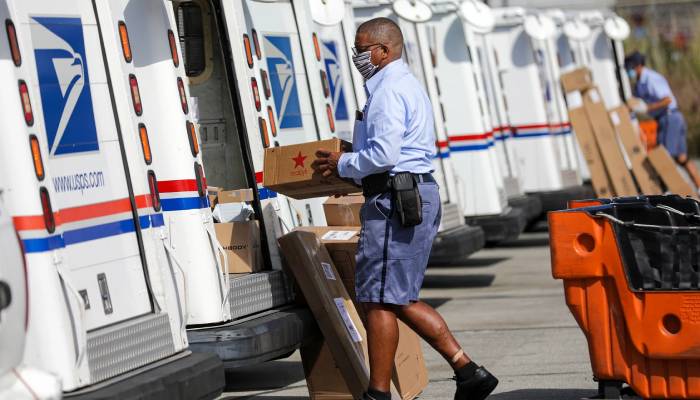
Extreme heat kills hundreds of mail carriers every year. The increasing number of workers getting affected by the weather conditions has raised alarm.
Postal mail carriers face severe risks of hyperthermia and heat-related illness due to extreme summer temperatures, aging delivery vehicles lacking air conditioning, and high-pressure delivery schedules.
As per the New York Times report, more than 559 workers die annually from heat exposure nationwide, while postal carriers notched more than 1,330 heat-related incidents over a recent two-year period.
Among them was Eugene Gates, a Texas mail carrier who died while delivering mails in June 2023.
Gates texted to his wife, Carla, about heat at 7:30 am, when it was already 87 degrees, and hours later he collapsed. The medical examiner found that hyperthermia contributed to his death.
What is hyperthermia?
Hyperthermia is a spectrum of heat-related illnesses. This group of conditions involves an abnormally high body temperature of more than 104°F (40°C). It is the opposite of hypothermia, Medical News Today reported.
Hyperthermia, or heat-related illness, occurs when the body’s heat-regulation system becomes overwhelmed by outside factors, causing a person’s internal temperature to rise.
It is considered separate from conditions where internal body sources, such as infection, heat-regulating problems, and adverse drug reactions or overdoses, cause a raised body temperature.
Symptoms of hyperthermia
The symptoms of hyperthermia depend on the stage it has reached or how much the body has overheated. Symptoms of overheating may develop rapidly or over hours or days.
Mild dehydration tends to have minor symptoms, such as headache and muscle cramps.
Severe dehydration, however, can strip the body of its ability to cool. Without treatment, this can result in dangerously high body temperatures and life-threatening conditions, including organ failure and death.
Treatments for hyperthermia
If someone suspects hyperthermia, they should immediately stop what they are doing and move to a cool, shaded place with good airflow.
A person should seek medical attention for heatstroke symptoms or general symptoms that do not improve within 1 hour of rest and care.
Additional tips for treating mild to moderate hyperthermia include:
• sipping cool water or an electrolyte drink
• loosening or removing excess clothing
• lying down and trying to relax
• taking a cool bath or shower
• placing a cool, wet cloth on the forehead
• running the wrists under cool water for 60 seconds
• not resuming activity until symptoms have gone away
• placing ice packs or compresses under the arms and groin
• using a fan to cool the skin