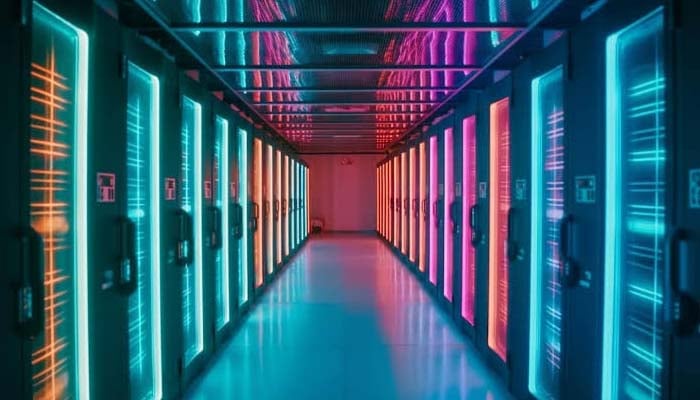
The significantly increasing artificial intelligence (AI) is now making waves all across the industries due to its phenomenal benefits, but at the same time, the fledgling field is also posing a greater challenge beyond computing power: electricity demand.
The cutting-edge AI-powered models need large data centres filled with energy-intensive servers, while countries are already under immense pressure, aiming to expand rida and secure a reliable power supply.
As per the International Energy Agency (IEA), global data-centre electricity consumption could roughly double from 485 terawatt-hours (TWh) in 2025 to about 950 TWh by 2030.
1. AI is driving power demand
AI-centric data centres are expanding rapidly as companies train and operate increasingly powerful models.
The IEA stated electricity consumption from AI-focused data centres grew by 50% in 2025, much faster than overall data-centre demand.
2. Grids face increasing pressure
Data centres need substantial amounts of electricity in concentrated locations. As per IEA, nearly 20% of planned data-centre projects could face delays because of grid constraints unless infrastructure risks are acknowledged.
3. Energy sources matter
Meeting increasing demand will need a mix of power sources. Renewables are likely to offer a significant share of additional electricity, while natural gas and nuclear power are also projected to contribute.
4. Local communities could feel the impact
One of the major issues is not the consumption of global electricity because data centres place an immense amount of pressure on local power systems as well as resources, including water used for cooling.
Texas recently paused new state-issued data-centre permits while officials review their impact on the electricity grid, energy costs and water use.
5. Governments are responding
Governments are increasingly examining how data centres affect energy systems. The European Commission has proposed needing a large European data centres to disclose their energy and water efficiency.
As AI adoption accelerates, the challenge will be balancing technological growth with reliable, affordable and sustainable energy supplies.