If nuclear war suddenly threatens the United States, the president does not stay in the Oval Office. Continuity of government plans swing into action within minutes to keep the nation’s leadership alive and in command.
Immediate shelter under the White House
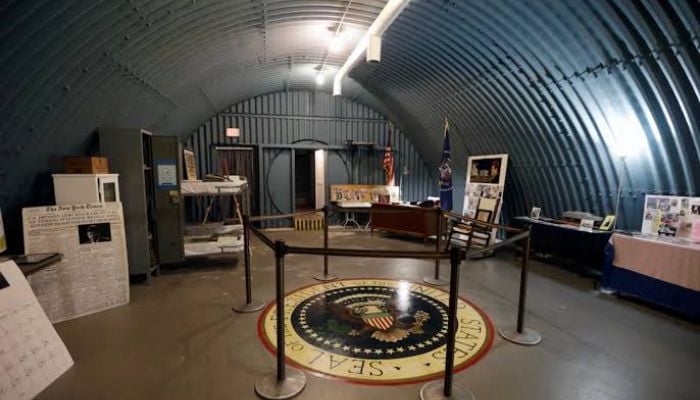
The first stop is the Presidential Emergency Operations Center, or PEOC, a hardened bunker beneath the East Wing. Built during World War II and repeatedly upgraded, it offers blast protection, secure communications and space for the president plus key aides.
On 9/11, Vice President Dick Cheney and other officials sheltered there. Recent reconstruction work has modernized the facility but its role remains the same: buy time.
Airborne escape option
If the capital itself becomes too dangerous, the president boards Marine One or is rushed to an E-4B National Airborne Operations Center – the so-called “Doomsday Plane.”
These modified Boeing 747s serve as flying command posts. Hardened against electromagnetic pulses and capable of mid-air refueling, they let the president direct military forces from the sky for days if needed.
Mountain fortresses for long-term survival
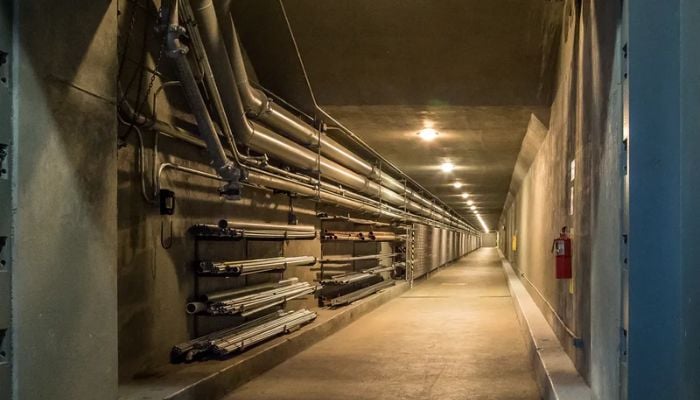
For longer protection, leaders move to mountain complexes. Mount Weather Emergency Operations Center in Virginia’s Blue Ridge Mountains serves as the main civilian leadership site, operated by FEMA.
Raven Rock Mountain Complex (Site R) in Pennsylvania acts as the “underground Pentagon” for military command. Cheyenne Mountain Complex in Colorado carved deep into granite, provides another hardened option linked to NORAD and Northern Command.
These sites, built during Cold War and continually modernized, contain independent power, water, food and advanced communications so the government can function even if Washington is destroyed.
Successors and other top officials disperse to different locations to prevent a single strike from wiping out the chain of command. The exact sequence stays classified but the goal is clear: keep the president - and the country’s ability to respond – alive.