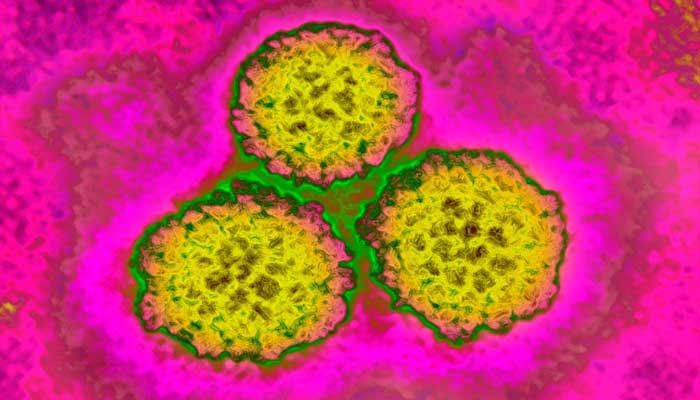
Nearly 12% of new cancer cases recorded in 2024 were associated with 12 infections, underscoring the significance of vaccination, early treatment and cancer prevention, as per a recent report by the World Health Organization’s International Agency for Research on Cancer (IARC).
As per report published in The Lancet Oncology, the report examines how certain bacteria and viruses contribute to cancer development all across the globe.
Scientists stated preventing and treating these infections could assist minimize the burden of multiple malignancies.
Human papillomavirus (HPV) was associated with approximately 4% of new cancer cases, primarily via cervical cancer and some head and neck cancers.
Helicobacter pylori, a bacterium that infects the stomach, was also linked to nearly 4% of new diagnoses, particularly gastric cancer.
Hepatitis B and hepatitis C infections were associated with liver cancer, accounting for approximately 2% and less than 1% of new cancer cases, respectively.
Epstein-Barr virus (EBV), which affects over 90% of the global population, was linked to around 1% of new diagnoses, including certain lymphomas and stomach cancers.
Scientists emphasise that having an infection does not mean a person will develop cancer. Risk based on some factors, and cancers associated with infections may take years to emerge.
Prevention remains an important strategy. HPV and hepatitis B vaccines can protect against infections linked to cancer, while antibiotics can eliminate H. pylori and minimise the risk of gastric cancer.
Moreover, effective HIV treatment can reduce cancer risks associated with immune suppression.
However, vaccines are not accessible for every infection identified in the report. Researchers are investigating potential Epstein-Barr virus vaccines, with multiple candidates under development or clinical evaluation.
Scientists hope the findings will encourage further investment in vaccines, treatments and prevention strategies, assisting minimise infection-related cancers all across the globe.