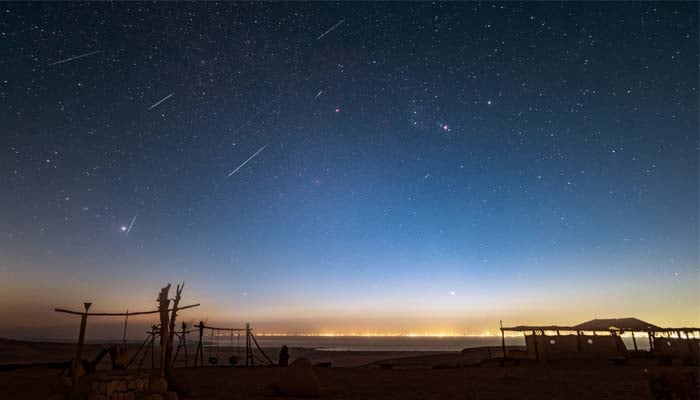
The Orionid meteor shower 2026 will peak overnight from October 21 to 22, providing a glimpse to skygazers to watch bright meteor streaks across the night sky.
The annual celestial event happens as Earth passes via debris left behind by Hallet’s Comet.
As per astronomy sources, the Orionids can produce nearly 20 meteors per hour under ideal viewing conditions.
However, this year’s bright Moon could make spotting the October meteor shower more challenging.
When will the Orionid Meteor shower peak?
The Orionids remain active from October 2 through November 7, with the peak likely during the night of October 21 and early hours of October 22.
Skygazers may help in spotting meteors on surrounding nights, based on weather conditions and sky visibility.
The shower is visible without telescopes or binoculars, making it accessible to amateur astronomers and casual skywatchers.
What is the best time to watch the Orionids in 2026?
The best time to see the Orionid meteor shower is generally after midnight and ahead of dawn, when the radiant in the constellation Orion is increased across the sky.
However, moonlight will minimize visibility during much of the peak night.
Notably, skywatchers are strongly advised to seek dark locations away from city lights and allow their eyes around 20–30 minutes to adjust to darkness.
What causes the Orionid meteor shower?
The Orionids happen when tiny particles shed by Halley’s Comet enter Earth’s atmosphere at approximately 66 km per second.
Friction and compression heat the surrounding air, producing the glowing streaks commonly, which is known as shooting stars.
Halley’s Comet last passed via the inner solar system in 1986 and is likely to return in 2061.
Despite the Moon’s interference, the Orionid meteor shower remains a notable October astronomy event.