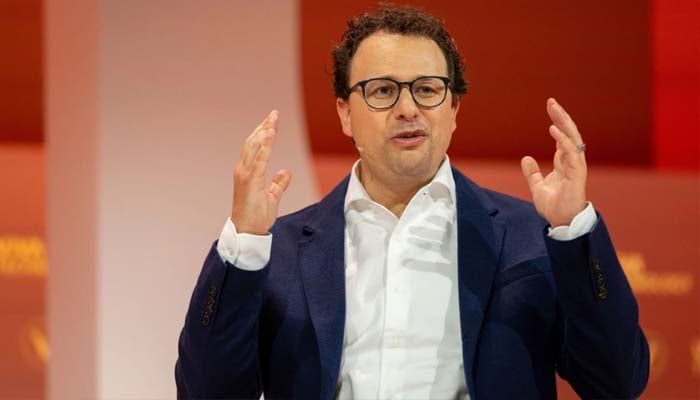
Anthropic co-founder Jack Clark has issued a warning to policymakers that rapidly advancing artificial intelligence (AI) could transform the global economy, with one of the company’s internal models estimating that US economic output could rise by nearly 50% by 2030 under specific conditions.
During a conversation with the International Monetary Fund and World Bank annual meetings on Saturday, Clark stated the estimate could take US gross domestic product (GDP) from more than $30 trillion to approx $44 trillion.
He acknowledged the estimate, saying, "sounds very outlandish, I know." But he added that AI was vastly increasing scientific discovery.
"The technology continuing to get better. And if GDP were to grow this much, then economic doctrine suggests that new industries and inventions would need to have been created to power such a major economic expansion," he added.
Clark called for international cooperation and urgent regulations, warning that the window for policymakers to establish safeguards was shrinking as AI became more capable.
He stated AI could speed up scientific discovery by assisting researchers solve complex mathematical, engineering and biological problems, including developing new medicines.
AI agents could support human scientists, possibly accelerating research and innovation.
However, Clark cautioned that these capabilities could also enable dangerous misuse, including biological and cyber weapons.
He called for the strictest human oversight and transparency in biological research to maintain safety.
Although AI remains under human control, Clark issued a warning that technological progress could eventually outpace human oversight.
He described the possibility of a future in which AI development accelerates beyond the ability of people to manage it effectively.
Additionally, Clark addressed that AI was contributing to job losses in sectors like call centres and customer service.
However, he stated its impact on employment remained uncertain, especially as new sectors could create a list of opportunities.
He added that countries could participate in the AI revolution by developing the data centre infrastructure required to support the technology.
Clark’s remarks come as governments and financial institutions evaluate AI’s options to drive economic progress against risks to employment, cybersecurity and global stability.