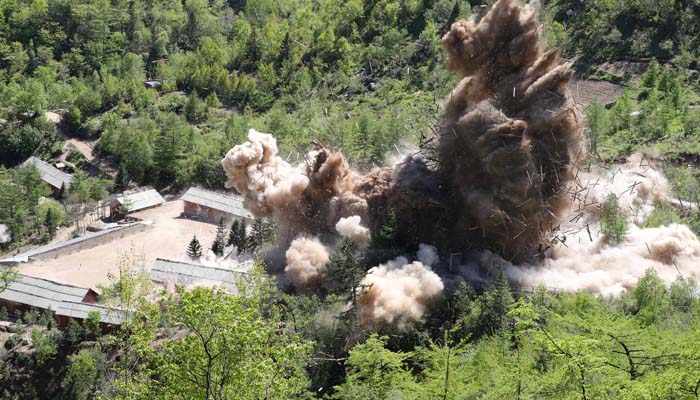
Scientists said they have detected an unexpected and prolonged increase in seismic activity at North Korea’s sprawling Punggye-ri nuclear test site since the country’s final and most powerful test in 2017.
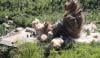
According to CNN, North Korea conducted six underground tests between 2006 and 2017 at the site at Mount Mantap in North Hamgyong province.
The final test, with an estimated explosive yield of 160 kilotons, unleashed a magnitude 6.3 earthquake and is believed to have resulted in an on-site collapse, perhaps of a tunnel.
Tests of nuclear bombs, such as those conducted in Nevada during the Cold War, have long been known to cause small, detectable earthquakes.
However, the effects were typically short-lived, occurring in the days and weeks after the explosion and confined to the area around ground zero, the test site.
The tests did not appear to affect Earth's crust in a significant way, said Kwang-Hee Kim, lead author of a study published Thursday in the journal Science.
However, according to seismic wave data from 2008 to 2025 collected and analyzed by Kim in South Korea and his colleagues in China, the area around Mount Mantap experienced 1,399 earthquakes, with the number and magnitude increasing over time.
Sunyoung Park, an assistant professor in the University of Chicago's department of the geophysical sciences who was not involved in the research said, "I think the broader lesson is that short-lived disturbances can have consequences that persist for years or even decades. The Earth's crust has a long memory."
The earliest earthquake occurred in 2013, after the third nuclear test, but seismicity, the relative frequency and intensity of the quakes, “remained sparse until 2017, when activity increased markedly after the sixth and largest detonation,” the study authors wrote.
The earthquakes were not powerful, mostly of a magnitude of between 2 and 3, and Kim said they appeared to be at a shallow depth.
Before this century, according to the study, the area had been quiet tectonically, with earthquakes “virtually unknown.”