NASA has successfully launched the Nancy Grace Roman Space Telescope, a top-notch observatory.
The Nancy Grace Roman Space Telescope is particularly designed to explore several universes biggest mysteries, such as dark matter, dark energy and distant galaxies.
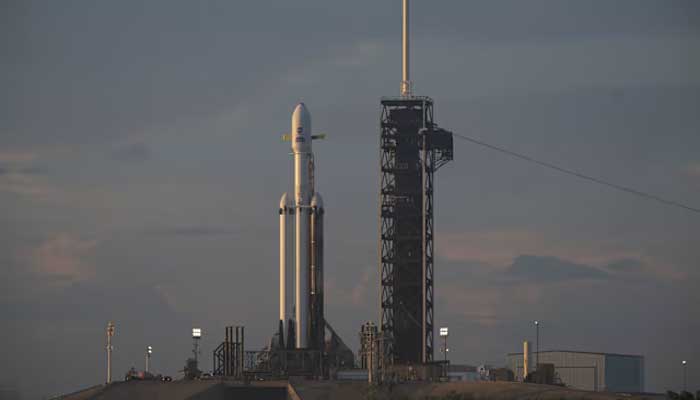
Falcon heavy launch today
The Nancy Grace Roman Space Telescope launch occurred on August 30 from NASA’s Kennedy Space Center in Florida aboard a SpaceX Falcon Heavy rocket, marking the most successful rocket lift off for the space agency’s ambitious space science program.
The Roman space telescope separated from the rocket after 31 minutes and 41 seconds and kicked off its historical journey toward its destination in space.
The observatory is heading toward the second Sun-Earth Lagrange point (L2), which is situated roughly 1 million miles from Earth.
The NASA launch is likely to be followed by a journey of more than three months ahead of Roman reaching its final orbit.
Roman space telescope will survey billions of galaxies
The Nancy Grace Roman space telescope may reportedly transform astronomical research by surveying far more of the sky as compared to the space telescopes.
During its five-year mission, it could observe hundreds of millions of stars and an unlimited number of galaxies while possibly detecting over 100,000 planets beyond our solar system.
Searching for Dark Matter and Dark Energy
One of the Roman telescope launch mission’s highly important goals is understanding dark matter and dark energy, two of astronomy’s biggest mysteries that remained unanswered up till yet.
Roman Telescope is able to survey the sky at greater speed
Although the Roman space telescope is usually compared with the Hubble Space Telescope, its capabilities differ from each other.
NASA says Roman can survey the sky around 1,000 times faster than Hubble, with individual images covering areas at least 100 times larger.
The NASA launch schedule for the mission and the successful space launch today, marking a major milestone toward answering some of the biggest questions about the cosmos.