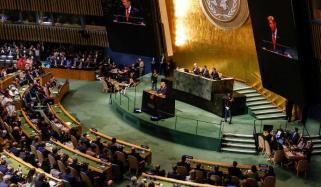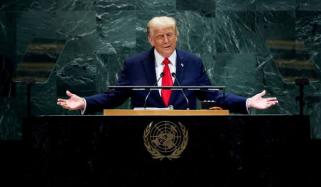
Turkish President Recep Tayyip Erdogan has issued a direct call to dismantle the veto system of the United Nations Security Council, urging the global body to replace permanent membership with an all-elected, rotating system.
World power dynamics need change
In an opinion article published in “Bloomberg,” President Erdogan argued that the current structure of the Security Council is an outdated relic of the post-World War II era.
He stated that recent global crises – including economic instability, supply-chain disruptions and regional conflicts – have highlighted the dangerous inefficiency of concentrating major international decisions within five permanent member states.
Reaffirming his long-standing diplomatic slogan, “The world is bigger than five,” Erdogan stressed that the veto privilege must be eliminated as the starting point for any meaningful UN reform.
A blueprint for dynamic representation
Rather than simply expanding the number of permanent seats – which Erdogan argued would merely grant privileges to a wider club of nations – the Turkish leader proposed a complete structural overhaul.
Under his proposed roadmap, all Security Council members would be democratically elected by the UN General Assembly for fixed, rotating terms.
To remain on the council, nations would be required to continually re-win the support of the majority of member states.
Strengthening the General Assembly
Erdogan urged the international community to form a broad coalition within the UN General Assembly to ensure that single powers can no longer unilaterally block the majority’s will.
He emphasized that emerging economies and political centers in Asia, Africa and developing regions deserve fair representation, warning that the world cannot build a stable future while clinging to legacy power hierarchies.