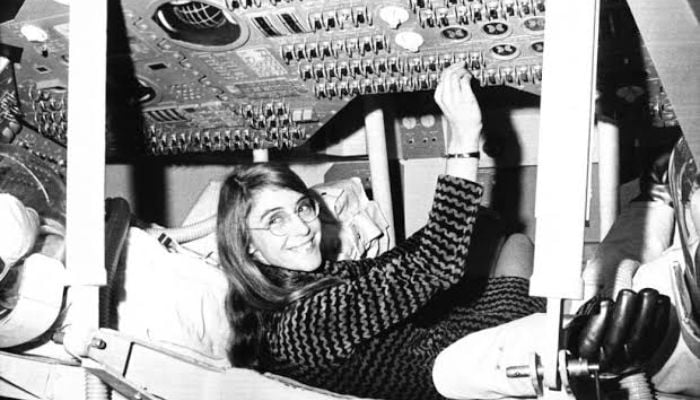
Margaret Hamilton, the pioneering computer scientist whose software guided the Apollo missions to the Moon, has died at the age of 90.
Hamilton passed away on September 30, 2026, in a hospital in Cambridge, Massachusetts. Her death was confirmed by her daughter, Lauren and by the Massachusetts Institute of Technology (MIT), where she spent much of her career.
She led the team that wrote the onboard flight software
In the 1960s, Hamilton joined MIT’s Instrumentation Laboratory as the first female programmer hired for the Apollo project. She later directed the Software Engineering Division and led a team of about 100 people.
Their code ran on the Apollo Guidance Computer and helped Neil Armstrong and Buzz Aldrin land safely on the Moon in 1969. The same software also supported later Apollo missions and Skylab.
Hamilton is widely credited with helping create the field of software engineering. She popularized the term itself at a time when writing computer programs was not yet seen as a formal engineering discipline.
Her team’s rigorous approach to testing and error handling proved critical when the Apollo 11 landing computer faced overload alarms – the software prioritized essential tasks and allowed the landing to continue.
Honors and later career
In 2016, President Barack Obama awarded her the Presidential Medal of Freedom, praising her for helping “launch an industry that would forever change human history.”
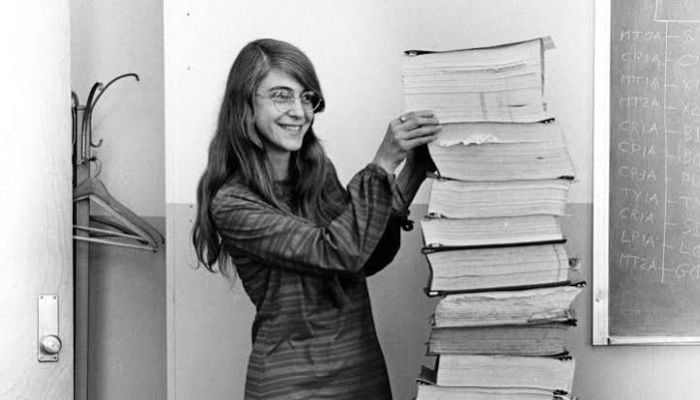
After leaving MIT in the mid-1970s, she founded her own software companies and published more than 130 papers.
Hamilton is survived by her daughter, a son-in-law, two grandsons, four great-grandchildren, and her siblings. Her work remains one of the most important contributions to the success of the Apollo program.