NASA gears up to launch a pivotal rescue mission to save an ageing telescope from falling back to Earth.
The $30 million mission is set to kick off this week with the planned launch of a robotic lifesaver.
NASA hired Katalyst Space Technologies for a rescue mission
As reported by CBC News, the US space agency hired startup Katayst Space Technologies to boost the Swift Observatory to a higher orbit where it can continue searching for some of the universe's biggest explosives.
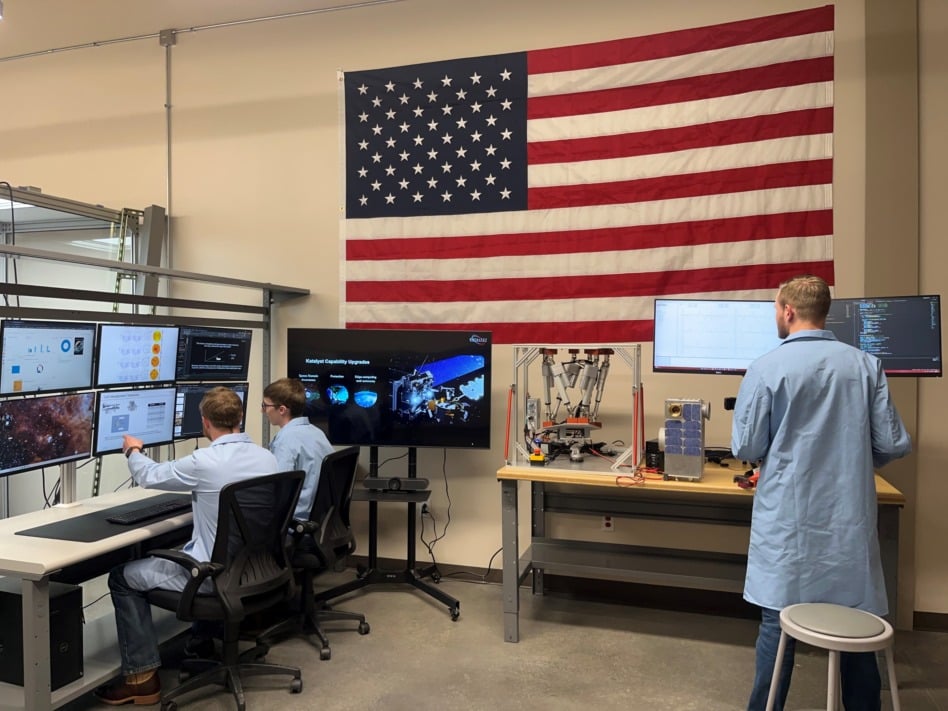
A three-armed spacecraft built by Katalst will chase after Swift once it takes off from an atoll in the Pacific's Marshall Islands aboard an airplace-launched Pegasus rocket.
Liftoff could occur as early as Tuesday, June 30.
About Swift Observatory
Launched in 2004, Swift has been sinking faster and faster due to recent intense solar activity. It needs to get to a higher, more stable orbit as soon as possible to survive.
Following the rescue of Swift, NASA's Hubble Space Telescope, which is also at risk, could be next to be rescued.
Why Hubble Space Telescope need to be rescued?
Similar to Swift, Hubble is losing altitude as the sun erupts with one flare after another. Katalyst Space CEO Ghonhee Lee said his company's next-generation robot, still in development, could help Hubble in the next few years.
Only China has attempted a mission like the upcoming one, successfully boosting a satellite into a higher graveyard orbit four years ago.
"This is the first American space robot to go up and do anything like this," Lee told The Associated Press. "NASA has all these big senior observatories … all of them can benefit from a service like this. So what we're proving with this mission is this is a new play in the playbook that's available."
How will the Swift Observatory be rescued?
It will take Katalyst's autonomous spacecraft, named Lift, about a month to rendezvous with Swift and catch it and another couple months to raise its orbit from the current 224 miles to the desired 373 miles.
The 1.6-tonne gamma ray observatory must be above 185 miles for the rescue to work. It's expected to reach that point of no return in October, according to the latest estimates.
Roughly the size of a small kitchen refrigerator with a 40-foot solar wingspan, Lift sports three arms with a reach of just over 3 feet. Each arm has two finger-like pinching grippers that resemble the hands of a Lego minifigure.
If all goes to plan, Swift could be back in business by September, according to Lee.
Worth hundreds of millions of dollars, Swift was never designed to be repaired, let alone retrieved by hands, which makes the mission more complex, as the company says there's no guarantee if the mission will work.
NASA signed a contract with Katalyst last September, as Shawn Domagal-Goldman, NASA's astrophysics director, said, "I have to be honest. No one thought it was going to be possible. No one thought we would get as far as we've already gotten today."
NASA has bought a little more time for Swift, turning off all scientific instruments to slow its descent. Observations ceased in February.
NASA's science mission chief Nicky Fox said the Swift is worth the effort.
"If we let Swift re-enter, we would lose that telescope. We would lose a lot of capability," she said. "We don't currently have the budget to build another one to replace that."