The US AI giant Anthropic has made serious theft claims against Chinese e-commerce firm Alibaba in a shocking move.
Anthropic accused the Chinese firm of "brazenly" and "illicitly" extracting its Claude AI's capabilities by creating thousands of fake accounts designed to access the AI mode which the company does not offer to Chinese groups.
Anthropic penned a letter to the US Congress
In a letter sent to two members of the US Congress, the San Francisco-based company said operators linked to Alibaba carried out almost 29 million exchanges with Clause using thousands of fraudulent accounts in what it described as the largest extraction campaign.
Anthropic requested Congress to penalise the companies behind attacks mentioned and to heighten measures to prevent US tech from being stolen.
Addressed to US Senators Tim Scott and Elizabeth Warren and dated to June 10, the letter accused the Chinese company of carrying out "the largest campaign to illicitly extract Clause's capabilities".
Details about Anthropic's accusations against Alibaba
According to Anthropic, the campaign was carried out through what are known as "distillation attacks", which use strong AI models to train weaker, smaller versions.
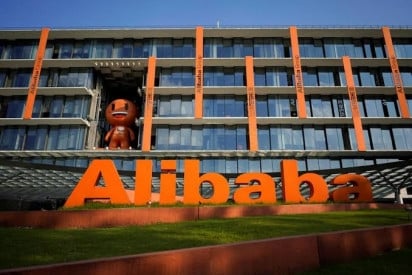
Alibaba-linked operators targeted Claude's most valuable capabilities, including its ability to tackle longer and more complex tasks and its approach to decision-making, claimed the tech-giant.
These types of attacks are carried out on an "industrial scale" to enable Chinese companies to market the US AI capabilities as their own, said the company.
National security concerns
Moreover, the letter also cited other alleged attacks, which Anthropic said posed a threat to the US military.
"Distillation attacks turn hundreds of billions of dollars in American investment and [research and development] into a massive subsidy for our geopolitical competitors," said Anthropic.
It cited the US Department of Defence's claims that Alibaba and several major firms like car maker BYD and tech company Baidu are tied to the Chinese military.
The accusation came as US pressure mounts on Alibaba, which is involved in businesses from ecommerce to cloud computing.
This week, the company asked a US court to remove it from a Pentagon blacklist of Chinese companies with alleged ties to China's People's Liberation Army.
In November, the White House had concluded that the Hangzhou-based group had provided tech support for Chinese military "operations against unspecified US targets.
Alibaba has denied having any connection to the PLA; however, it did not address the accusations made by Anthropic.
Shares of the Chinese tech group fell more than 4 per cent in Hong Kong on Thursday, June 25.
OpenAI has also previously accused Chinese groups of employing the same practice.
Anthropic is a leading AI developer and, alongside ChatGPT-maker OpenAI, is gearing up for a pivotal stock market debut that could make it one of the most valuable companies in the world.
However, some of Anthropic's more advanced models, such as Mythos, have raised cybersecurity concerns over their ability to target weaknesses in computer systems.
Previously, Anthropic had accused Chinese AI labs DeepSeek, Moonshot and MiniMax of distillation, claiming they "illicitly" used Claude's outputs to train their respective models.