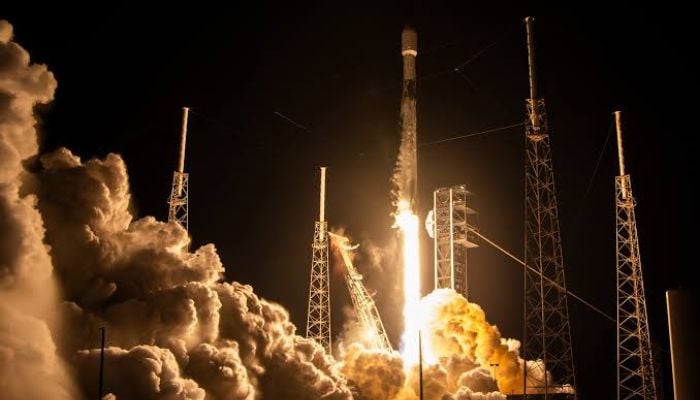
SpaceX has postponed its Falcon 9 launch of the Bandwagon-5 rideshare mission. The flight was set for Monday, October 19, 2026, from Cape Canaveral Space Force Station in Florida. Unfavorable weather in the booster recovery area forced the delay.
Launch now aims for Tuesday
Teams are targeting no earlier than Tuesday, October 20. The one-hour window opens at 6:30 a.m. ET (10:30 UTC) from Space Launch Complex 40. A backup chance exists on Wednesday if needed. A live webcast will start about 15 minutes before liftoff on the SpaceX website and X account.
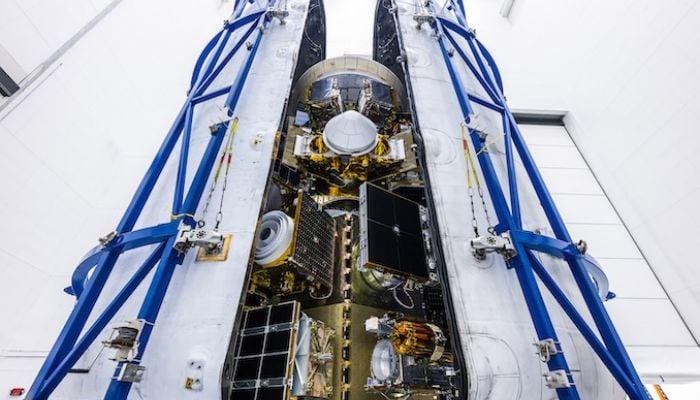
Bandwagon-5 is a dedicated rideshare mission. It carries 32 payloads including small satellites (cubesats and microsats) for commercial and government customers, plus SpaceX’s own Starfall reentry vehicle.
Many of the satellites were arranged by Exolaunch. They include radio-frequency monitoring satellites from HawkEye 360, communications satellites from ICEYE and navigation satellites from Xona Space Systems.
Starfall makes its second flight
Starfall is SpaceX’s uncrewed reentry capsule. It is designed for mass production and can bring up to 1,000 kilograms of customer experiments or manufactured goods safely back to Earth. The capsule is roughly cylindrical about 0.75 meters tall and 3.1 meters wide and weighs around 2,100 kilograms. This is second demonstration mission.
The Falcon 9 first-stage booster, B1085, will fly for the 19th time. After separation, it is set to land on the droneship A Shortfall of Gravitas in the Atlantic Ocean. The rocket will head southeast into a mid-inclination low Earth orbit.
SpaceX’s SmallSat Rideshare Program offers regular, lower-cost flights for smaller payloads. This mission continues that effort while testing technology that could support future in-orbit manufacturing and experiment recovery. Weather conditions will be monitored closely ahead of the new launch attempt.