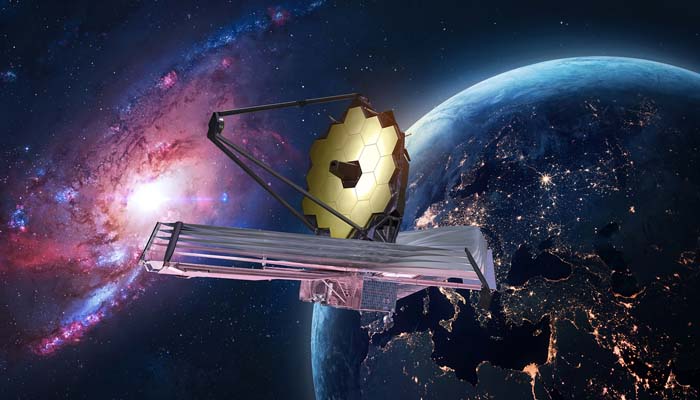
NASA (National Aeronautics and Space Administration) has decided to launch a telescope in space to look for life on 20 distant planets.
According to Time Magazine, NASA next year will launch a far smaller than usual telescope, weighing just 716 pounds and measuring 17 inches across, in the search for signs of life beyond Earth.
The latest telescope, dubbed Pandora, will focus on 20 selected exoplanets and study each of them for up to 24 hours at a time and repeat the same process 10 times. The objective of the mission is to analyse if these distant worlds have suitable conditions for life and will also provide valuable insights into the exoplanet.
Daniel Apai, professor and the scientist tasked with overseeing Pandora’s mission operations centre, said, “Almost all of these planets have been studied, but they have been studied at varying degrees and with [different levels of] success. The special power of Pandora will be these many revisits and extended monitoring of the star to build up a comprehensive picture.”
He further added that it was very difficult to choose only 20 planets for the study. “We selected planets that orbit hotter stars and planets that orbit cooler stars. We selected larger gas giant planets and then also smaller sub-Neptune ones. We had about 100 interesting candidates at first and then made cuts.”
Pandora will look for water vapour and hydrogen in the star systems, which can indicate if a planet has water or is being overheated by its sun.
It is worth noting that the budget of this mission is $20 million, a tiny fraction of the $10 billion Webb telescope.