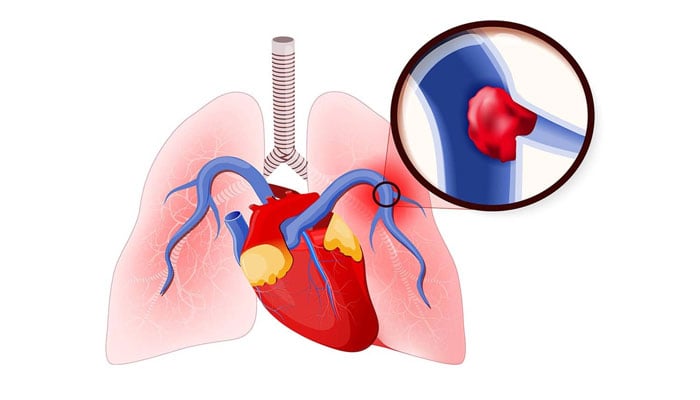
A pulmonary embolism (PE) — a medical emergency — is a blood clot in a blood vessel of your lungs that blocks the breathing pathway, causing disruption between blood flow and oxygen levels in one of the most vital organs.
A PE limits blood flow to your lungs, reducing oxygen levels and causes pulmonary hypertension. It’s a fatal condition that exerts immense pressure on your heart, causing heart failure.
Notably, the award-winning star Catherine O'Hara’s also died due to pulmonary embolism at the age of 71.
Pulmonary embolism symptoms
Pulmonary embolism causes dyspnea, wheezing, tachycardia, sudden sharp pain in your chest that radiates to your shoulder, trapezius ridge, jaws and neck, pale or bluish skin (due to decreased oxygen in blood).
If left untreated timely or misdiagnosed, patients may faint or even lead to death.
Causes of pulmonary embolism
Here are a few possible causes of Pulmonary embolism:
- Blood collecting or “pooling” in a certain part of your body (usually an arm or leg) due to prolonged inactivity.
- It may also occur due to a vascular injury, like from a fracture or surgery.
- Due to an occurrence of any cardiac event (including congestive heart failure, arrhythmias, myocardial infarction or stroke).
- Increased clotting factors can occur with some types of cancer or in some people consuming hormone replacement therapy or birth control pills.
Risk factors for pulmonary embolism
People who are at a significantly higher risk of developing the life-threatening condition may include:
- People suffering from deep vein thrombosis (DVT) or varicose veins.
- Individuals taking hormonal-based contraception (like birth control pills, patches or rings) or hormone replacement therapy.
- Smokers, cancer and diabetic patients
- People over 60.
- Diagnostic tests
- Blood tests, radiological tests such as Computed tomography (CT) angiogram, Pulmonary angiogram, chest X-ray, leg ultrasound, and VO scans are used to diagnose pulmonary embolism.
Treatment
Anticoagulant drugs — blood thinners — are most commonly prescribed to treat the condition.
Thrombolytic therapy
Thrombolytic medications,, including tissue plasminogen activator (TPA), dissolve the clot.
Procedures
If none of the above mentioned treatment works, healthcare professionals recommend surgery or a catheter to remove the blood clot from your pulmonary artery.