A recent study revealed that electrical zaps to the brain can do the trick.
As per research published in PLOS Biology, stimulating two areas of the brain significantly raised people's ability to behave philanthropically.
Specifically, getting these brain regions to fire in tandem increased the likelihood a person would share more reward money with someone else.
For the study, scientists asked nearly 44 individuals to participate in a “Dictator Game.”
In the game, participants made instant judgments about an amount of money they’ll split with another gamer.
Every time, the individual could make more or less money as compared to their partner; however, the amounts varied.
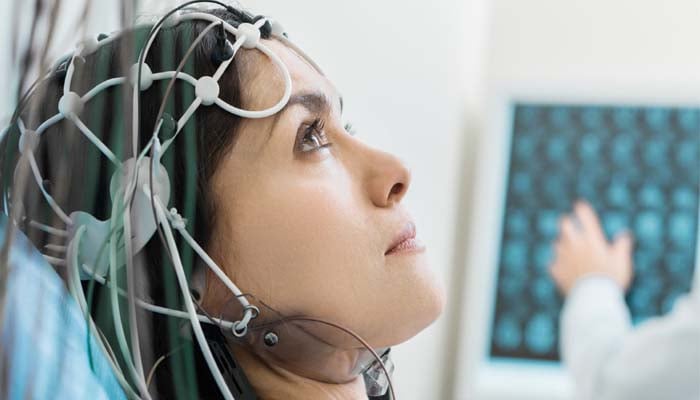
During the game, participants wore electrodes on their scalp that sent current to the parietal and frontal lobes of the brain.
The stimulation that lets the brain cells in those areas to fire together repetitively.
Results indicated that participants were more likely to make an altruistic choice if the two brain regions had synchronous gamma wave rhythms.
Gamma waves are said to be the fastest signals produced by the brain, and involve problem-solving, and intense concentration.
lead researcher and a scholar in psychology at East China Normal University in Shanghai Jie Hu stated, “What’s new here is evidence of cause and effect: When we altered communication in a specific brain network using targeted, non-invasive stimulation, people’s sharing decisions changed in a consistent way — shifting how they balanced their own interests against others.”
Scientists mentioned that they didn’t directly record brain activity while conducting the experiment, so they are unable to draw a direct cause-and-effect relationship between stimulation and altruism.
Research should use EEG scans to track the direct effect of stimulation on brain activity.
Head of brain stimulation, EEG and pharmacology at the University of Zurich Laboratory for Social and Neural Systems in Switzerland researcher Marius Moisa stated, “We were struck by how boosting coordination between two brain areas led to more altruistic choices.”
“When we increased synchrony between frontal and parietal regions, participants were more likely to help others, even when it came at a personal cost.”