_updates.jpg)
Japan’s defence minister, Shinjiro Koizumi, called out China after "new militarism" accusations.
Since Prime Minister Sanae Takaichi took office, Japan has shifted to a more proactive defence policy, which has prompted Beijing to accuse Tokyo of following a reckless policy of "new militarism" that could destabilise the region.
On Sunday, May 31, Koizumi hit back at China, noting that "nothing could be further from the truth".
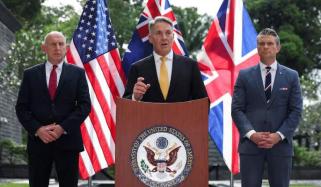
"Think about it. There is a country that has a huge arsenal of nuclear weapons and strategic bombers," Koizumi said at the annual Shangri-La Dialogue in Singapore.
He added, "Japan has neither of such weapons. And yet, Japan is labelled (as) 'new militarism'. Isn't it strange?"
A diplomatic spat between the two countries has began since Takaichi suggested in November that Japan might intervene militarily if China were to attempt to seize Taiwan, the self-ruled island that Beijing claims is part of its territory.
Koizumi said that China was expanding its military capabilities "without sufficient transparency" and that its military activities were "a matter of serious concern for Japan".
Tokyo would "steadily build up its defence capabilities and make continuous updates with a high degree of transparency", including in the fields of artificial intelligence, uncrewed systems and cyber and space defence, he claimed.
"Japan's past as a peace-loving nation has been valued by the region and by [the] international community. This fact will not be shaken by false claims, because it is a fact," he said.
The Shangri-La Dialogue is Asia's top defence forum, bringing together security officials and experts from about 45 countries.
Moreover, for the second consecutive year, China sent a delegation that did not include its defence minister, Dong Jun.