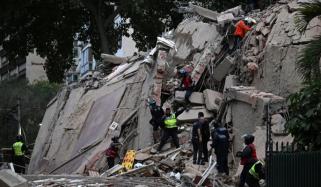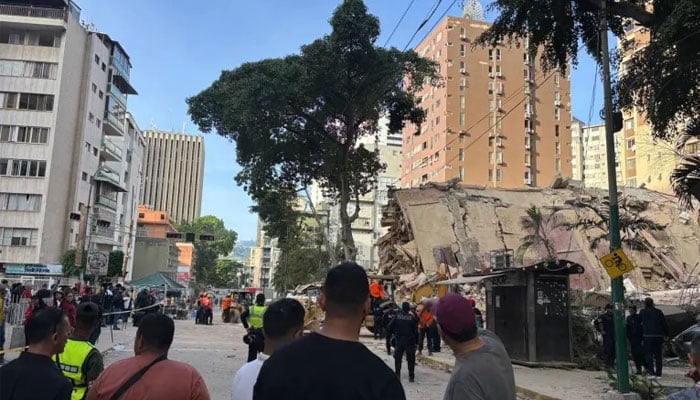
First responders and volunteers have been rushing into the rubble of the collapsed buildings in an effort to save lives after two powerful earthquakes struck Venezuela.
The earthquakes, of magnitudes 7.2 and 75, have claimed at least 235 lives and injured around 4,300 people.
"Unfortunately, we have received around 235 patients who arrive without vital signs or die when they arrive at our health facilities," Health Minister Carlos Alvarado told state media on Thursday, June 25.
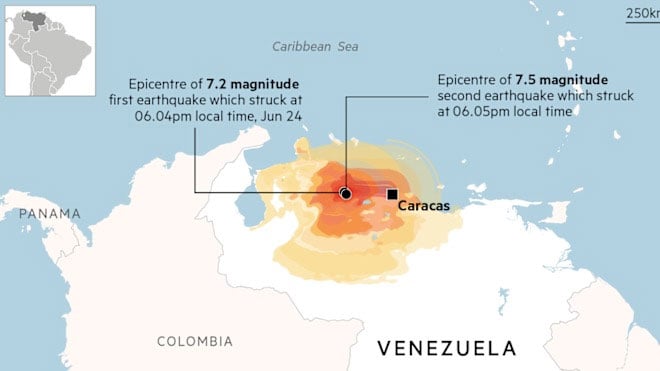
In Carcas and the nearby coastal city of La Guaira, people could be heard calling for help from under the debris, as the death toll is expected to rise, with many people left homeless or too afraid to stay in damaged, unsafe buildings.
The earthquakes, just seconds apart, hit Venezuela on Wednesday, which was also the country's public holiday commemorating the 1821 military victory which secured Venezuela's independence from Spain.
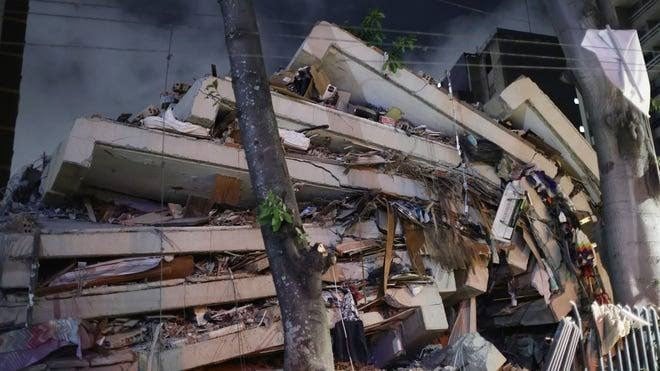
According to the US Geological Survey (USGS), both earthquakes occur close to the surface, making destruction more severe, as they added, "High casualties and extensive damage are probable, and the disaster is likely widespread."
State of emergency in Venezuela
Following the devastating quakes, interim leader Delcy Rodríguez declared a state of emergency for the country and urged citizens to evacuate damaged structures.
Foreign aid for Venezuela amid earthquakes
Several countries have vowed to help the rescue efforts, with the US promising $150 million in aid to its "new and great friends".
Jeremy Lewin, the US under secretary of state for foreign assistance, said on X, "Working with our partners in the interim Venezuelan government, the U.S. will be sending search and rescue teams, medical and humanitarian supplies and other resources in the crucial first days after this tragic natural disaster."
Mexico, Qatar, Brazil, Spain, Portugal, and Canada have also vowed to send aid.
A number of shipments were already on the way Thursday, which included emergency and military personnel, canine and search teams, medical supplies, water purifiers, airplanes and drones.
Building damages in Venezuela earthquakes
Jorge Rodríguez, the president of Venezuela's National Assembly, said around 250 buildings had been damaged or lost, mostly in La Guaira.
About 250 kilometres northwest of Caracas, a multi-storey hotel collapsed in Tucacas on the coast.
The airport had been closed after suffering "severe damage" and announced that the metro and train systems had been halted.
Moreover, parts of the capital lost power and cellphone service, and subway and natural gas were also shut off.
Classes will also be cancelled for several days, and the Ministry of Education said some school buildings would be used as shelters and donation centres.
More than 30 aftershocks have struck Venezuela since the first major earthquake struck at about 6 p.m. on Wednesday.
Estimated death toll following Venezuela earthquakes
According to the initial estimation, there was a 42% chance of more than 10,000 deaths and a 33% chance of over 100,000 deaths as a result of the earthquakes, based on similar quakes and the size of the nearby population.
These figures are not exact predictions and were issued to help the emergency response.
Shortly after the earthquakes, the United Nations officials in Venezuela called on the government to lift social media restrictions so people can get potentially life-saving information; Venezuelans in the country were able to access X.
The site had been blocked by Nicolás Maduro since August 2024 in an attempt to suppress the exchange of information among those who rejected his claim of victory in the July presidential election.