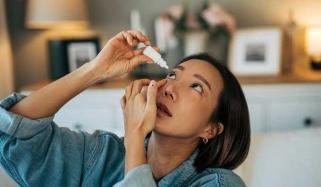
The Food and Drug Administration (FDA) recalled nearly 12 million bottles of Rohto eye drops, citing sterility concerns.
The voluntary recall was issued by Vietnam-based Rohto-Mentholatum and includes eye drops that relieve redness, dryness and eye strain.
As per FDA, the recall affects 11,960,623 cartons of Rohto Cooling Eye Drops distributed across the nation.
It is pertinent to mention that federal regulators classified the action as a Class II recall.
Class II recall means that the use of this product is likely to pose reversible health issues.
As per FDA, the products were recalled due to "lack of assurance of sterility," meaning the eye drops cannot be guaranteed to be free of potentially harmful microorganisms.
The recall covers eight Rohto Cooling Eye Drops products, including ALL-IN-ONE, Max Strength, Optic Glow, Digi Eye, Dry Aid and Cool Relief, in single and twin-pack configurations.
The expiry dates range from July 2025 through February 2029 of all the affected products.
Consumers are urged to compare the lot number and expiry date on their packaging with the manufacturer's recall notice or the FDA's website to determine whether their product is included.
The eye drops were manufactured by Rohto-Mentholatum in Vietnam and distributed by The Mentholatum Company, based in Orchard Park, New York.
Consumers whose products are included in the recall should stop using them immediately and either dispose of them or return them to the place of purchase for a full refund.
The recall comes after the FDA recently classified the recall of over 2.5 million bottles of a prescription steroid eye drug as a Class 2 action because of concerns regarding foreign material discovered in specific lots.
Lupin Pharmaceuticals Inc. voluntarily recalled 2,530,182 bottles of prednisolone acetate ophthalmic suspension USP, 1%, after detecting the presence of a foreign substance, as per FDA enforcement report.
In July, the FDA also announced the recall of certain lots of generic cetirizine hydrochloride tablets, commonly sold as generic variants of Zyrtec, over concerns they may have been cross-contaminated with another drug that could trigger possibly fatal reactions.