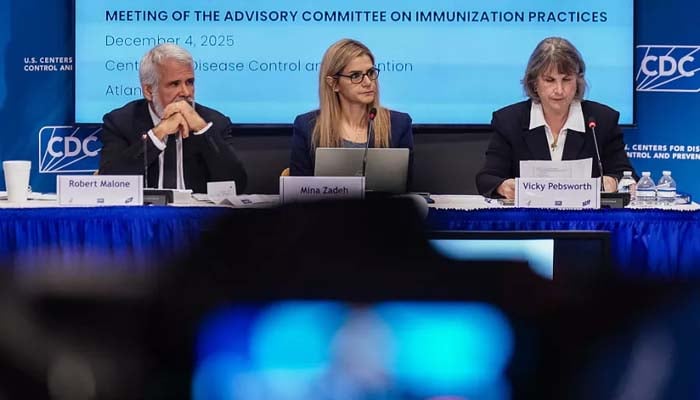
The CDC’s Advisory Committee on Immunization Practices (ACIP) has voted to change the decades-long policy advising universal hepatitis B shot at birth.
The committee recommended that only infants born to mothers who test positive for hepatitis B should get the vaccination.
For babies whose mothers test negative, ACIP suggested those parents to discuss vaccinations with their doctors.
The recommendation, if approved by the CDC’s acting director, would reverse over 30 years of universal newborn hepatitis B vaccination.
Though this advise contradicts the existing medical guidelines, medical groups opposed the change.
Health professionals have opposed the change, arguing the current system is appropriate and protects infants from preventable infections.
Furthermore, ACIP was voted 6-4 to recommend testing infants’ antibody levels after every vaccine dose to determine whether the standard three-shot series is required.
This move could lead to several infants receiving less than three doses, despite CDC officials warning that existing data only supports the full three-dose schedule.
The votes suggested deep divisions within the committee, appointed by Health Secretary Robert F. Kennedy Jr., a longtime critic of some vaccines.
A few members argued parents should have an option to delay shots for years. Others issued warnings regarding a rapid spread of hepatitis B infections following the shift.
Experts mentioned the universal birth dose ensures that no at-risk infants are missed, as hepatitis B can transmit during childbirth or via contact with infected bodily fluids.