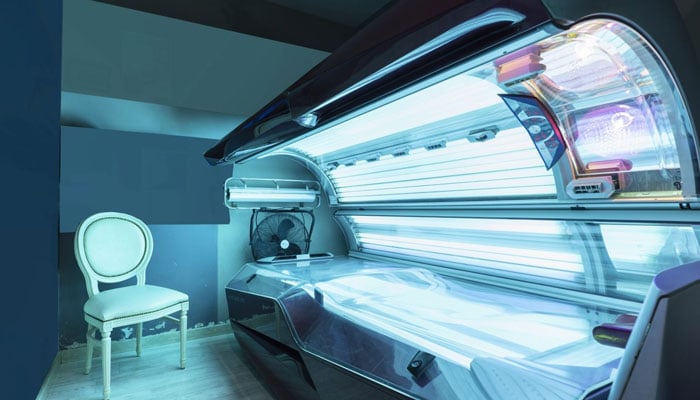
A recent study revealed that tanning is associated with a nearly threefold increase in melanoma risk.
According to a study published in the Science Advances, indoor tanning is linked to melanoma-related DNA damage across almost the entire skin surface.
Melanoma, the deadliest form of skin cancer, kills nearly 11,000 individuals annually across the US. While indoor tanning has long been tied with increased risk of cancer.
Researchers further discovered that tanning beds induce widespread DNA mutations in melanocytes, even in areas of skin not typically exposed to sunlight.
For the study, scientists assessed medical records from nearly 3,000 tanning bed users and 3,000 non-users.
Nearly 5.1% tanning bed users were diagnosed with Melanoma in contrast to the 2.1% non-users. After adjusting for several risk factors, indoor tanning was linked to 2.85-fold higher melanoma risk.
Using cutting-edge single-cell DNA sequencing, researchers examined 182 melanocytes from tanning bed users and control subjects.
Results indicated that skin cells from indoor tanners showed nearly twice as many mutations and an increased prevalence of melanoma-linked genetic changes.
Notably, these mutations were discovered across sun-protected areas, confirming that tanning beds cause severe DNA injury than natural sunlight.
The result challenge industry claims that tanning beds are no more harmful than sun exposure.