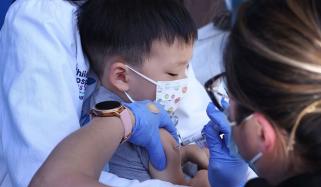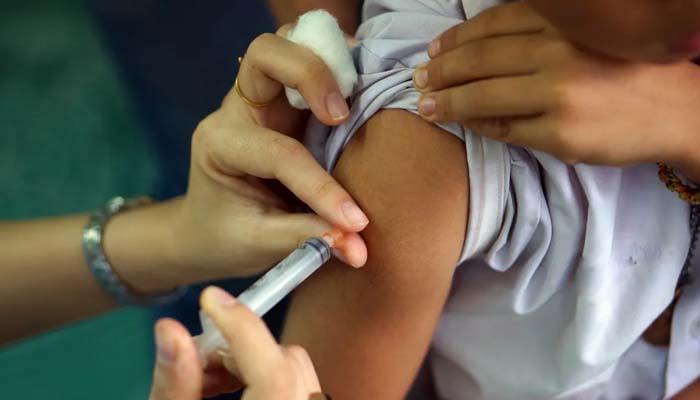
The Centers for Disease Control and Prevention has announced an unprecedented overhaul of the childhood vaccine schedule that recommends fewer shots to all children.
According to NBC News, under the change, effective immediately, the vaccine schedule will more closely resemble Denmark’s, recommending all children get vaccines for 11 diseases, compared with the 18 previously on the schedule.
Senior Health and Human Services Department officials said the changes are meant to restore trust in public health that spilled over from the Covid pandemic.
“The loss of trust during the pandemic not only affected the COVID-19 vaccine uptake. It also contributed to less adherence to the full CDC childhood immunization schedule, with lower rates of consensus vaccines such as measles, rubella, pertussis, and polio,” reads the scientific assessment the agency based its decision on.
The assessment said “there is a need for more and better science” on vaccines — though the new schedule doesn’t say there are specific vaccines children should not get.
Dr. Yvonne Maldonado, a professor of global health and infectious diseases at Stanford University, said there was an “incredible lack of transparency” behind the new schedule.
“There are no data, no papers, no discussions at all that are cited in this quote-unquote exhaustive search. So we have no idea who made these decisions and why they were made now,” she said.
Dr. Jake Scott, an infectious diseases specialist at Stanford Medicine, said the change could have a dramatic effect on vaccine uptake.
The CDC said it will continue to recommend that all children get vaccines for measles, mumps, rubella, polio, pertussis, tetanus, diphtheria, Haemophilus influenzae type B (Hib), pneumococcal disease, HPV and chickenpox.