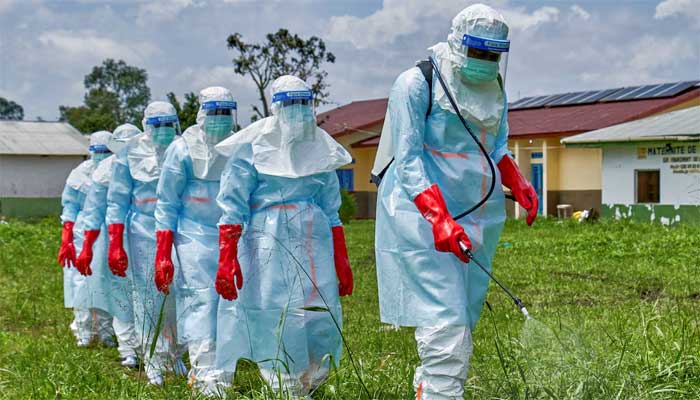
An Ebola outbreak in eastern Democratic Republic of Congo is straining health systems a month after the World Health Organization (WHO) declared it an international emergency.
As per Reuters, the outbreak, caused by the rare Bundibugyo strain, has exceeded 800 confirmed cases and is likely to be on track to become one of the worst recorded, possibly surpassing the 2014-2016 West Africa epidemic.
Health employees are experiencing severe shortages of important resources such as trained personnel, ambulances, protective equipment, and even basic construction material, which is required to establish isolation wards.

As per aid officials, a significant number of suspected cases and contacts are still lost because of insecurity, challenging terrain, and the region’s active mining and trade networks.
Africa Centres for Disease Control and Prevention (Africa CDC) officials issued a warning that surveillance gaps are critical, with alerts regarding suspected cases going uninvestigated.
In the underserved areas, only a little number of required staff and vehicles for safe burials and decontamination remain accessible.
Moreover, patients are reportedly escaping treatment centers or waiting hours before receiving care.
While Congo’s health ministry stated thousands of community health workers have been deployed and contact tracing continues to enhance.
Experts highlighted a major challenge of the supply shortages. These include PPE, ambulances, and even construction materials such as gravel for treatment facilities.
The outbreak has already affected health workers, with dozens infected and no proven vaccine or treatment available for this strain. Aid agencies warn that funding gaps and minimised international support are further limiting the response capacity.