Scientists in a major breakthrough in the obesity found a “fat metabolism” switch in the human body for the first time ever.
According to Science Alert, the GLP-1 drugs like Ozempic in the recent years showed dramatic progress in helping people to lose but it was noted that it also came with a side effect such as bone and muscle loss.
The side effects of the GLP-1 gave researchers an idea to find more natural ways of managing weight and during these efforts they identified the protein MTCH2, informally known as “Mitch.”
Fat metabolism switch, Mitch
In a 2016 study, researchers found that when Mitch production was shut down in mouse muscles, the animals were protected against obesity, while also improving in markers of stamina and endurance.
Together with other previous Mitch research, that prompted a newly published study from researchers led by a team from the Weizmann Institute of Science in Israel to find transformative success.
Biologist Sabita Chourasia from the Weizmann Institute of Science said, “After deleting Mitch, we examined, every few hours, the effect that had on more than 100 substances taking part in metabolism in human cells.”
“We saw an increase in cellular respiration, the process in which the cell produces energy from nutrients, such as carbohydrates and fats, using oxygen. This explains the increase in muscular endurance in previous experiments using mice,” she added.
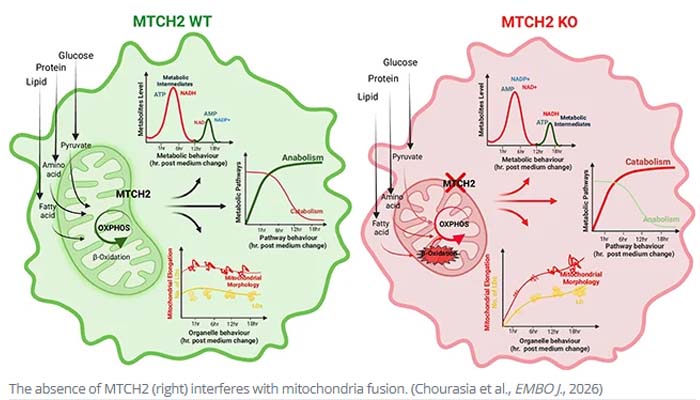
The researchers also determined that cells without any Mitch also focused on fats in particular as an energy source. They effectively started burning up the fatty building blocks around the cell membranes.
Biologist Atan Gross from the Weizmann Institute of Science noted, "We discovered that deleting Mitch led to a major drop in fats in membranes.”
"At the same time, we saw an increase in fatty substances used to produce energy, and we realized that the fat was being broken down from the membrane to be used as fuel. In other words, we showed that Mitch determines the fate of fat in human cells," Gross explained.
Potential new direction for obesity research
Although the work was conducted in cells and is still far from becoming a treatment, the findings reveal a powerful biological pathway that influences both energy use and fat storage.
By increasing fat burning while simultaneously limiting the formation of new fat cells, targeting Mitch could eventually provide researchers with a new strategy for combating obesity. The discovery may also help address one of the most persistent challenges associated with modern weight loss therapies: preserving healthy muscle while reducing excess body fat.