_updates.jpg)
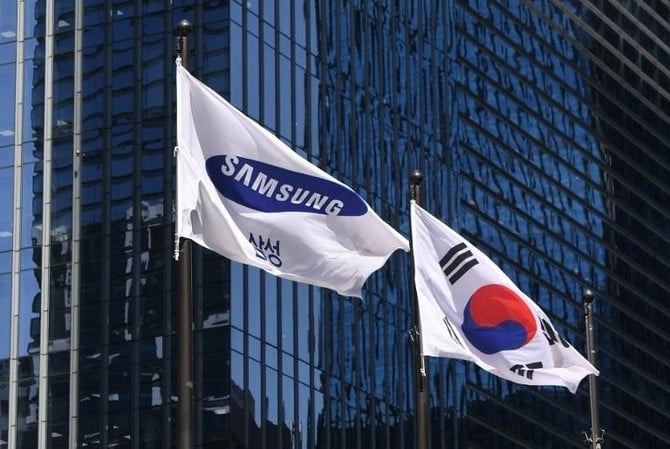
Samsung is expanding the use of OpenAI's workplace AI tools across its workforce.
According to the OpenAI announcement, ChatGPT Enterprise, the business version of the chatbot, and Codex, the AI coding assistant, will be available to all Samsung Electronics employees in South Korea and to all employees worldwide in Samsung's Device eXperience (DX) division.
What is Samsung's DX division?
The DX division is the part of Samsung responsible for consumer products, including Samsung Electronics smartphones, TVs, home appliances, wearable devices and tablets.
How will Samsung employees use OpenAI's tools?
Samsung is making OpenAI's tools available to hundreds of thousands of employees for technical and non-technical tasks such as writing emails and reports, research and data analysis, software development and debugging, product planning and customer support.

With ChatGPT, Samsung Electronics employees could perform a wide range of knowledge-based tasks more efficiently, including searching for and analysing information, drafting documents, developing ideas, and interpreting data.
The 'largest' deployment of OpenAI Enterprise
OpenAI has described Samsung's global deployment as "one of OpenAI's largest enterprise launches ever".
The blog said that over 5 million people use Codex weekly and that Codex weekly active users in South Korea grew nearly 800 per cent since February 2026.
As reported by Tech in Asia, this rollout reverses a 2023 company-wide ban on ChatGPT following an internal source code leak and notes Samsung's semiconductor Device Solutions unit remains under tighter restrictions.
Kim Kyung-hoon (Harrison Kim), General Manager of OpenAI Korea, said, "This deployment is a highly significant case in that Samsung Electronics is utilising AI not as a tool limited to certain organisations or tasks, but as a core platform to enhance the working methods and innovation capabilities of its global executives and employees."
"We will cooperate so that Samsung Electronics executives and employees can utilise ChatGPT to execute ideas faster, solve complex problems, and create new products and services," he said on Monday, June 22.
OpenAI and Samsung Electronics collaboration
The announcement highlights a deeper partnership between OpenAI and Samsung Electronic, with the South Korea-based company increasingly adopting generative AI in its workplace operations.
OpenAI and Samsung Electronics are also cooperating globally in the AI infrastructure sector, particularly in relation to the supply of advanced memory semiconductors required for next-generation AI infrastructure.
Moreover, recently Seoul National University began providing ChatGPT Edu to all 47,000 members of its community, including students, faculty and staff, as part of its transition toward becoming an AI-native campus.
OpenAI has also worked with Kakao to enable people to ask ChatGPT questions and receive responses directly within KakaoTalk group chats, bringing ChatGPT into South Korea's widely used everyday messaging platform.
Companies across a wide range of industries in the country, including Samsung SDS, TVING, LG Electronics, LG Uplus, LG CNS, GS E&C, Krafton, Toss, MUSINSA, Korea Zinc, Nexen Tire, and HanaTour are also using ChatGPT Enterprise, OpenAI APIs, and Codex.
Steps for successful OpenAI tools rollout
If Samsung gives ChatGPT Enterprises to thousands of its employees, it cannot simply hand out accounts and require necessary systems and rules in place.
Hence, employees could be using their Samsung work account to access ChatGPT rather than creating separate passwords.
A successful rollout could also require data-loss prevention steps, including blocking customer data from being pasted into the chatbot, detecting confidential source code, and flagging proprietary business information.
Employees should also be taught the information that can and can't be shared with the AI and how to verify AI-generated outputs and to avoid prompt injection attacks.