The Sun has entered a period of intense activity, treating Earth to a flurry of solar eruptions just in time for the July 4 holiday weekend.
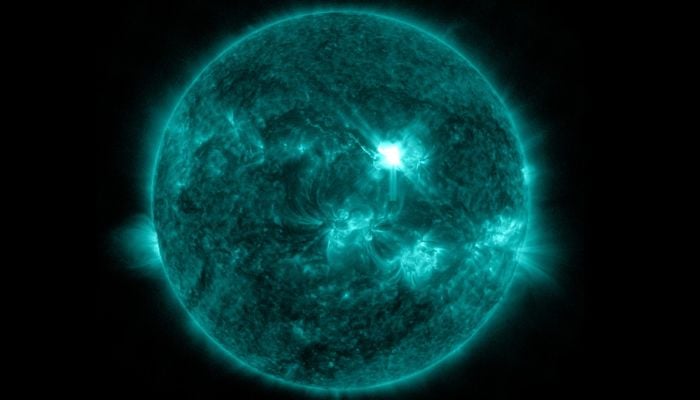
Over a 24-hour period, our star fired off 10 M-class solar flares, following a powerful X1.1-class flare that occurred on June 30.
This rapid succession of event has sent multiple coronal mass ejections (CMEs) – massive clouds of solar plasma and magnetic fields – hurtling toward our planet.
A “Machine-Gun Sun” erupts
The recent activity has been so relentless that solar physicist Dr. Tamitha Skov described the phenomenon as a “Machine-Gun Sun.” Scientists are currently monitoring these eruptions to determine exactly how many will strike Earth’s magnetic field.
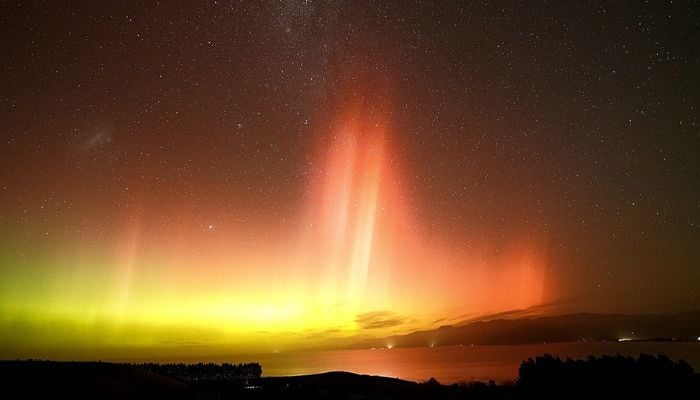
While predicting the precise impact of solar weather is notoriously difficult, the consensus among experts is that the incoming plasma clouds could trigger significant geomagnetic disturbances, setting the stage for vibrant displays of the northern lights.
Potential for light displays
For skywatchers, the timing is perfect. NOAA’s Space Weather Prediction Center has forecast moderate (G2) geomagnetic storm conditions beginning July 3 and continuing into July 4.
These storms occur when the magnetic fields carried by the CMEs connect with Earth’s own magnetic shield.
Dr. Skov noted that the intensity of the upcoming light show will largely depend on the “magnetic orientation” of the arriving storms, explaining that if the alignment is right, it “can more effectively transfer energy into Earth’s magnetic field producing stronger geomagnetic storms and brighter auroras.”
Advice for aurora chasers
Despite the excitement, experts caution that observing the aurora requires a bit of luck and preparation.
The arrival of these solar storms is expected to occur in stages with the first potential impacts beginning as early as July 3. Because summer nights are shorter and light lingers in the sky for longer, visibility may be challenging.
Those hoping to catch a glimpse of the spectacle should head as far north as possible, ideally away from city lights and look toward the northern horizon between 10 p.m. and 2 a.m.
_updates.jpeg)
Photographers are encouraged to keep their equipment ready as modern smartphone cameras are often surprisingly effective at capturing the faint pinks, purples and greens of the aurora that the human eye might miss.
As the holiday weekend progresses, the geomagnetic activity is expected to gradually taper off but for the next few days, the sky may hold a spectacular, electrically charged surprise for those willing to look up.