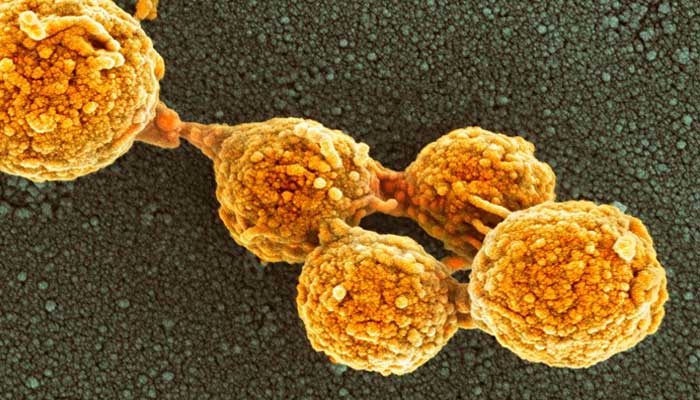
In a landmark achievement for science, researchers at the University of Minnesota have successfully constructed the world’s first synthetic cell capable of performing a complete life cycle.
Unlike previous experiments that involved modifying existing bacteria, this new creation – nicknamed “SpudCell” – was built entirely from scratch using only non-living chemical components.
This breakthrough announced on July 1, 2026 marks a major step toward understanding how life can emerge from simple inanimate matter.
How the synthetic cell functions
The research team led by synthetic biologist Kate Adamala assembled the cell by packing tiny water-filled spheres known as liposomes with essential biological materials.
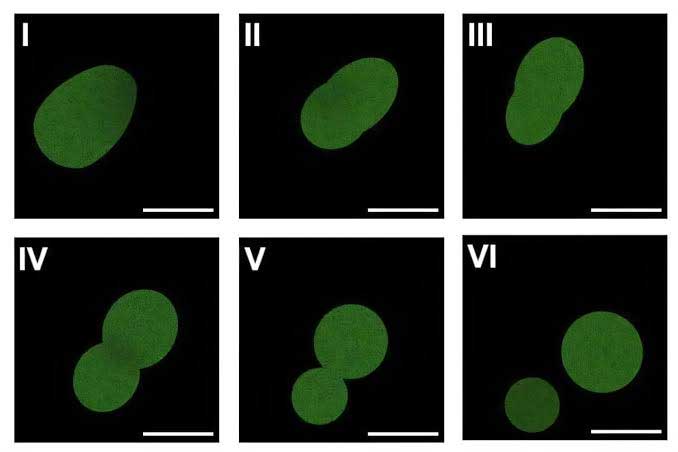
By incorporating synthetic DNA, enzymes and other complex molecules, the scientists created a system that can absorb nutrients, grow, copy its own genetic code and physically divide.
The mechanism mimics the fundamental behavior of living cells, yet it operates without the complexity found in natural organisms.
The team utilized proteins that naturally crowd on the cell membrane which creates mechanical stress eventually causing the cell to split. This process allows the synthetic cell to replicate its genome and produce daughter cells effectively completing a full life cycle.
Insights from the research team
The team views this project as a proof of concept that challenges our traditional understanding of life. Reflecting on the significance of the achievement, Kate Adamala stated:
“We’ve replicated in chemistry what only used to be possible in biology: the complete set of behaviors of a cell.”
She further explained that their work debunks the need for a “mysterious magical spark” to initiate biological processes, noting, “It proves that the most fundamental functions of life, like growth and replication do not need a mysterious magical spark.”
While the SpudCell is still in its early stages – Adamala described it as “an incredibly wimpy organism that right now basically does nothing other than to eat and occasionally make a daughter cell” the ability to define its exact makeup is a powerful advantage.
Adamala noted, “I know the full ingredient list of the cell. It is fully defined which means we can engineer it.”
The future of synthetic Biology
This “chassis,” as the team calls it, offers a blank slate for future scientific innovation. Because the researchers know every molecule included in the cell, they can program it to perform specific, custom tasks.
The team hopes this technology will eventually lead to advancements in medicine, such as creating precise drug delivery systems or environmental solutions like specialized cells designed for carbon capture.
As Adamala expressed, “We’re hoping we’re really starting the true age of bioeconomy enabling technology that will let people engineer biology.”
While there is much work ahead, this milestone represents a turning point in our ability to design and utilize synthetic life.