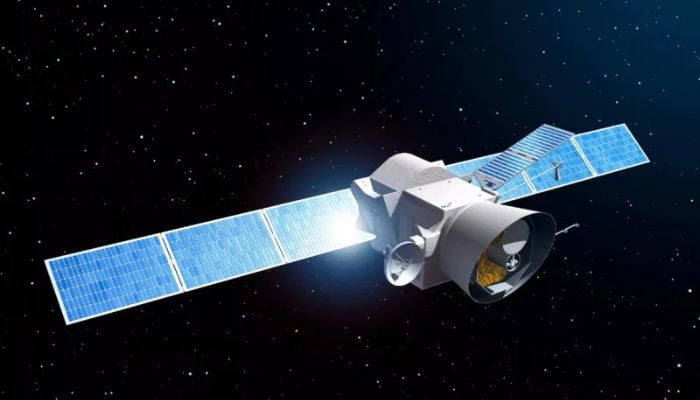
After a dramatic eight-year journey spanning nearly 10 billion kilometers, the joint European-Japanese BepiColombo spacecraft has officially entered orbit around Mercury.
On November 21, 2026, the probe fired its engines to slip into the planet’s gravitational grip becoming only the second mission in history to orbit the solar system’s innermost world.
Overcoming an eight-year obstacle course
Launched in October 2018 from French Guiana, BepiColombo faced a complex path. Reaching Mercury requires slowing down against the Sun’s massive gravity, so the craft completed nine planetary flybys – looping past Earth once, Venus twice, and Mercury six times.
The mission also survived a 2024 thruster power glitch that delayed its arrival by nearly a year. Controllers detached its main propulsion module in September before guiding the stacked science probes into orbit.
Two orbiters prepare for groundbreaking science
BepiColombo is actually two spacecraft traveling together: the European Space Agency’s Mercury Planetary Orbiter (MPO) and the Japan Aerospace Exploration Agency’s Mio.
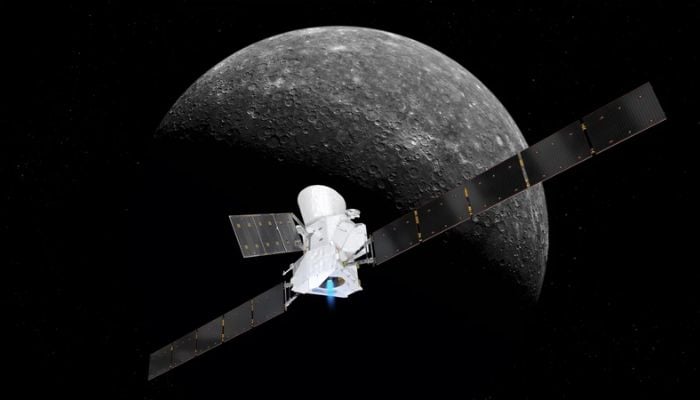
Currently locked together, the pair will separate on December 9 and 10 to enter independent polar orbits.
Unlocking Mercury’s mysteries in 2027
Once settled into their final positions, full science operations will kick off in April 2027. Together, the twin orbiters will endure extreme temperatures to map Mercury’s rugged surface, study its oversized iron core and uncover why it is the only rocky planet besides Earth with a global magnetic field.