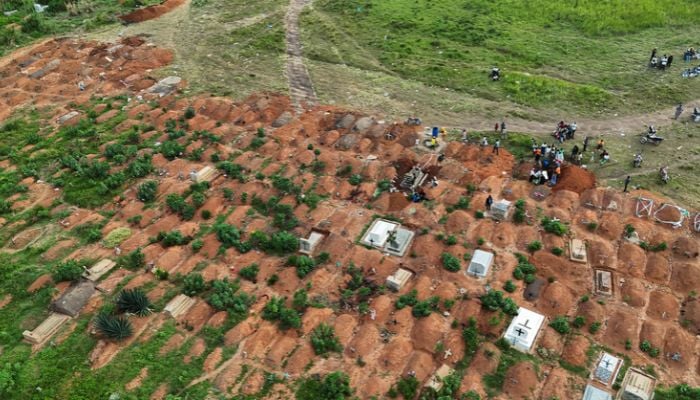
Freshly dug graves across eastern Democratic Republic of Congo are multiplying far faster than official health tallies suggest, revealing that the true human cost of the region’s deadliest Ebola outbreak is significantly higher than reported.
A Reuters investigation combining satellite imagery with local cemetery records shows excess deaths in the eastern city of Bunia running more than 50% above official figures by early November.
Satellites reveal rapid cemetery expansion
In towns like Bunia and Mongbwalu, satellite photos show patches of red earth rapidly swallowing open land as burial teams work around the clock.
Graveyard workers report burying up to 15 people a day during peak surges. Local officials admit many victims are laid to rest without being tested or registered, leaving entire rows of unmarked mounds whose identities remain unknown.
Rare strain and aid gaps fuel the undercount
Since the epidemic was declared in mid-May, official counts have surpassed 11,600 cases and 5,600 deaths, making it the largest outbreak in Congo’s history.
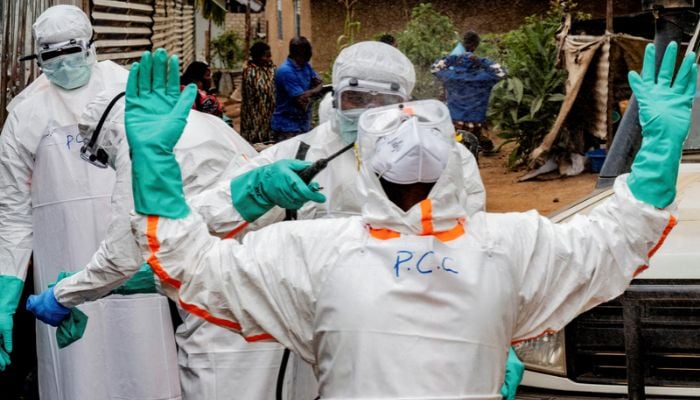
The crisis is driven by the rare Bundibugyo species of the Ebola virus which currently has no approved vaccine or targeted treatment. Health experts say initial testing delays, ongoing armed conflict, and sharp cuts in international aid have crippled surveillance.
Because many patients die at home rather than in clinicis, thousands of fatalities are slipping past official trackers – meaning the true scale of the disaster may never be fully known.