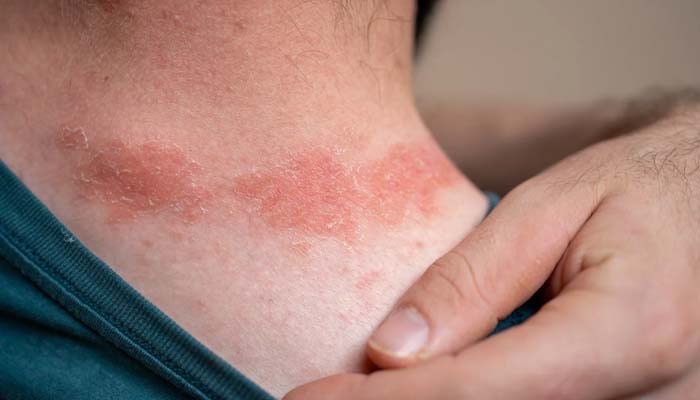
A recent study revealed that iron deficiency without anemia is common among adults with moderate-to-severe atopic dermatitis (AD).
According to the study published in Nutrients, people suffering from moderate-to-severe atopic dermatitis (AD) are at a higher chance to suffer iron deficiency without anemia.
For the study, scientists from Wroclaw Medical University in Poland assessed iron status in 86 adults with moderate-to-severe AD and assessed it's relation with disease severity and quality of life.
Despite most patients having normal hemoglobin levels, many showed clear signs of iron deficiency.
Low transferrin saturation was discovered in 45% of patients, low ferritin in 37%, and minimised serum iron in 26%.
Patients with signs of systemic inflammation—measured by increased high-sensitivity C-reactive protein showed a distinct pattern of disrupted iron metabolism.
This included reduced serum iron and transferrin saturation, along with increased soluble transferrin receptor levels, suggesting impaired iron accessibility.
It is pertinent to mention that reduced iron levels were associated with poorer quality of life, as measured by the Dermatology Life Quality Index.
Increased transferrin levels were also linked to greater disease severity, assessed using standard AD scoring tools, including the Eczema Area and Severity Index and SCORing Atopic Dermatitis.
The authors concluded that disrupted iron homeostasis, in the absence of anemia, is a frequent systemic feature of atopic dermatitis.
The iron abnormalities may lead to poor quality of life.
Researchers further stressed the need of more studies to explore whether correcting iron deficiency could enhance outcomes for patients with AD.