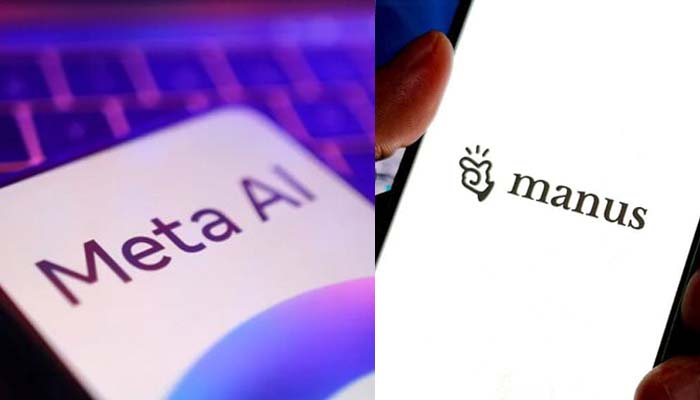
Mark Zuckerberg’s Meta has decided to but Chinese artificial intelligence startup for advanced features.
According to Reuters, Meta said on Monday it would acquire Chinese artificial intelligence startup Manus, as the technology giant accelerates efforts to integrate advanced AI across its platforms.
Tech giants such as Meta have been ramping up AI investments through strategic acquisitions and talent hires as they navigate fierce industry competition.
Earlier this year, the Facebook-owner invested in Scale AI in a deal valuing the data-labeling startup at $29 billion and bringing in its 28-year-old CEO, Alexandr Wang.
Financial terms of its deal with Manus were not released.
A spokesperson for Meta told Business Insider in a statement, “Meta's acquisition of Manus AI will enable us to provide the most advanced technology to our users with safeguards in place to eliminate areas of potential risk.”
“There will be no continuing Chinese ownership interests in Manus AI following the transaction, and Manus AI will discontinue its services and operations in China,” the spokesperson added.
Singapore-based Manus makes general-purpose AI agent, which can operate as a digital employee, executing tasks such as research and automation independently and with minimal prompts.
Meta will operate and sell the Manus service, as well as integrate it into its consumer and business products, including in Meta AI, the company said.
Earlier this year, Manus launched its AI agent, claiming that its performance surpasses that of OpenAI's AI agent, DeepResearch.
The company, part of Beijing Butterfly Effect Technology Ltd Co, has marketed its product by completing dozens of tasks for users on X for free.
Manus is among a flurry of Chinese firms that have domiciled in Singapore in recent years, betting a move to the trade-focused city-state would reduce risks their operations get disrupted by Sino-US geopolitical tensions.