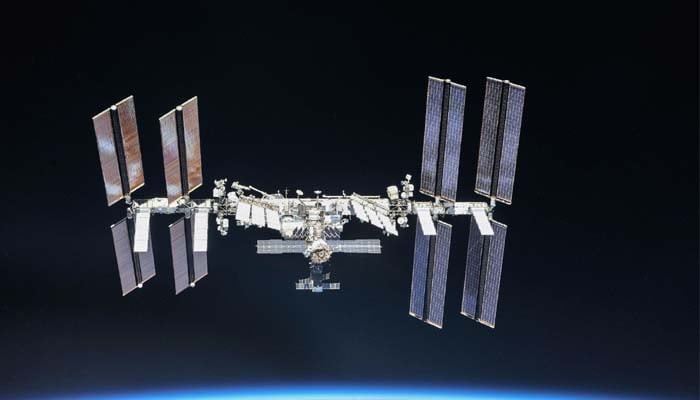
Astronauts aboard the International Space Station (ISS) are trained to manage worst-case scenarios, including the need to abandon the station in a short time period.
On January 15, 2026, all on board astronauts executed their training after one astronaut suffered a medical emergency that was impossible to treat in orbit.
The crew, including NASA astronauts Mike Fincke and Zena Cardman, Japan’s Kimiya Yui, and Russian cosmonaut Oleg Platonov, went to ISS for a six-and-a-half-month mission in August 2025.
Instead, they evacuated together aboard their SpaceX capsule.
As per the experts, astronauts receive training for fires, toxic leaks, rapid depressurisation and other medical emergencies via realistic simulators on Earth.
UK Space Agency’s senior exploration manager Meganne Christian stated, "They won't tell you what's going to happen – for example, fires, ammonia leaks, all sorts of different things and you just have to deal with them."
"It's designed to be a situation that will never happen, fingers crossed, but it's really to get you ready for the idea that lots of things could happen at once and you have to be able to make decisions on your feet."
"They questioned us thoroughly about it during the interviews we had with psychologists, and during the practical exercises we did in teams or in pairs, They are looking for people who can remain calm in those situations and are adaptable and resilient," Christian added.
However, a major safety rule is that a spacecraft capable of returning the crew to Earth is always docked to the ISS, effectively acting as both an escape vehicle and a safe haven.
According to the policy, if any one crew member leaves, the entire crew of that capsule should be returned together.
While ISS crews can be back on Earth within hours, future missions to the Moon and Mars are likely to experience major risks, with no possibility of quick evacuations.