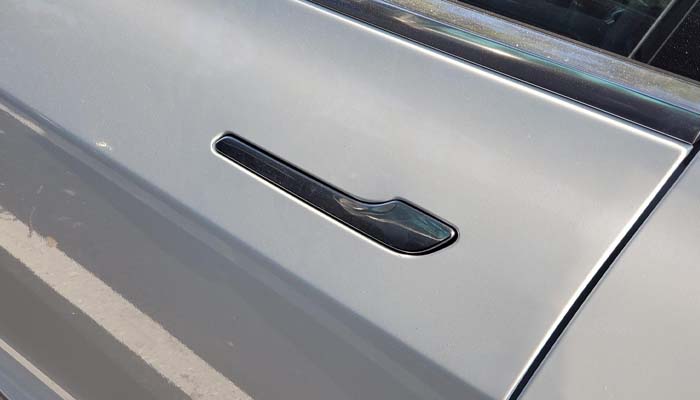
China has banned hidden car door handles amid security concerns in a fresh blow to Elon Musk’s Tesla’s sleek design.
According to The Guardian, China will soon ban concealed door handles on electric vehicles (EVs), becoming the first country to do so after several deadly incidents triggered global scrutiny of the controversial design first popularised by Tesla.
As per regulations announced on Monday, February 2, by the Ministry of Industry and Information Technology, cars sold in China will now be required to have a mechanical release on both the inside and outside of every door except the boot.
The new regulations will “improve the level of automotive safety design”, it said.
Due to take effect on 1 January next year, the regulations stipulate every car should provide hand-operable space measuring at least 6cm by 2cm by 2.5cm in order to manually release the door. Within the vehicle, there must also be signs showing occupants how to open the door.
The flush-mounted pop-out door handle was first popularised by Elon Musk’s Tesla Model S, released in 2012.
The design integrates the handle into the door and uses electrical signals to activate the latch. Such door handles provide a slight boost to efficiency by reducing drag.
It has since become a common design choice on many EVs worldwide, including in China, where it features in around 60% of the top 100 bestselling new energy vehicles, which includes both EVs and hybrid cars, according to state media.
Cars released after January next year must comply with the new regulations, forcing Chinese car manufacturers to redesign many of their vehicles. Certain vehicles already approved and in the final stages of launching have been given a two-year grace period to update designs.