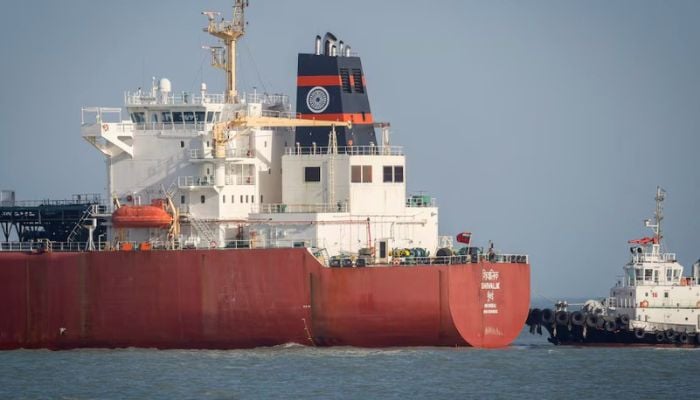
Despite a recent announcement for a two-week ceasefire agreement between the US and Iran recently, the shipping crisis remains at a standstill in the Strait of Hormuz, dampening hopes for a resolution to one of the worst global energy disruptions in history.
According to ship tracking data, only a handful of vessels have transited the critical strait since Washington and Tehran on Tuesday announced a two-week pause in fighting.
As reported, only five vessels crossed the strait on Wednesday, down from 11 the previous day, and seven transited on Thursday, according to data from market intelligence firm Kpler.
Whereas more than 600 vessels, including 325 tankers, are still stranded in the Gulf due to the blockage of the strait, according to Lloyd’s List Intelligence.
“While some vessel movement has resumed, traffic remains very limited, compliant shipowners are likely to stay cautious, and safe transit capacity is expected to remain constrained at maximum 10–15 passages a day if the ceasefire holds, without consideration of tolls applied,” Kpler trade risk analyst Ana Subasic said in an analysis on Thursday.
On Thursday, US President Donald Trump accused Iran of failing to live up to its part of the ceasefire agreement, which includes a commitment to allow “safe passage” through the waterway for two weeks.
While Iranian Foreign Minister Abbas Araghchi earlier accused the US of not honoring the deal, warning, in reference to Israel’s ongoing attacks on Lebanon, that it had to choose between a ceasefire or “continued war” via its ally.
The waterway, which usually carries about one-fifth of global oil and liquefied natural gas (LNG) supplies, typically handled about 120-140 transits before the US and Israel launched their attacks on Iran on February 28.
After plummeting on the back of the ceasefire announcement, oil prices have again begun to tick up as markets digest the reality that maritime traffic remains effectively halted despite the truce making it more challenging to combat the global energy crisis amid the US-Israel-Iran war.